
Image Credit: Wiki Commons
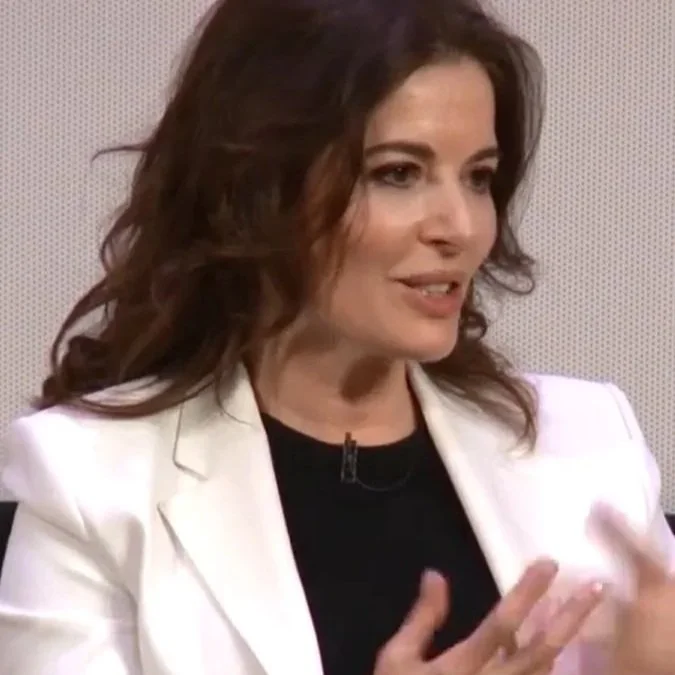
Ah, the Great British Bake Off. An indulgent way to sweeten the impending darkness of autumnal evenings. Gracing our screens for the seventeenth time this season, the much-loved baking show has revamped its judging panel with Prue Leith’s exit giving way to culinary legend Nigella Lawson. Nigella is a calm and thoughtful presence in the tent, a natural judging counterpart to fiery Paul Hollywood, and on the surface not much has changed. However, Nigella’s attitude is quietly setting a precedent that this show has been in desperate need of.
“I don’t approve of talking about food as naughty,” she tells Hollywood in episode two of the new series. “We need to take our pleasures where we can in life.” It’s an understated comment, and Hollywood quickly agrees. But it's not just a throwaway line. Nigella’s words are a calm rebellion against our Ozempic-fuelled media landscape.
A recent Parliamentary report found that 6 in 10 women feel negatively about their bodies. One glance at the 2026 Oscars and it’s not hard to see why. The heroin-chic era of the 1990s is well and truly back, and celebrity after celebrity appeared on the red carpet looking unusually thin. It’s not just within high fashion circles, though; leading high street fashion brands like Next, M&S, and Zara have recently had advertisements banned for featuring “unhealthily thin” models. And this obsession is amplified online, particularly through the rise of ‘Skinnytok’, a trend promoting weight loss through disordered eating.
The idea of female bodies following trends is anything but a new phenomenon, but recent advances in weight-loss drugs are a troubling development. Although products like Mounjaro and Ozempic have genuine medical applications, they become damaging when endorsed for solely aesthetic reasons. The drugs have severe physical side effects, but Alexis Conanon, a psychologist and eating-disorder therapist, also warns of the mental health risks associated with the drugs. “People talk about these drugs like they’re miraculous and safe, but we overlook how strongly they can encourage disordered eating habits,” she says.
Despite Nigella’s best efforts to reject diet culture on the show, it has already found its way into conversations surrounding the new judge. The way she tastes each bake has become a talking point, with one article even labelling it as ‘weird’. Nigella takes generous, often messy bites, and expresses pleasure exuberantly, harmless reactions which somehow sparked debate and produced countless memes online. Nigella’s enthusiasm doesn’t fit with the restrained attitude to eating expected of a woman in today’s media landscape, raising uncomfortable questions about double standards: after all, has anyone ever written an article analysing the way Paul Hollywood bites into a biscuit?
In such a bleak era for body positivity, the outpourings of praise for Nigella’s judging on X (formerly Twitter) demonstrate the quiet rebellion in her rejection of diet talk. One user wrote that Nigella ‘brings what genuinely feels like a real LOVE of every bite she takes.' And it does feel genuine; she proudly stated in a recent interview that ‘eating is my superpower’. In the current Ozempic-fuelled media landscape, shifting the narrative away from the demonisation of food, and towards the genuine joy it can bring, is exactly why we need more women like Nigella on our screens.