
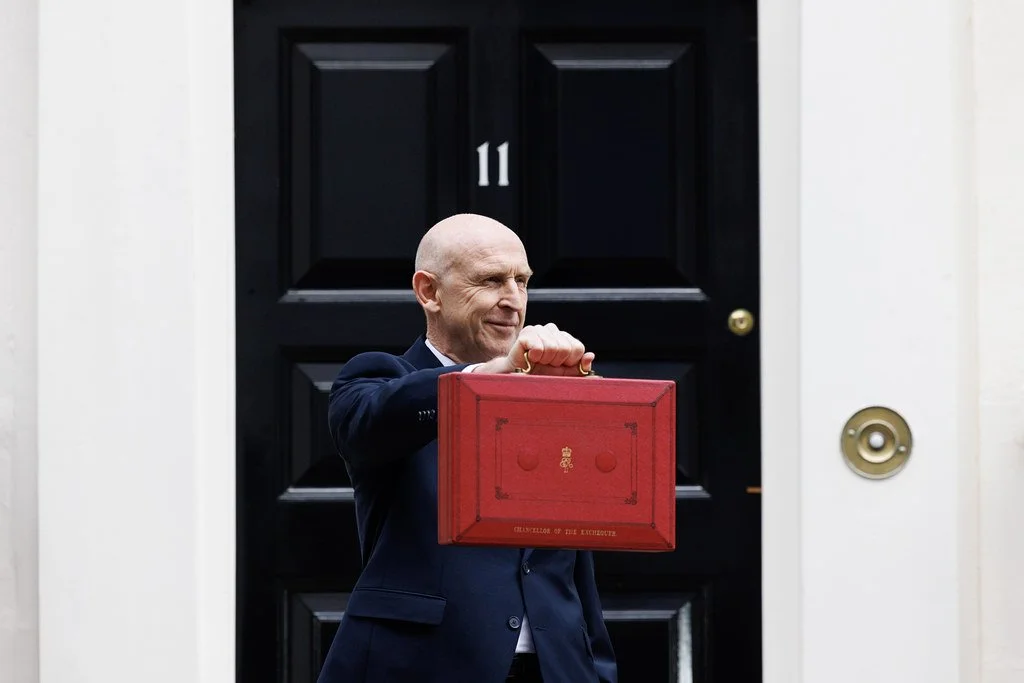
Image Credit: HM Treasury via Flickr
John Healey has kept his promise of a Budget “for the working people of Britain”. A £100 energy payment, the scrapping of gas standing charges, and higher minimum wages are among the policies aimed at easing rising living costs, and several could help students. But while the support is welcome, the Budget’s biggest impact may lie in what it failed to do. For all its 98 measures, the most since 2010, it left many of Britain’s major economic problems untouched. In her speech, Conservative leader Kemi Badenoch described a country that is “overspent, over-borrowed, overtaxed and drowning in an out-of-control welfare system”. Rather than confront these problems, Healey has pushed the biggest decisions, including those on defence spending and welfare reform, into next year, adding to the government’s growing pile of homework. Healey’s straw-house budget may have left the UK exposed, and if Russia’s attacks escalate into Europe or a new energy shock arises, suspending tariffs on gherkins may prove the least of our concerns.
With the Energy Price Cap expected to rise by 27% in January, the Budget introduced a one-off £100 Household Energy Payment for homes in council tax bands A to D in England. Students living in private or rented properties within the required tax bands are eligible, with the exception of those residing in student halls. However, because most students do not pay council tax, local authorities will be responsible for establishing payment mechanisms themselves. Additionally, standing gas charges are to be scrapped in England, Scotland and Wales during 2027, and the fixed costs will instead be added to the price per kilowatt-hour. This move aims to make energy spending more equitable; those who use more, pay more. For students this is particularly good news as turning the heating down now translates more directly into lower bills. MoneySavingExpert founder Martin Lewis estimates that around 60% of households will end up paying less. Other policies to help lower the cost of living include the extension of the VAT cut on electricity bills to July as well as the suspension of tariffs on 100 super market products.
The Chancellor has backtracked on his pledge to equalise the gap between minimum wage for adults and youths, although both rates will still rise by 3.9%. For those aged 18, 19 or 20, the minimum wage will increase to £11.27 an hour, while those aged 21 and over will receive £13.21. In breaking his minimum wage promise Healey might have done youths a favour; raising the minimum wage likely would have led to a decrease in the number of entry-level jobs.
It is also important to address the hidden tax rises that were not explicitly mentioned in the budget, particularly the continued freeze on income tax and student loan repayment thresholds. Economists expect inflation to average 3.4% in 2027, and as wages rise with it, incomes will inevitably be taxed more as people are pushed into higher tax brackets. Graduates on Plan 2 loans, who repay 9% of earnings above the threshold, will likewise pay more each year as their salaries rise. For current students, the impact is mostly delayed: those who started university from 2023 are on Plan 5 loans, which the freeze does not affect.
It is also important to address the hidden tax rise that was not explicitly mentioned in the budget, particularly the continued freeze on income tax thresholds. Economists expect inflation to average 3.4% in 2027, and as wages rise with it, incomes will inevitably be taxed more as people are pushed into higher tax brackets. Placement and internship salaries often exceed the £12,570 threshold, meaning students in these roles will see more of their pay taxed.
Most concerning for students, however, is the big bag of unaddressed policies looming over Westminster. At a time when interest on government debt alone is costing around £109bn in 2025-26, the OBR’s forecast that growth will slow to 1% next year offers little hope of relief. Bloomberg’s John Stepek points to welfare, particularly health and disability benefits, as one of the few levers Healey actually controls, noting that even stabilising this spending would meaningfully improve the fiscal outlook. Yet reforms have been put off. Defence faces a similar delay; Healey has yet to fully establish how the government will reach its target of spending 3% of GDP on defence, a gap critics warn could leave Britain exposed if security threats escalate. To borrow Badenoch's words again: “If you cannot defend your country, there will be nothing left to defend”.