
Image Credit: Michael Zettel via Pexels
It’s the start of your first year of university and you want to make the most of it. UCL has many societies to choose from, boasting over 300 different options, making the decision quite tricky.
Having stopped taking dance classes halfway through secondary school, I decided to try Dance Society, finding my way to a taster Hip Hop session on campus. The song was a remix of Nelly Furtado and Tyla, the room was at maximum capacity, and the class was a mix of nerves and excitement.
Trying to work out the footwork from the back of the room, we gradually started to get the hang of it, laughing with others as we got the choreography completely wrong or started on the wrong beat. The session was a snapshot of what dance classes continued to be like throughout the year, as I continued with Hip Hop and Commercial and enjoyed them just as much as this first session.
Not only do technical terms like pas de bourrée start to sound familiar, but some choreography seems to stay with you, even when you randomly hear a song playing in the Print Room Café. A community starts to form around you, from the people you met at the first taster session to the fellow dancers you get to know in the build-up to showcases. You explore endless sections of the IOE with every rehearsal, bonding over impossible deadlines and the possibility that you may have signed up for too many things this term.
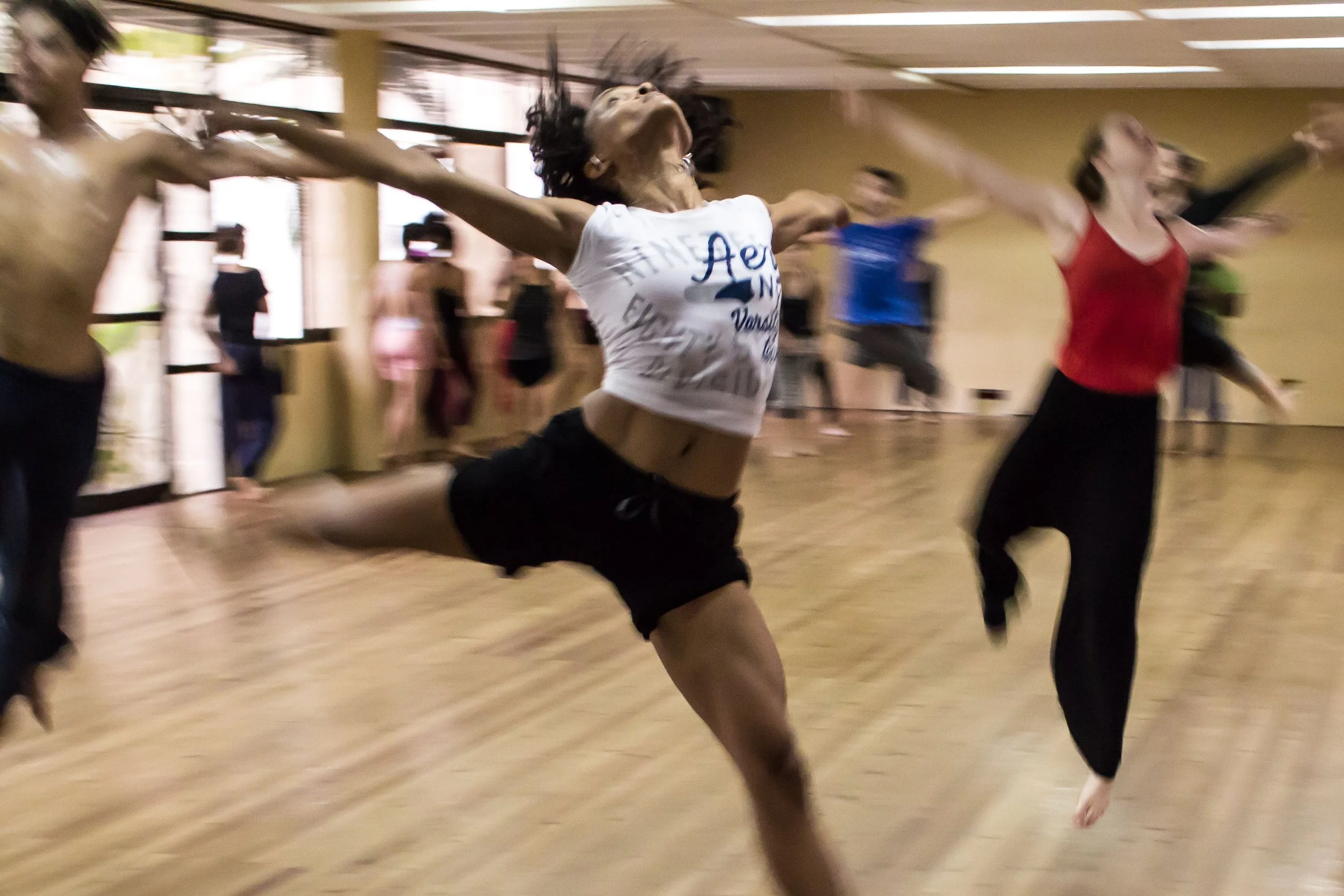
From professionally taught classes to dance showcases and competitions, there are many ways to get involved. As Abby Lande, the President of Dance Society said, “Members have the opportunity to try new styles or get back into styles they haven’t practised in a while. There is something for everyone, whether that be performing or training or even just meeting new people.”
Many of my closest friends have come through the society's weekly classes or annual shows such as the Triple Bill and Spring Showcase. The atmosphere is always electric during these performances; the dancers are incredibly talented and are supported by the audience loudly cheering them on.
Dancing offers a way to exercise not only physically but mentally. The Harvard Medical School reported in 2015 that the ‘synchronising music and movement’ beneficially affects the brain. It has been found that ‘music stimulates the brain’s reward centres, while dance activates its sensory and motor circuits.’ Therefore, learning a new eight-count may have advantages such as reduced stress levels, an improved memory, and stronger neuronal connections.
Moreover, research by The Albert Einstein College of Medicine in 2003 found that dancing was the only activity (among others such as tennis, golf, and swimming) that was ‘associated with a lower risk of dementia.’ While this does not definitively prove that dancing can prevent conditions such as dementia, it is evident that there are potentially long-term cognitive benefits to dance alongside more physical ones.
I definitely recommend anyone interested in dance to join the society. It is the perfect place to get active physically and socially, gain confidence in yourself, and learn a new skill - all with an elite playlist in the background!