
From hand-knit sweaters to geometric sculptures on the red carpet, the story of the Schiaparelli Maison has come alive at the V&A.
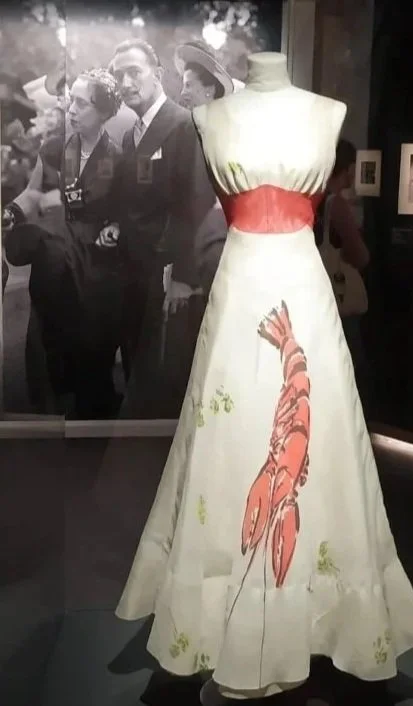
Image Credit: Arroser via Wikimedia Commons
The art world went wild with the V&A’s sensational new show dedicated to the history of Maison Schiaparelli, a fashion giant created by the bold female designer who literally turned the fashion world on its head. Elsa Schiaparelli was no ordinary woman. Born into a family of Orientalists and astronomers, her imagination took flight, and she spent her life immersed in ancient cultures and rites. The fascination naturally brought her to the Surrealists and Dadaists – groups of contemporary artists who defied logic in favour of chaos and absurdity. Surrealism and phantasmagoria would become the defining characteristics of her later works, especially once she began collaborating with Dalí, Picasso, and Giacometti.
The exhibit follows the entire history of the fashion house: it welcomes the viewer with Elsa’s first optical illusion creation, the famous hand-knit bow sweater, and leaves them astonished with the sculptural garments of their latest haute couture collections. Despite the increasing otherworldliness of the Maison’s garments, they never ceased to be designed first and foremost for practicality and the everyday. At the heart of the “Fashion Becomes Art” exhibit is constant juxtaposition: a casual dress stuns with a surrealist bright-orange lobster, while a smart jacket shines with buttons shaped like globes, charging fashion with a political voice in 1940.
The exhibition is not merely a retrospective on the iconic designer, but a tribute to the House’s enduring legacy and continuous development. The historic showcases flow into the contemporary ones, allowing visitors to witness a journey from 1920s craftsmanship to the pieces that appeared on the red carpet just a few years ago. The Maison’s current creative director, Daniel Roseberry, builds on the central contrast between ordinary and extraordinary, and takes Elsa’s experimentation with synthetic materials even further. In the gallery, the story of the house’s haute couture collection starts with their hallmark design – “The Skeleton Dress”, 1938 – and concludes with its contemporary reinterpretation – “The Lungs Dress”, worn by Bella Hadid at the Cannes Film Festival in 2021. In the original piece, the quilted fabric uncannily emulates the human skeleton; just so, the shimmering metal necklace of the new design mimics the vascular structure of human lungs. Both turn the body inside out, and Roseberry takes the radical juxtaposition of the human and the inhuman further, incorporating metal into fabric.
The show leaves one with no doubt about what the Schiaparelli Maison once was and now is. No tiny brooch, button or sketch is left out – indeed, whole separate galleries are dedicated to Elsa’s deep dives into jewellery, accessories, and perfumes. The very first sportswear designs are explored under as close a loupe as the canonical shoe hat. Elsa’s designs from 80 years ago today surprise no less than Daniel’s contemporary bold experiments with the human body, fabric, and sculpture – both reflect the radical revolution these designers shook the world with, unafraid to subvert the norms and break the boundaries.