
Image Credit: Wikimedia Commons
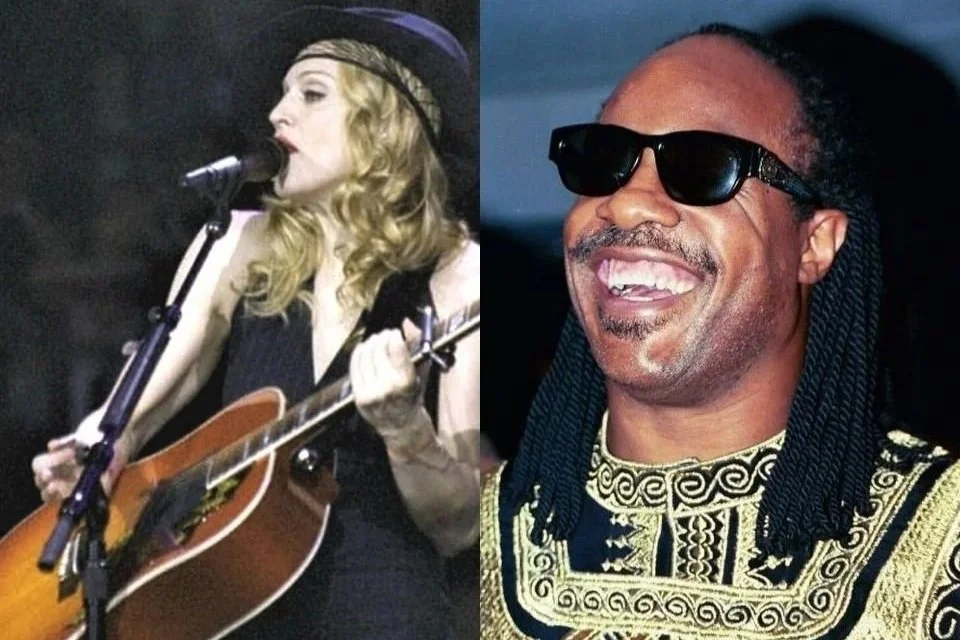
Over 50 years ago, writer Susan Sontag argued that society holds men and women to different standards when it comes to ageing. Given the way audiences discuss Stevie Wonder and Madonna today, her argument remains remarkably relevant. While Wonder is often celebrated as a musical legend whose longevity strengthens his legacy, Madonna continues to face scrutiny over her appearance, behaviour, and relevance, revealing how ageing under the scrutiny of the media remains a deeply gendered experience.
Both Wonder and Madonna have spent decades shaping popular music and influencing generations of artists, yet discussions surrounding them could not be more different. Wonder recently performed Songs in the Key of Life to celebrate the album’s 50th anniversary; Far Out Magazine described him as "the embodiment of living-legend status," noting how he laughed off mistakes and enjoyed the performance despite its imperfections.
While Wonder’s age signifies wisdom and accomplishment, in contrast, discussion around Madonna tends to focus on her appearance rather than her status as the ‘Queen of Pop’ or her four-decade career. Many of today's biggest female artists, from Britney Spears to Beyoncé to Lady Gaga, have followed in her artistic footsteps. But rather than celebrating her ambition, critics often question why she remains in the cultural space she helped shape. While men are allowed to age publicly, women are meant to fade into the background. As Madonna observed while accepting Billboard's Woman of the Year Award in 2016, "To age is a sin…People say that I am so controversial, but I think the most controversial thing I've ever done is to stick around."
The irony is that Madonna's career has always challenged expectations. She built her image around reinvention and self-determination. Continuing to experiment and perform later in life is consistent with the persona that made her famous. Yet the same behaviour that might be described as confident or rebellious in a male rockstar is labelled desperate when associated with an older woman. And popular culture reinforces these expectations by rewarding women who age quietly while scrutinising those who refuse to disappear.
This is not to say that Madonna is beyond criticism, nor that every male artist escapes scrutiny. But we must examine how gendered assumptions shape cultural conversations. Why is an older man on stage experienced while an older woman is irrelevant? Why is one artist's age evidence of mastery and another's a subject of controversy?
As audiences, the way we answer those questions reveals as much about us as it does about the stars themselves. Ageing is inevitable. The real issue is whose ageing society chooses to celebrate and whose it struggles to accept.