
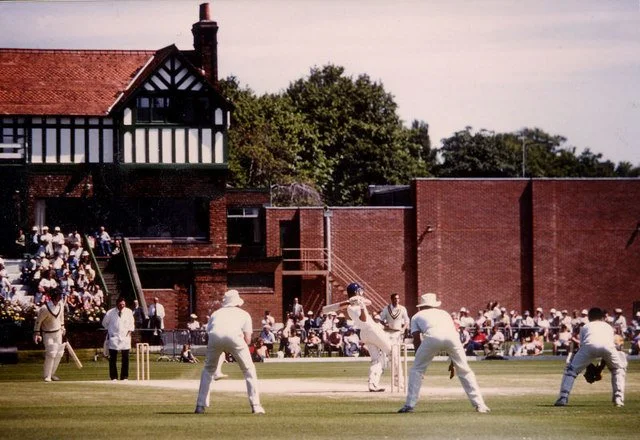
Image Credit: Mike Pennington via Wikimedia Commons
‘Wow. That’s an odd decision,’ I thought when I read that Lancashire County Cricket Club had decided not to renew club legend Sir James Anderson’s contract for 2027.
‘I thought he had a good year?’ A quick search confirmed it was better than good. 50 County Championship wickets at an average of 17.68, the second-best average in the entire Championship among bowlers with 40+ wickets, all while captaining the side. So, why let him go?
Lancashire have been poor on the pitch. Relegated to Division Two in 2024, they struggled again in 2025 and finished second bottom in 2026. The club appointed former Nottinghamshire chief Richard Kenyon as chief executive, and in October Paul Farbrace, who led Sussex from Division Two to third in Division One, arrived as director of cricket. He came with a clear mission: rebuild the squad and challenge for the title within four years. Anderson is 44. Lancashire can’t cite his age, but clearly, they don’t see a 44-year-old fast bowler as part of a multi-year rebuild. Remove the emotion of a legend being axed, and it’s hard not to say, well, fair enough.
It did, however, make me think of one of my favourite films: Moneyball. It follows Billy Beane, the Oakland A’s general manager, who competed with baseball’s richest teams on one of its smallest payrolls by trusting statistics over scouts’ instincts, which wrote players off for reasons such as weight or speed, unorthodox technique or, crucially, age.
England’s greatest ever bowler is hardly an undervalued asset. Yet Lancashire seem to have valued his age above his numbers. Many fans were angrier about how he was let go, with no real farewell, but I want to ask whether they should be angry on purely cricketing grounds.
Unlike the Oakland A’s, Lancashire aren’t counting pennies. They’re one of county cricket’s “Big Four”, and in 2025 banked a £29.2 million windfall from selling a stake in their Hundred team. Anderson, signed on rolling one-year contracts, was hardly an expensive gamble. And his numbers go beyond wickets, for example, his economy rate of 2.74 shows he was hard to score off, and his strike rate, a wicket every 38 balls, was second best among Division Two’s leading wicket-takers. He also bowled 29 overs a game, a workload in line with seamers far younger than him. The decline Lancashire are predicting hasn’t arrived yet.
It seems like an anti-Moneyball approach: prioritising the age bias over exceptional statistics. The rebuild has started with youth, including 18-year-old academy fast bowler George Brown. But maybe they know something we don’t. Perhaps Anderson’s undisclosed wages are better spent elsewhere, Farbrace’s record at Sussex suggests it might pay off.
Still, I think they’ve missed a trick. Keeping him as a playing mentor, then bowling coach, could have been perfect for a young side mid-rebuild. Maybe I’m biased too, and just sad I might not watch a childhood hero bowl again. Either way, as Beane says in the film, ‘It’s hard not to be romantic about baseball.’, and I certainly feel the same about county cricket. I surely hope we see Jimmy at work again, even if not for the Red Roses.