
Magda Barascu via Wikimedia Commons
This Halloween, a ghost stalks the shelves of Britain’s bookshops.
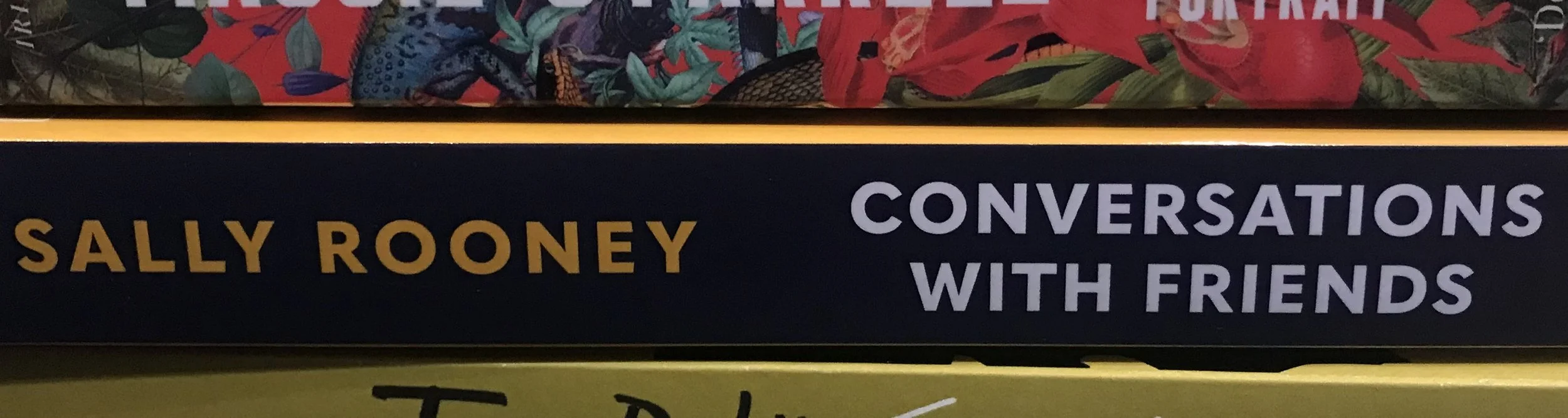
On October 14th, Faber announced that Sally Rooney’s books will no longer be supplied in the UK, citing legal restrictions linked to her support for Palestine Action, a group proscribed in July 2025. One of the most celebrated Irish writers of her generation has been pushed out of the British market for speaking about and acting on the genocide in Gaza.
But Britain has always been careful about what names it gives to things where Ireland is concerned.
Ireland’s defining national trauma, and the deepest wound in its relationship with Britain, An Gorta Mór (1845-1852), happened under a British government, and Britain has never called it a genocide.. Rooney’s case raises the question as to what it means when Britain, again, decides how far an Irish voice can go on the subject of mass death.
Although no one has formally banned Rooney’s books, UK law created the circumstances that removed them. Faber stated that the reason for no longer supplying Rooney’s oeuvre in the UK is because the current legislation has led to circumstances where Faber cannot pass on UK earnings onto Rooney, something that the publishing house sees as unconscionable.
Exactly one week after Rooney’s books disappeared from both physical and digital shelves around the UK, the New Statesman published an open letter to the government from leading authors, artists, and public figures in defence of Rooney. Signed by the likes of Anne Carson, recent Nobel prizewinner, and the two stars of Rooney’s mini series adaptation of Normal People, the open letter accuses the government of making an ‘affront to basic principles of free speech and expression’ by allowing ‘draconian anti-terror legislation’ to remain in place.
However, the Home Office states that lawful pro-Palestinian protest is unaffected and, when questioned in Parliament as to the proscription and the withdrawal of Rooney's books Keir Starmer refused to review the ban on Palestine Action. Yet the question remains:
If no one banned her books but she still cannot publish due to her beliefs, what does one call that?
Between 1845 and 1852, around one million people died in Ireland and another two million fled, while the island was part of the richest and most powerful nation in the world. Food continued to be exported from Irish ports as people starved.
In 1997, a statement issued in Tony Blair’s name, read at a commemoration in Cork, admitted that those governing from London had failed the Irish people by standing by while a crop failure became a human catastrophe. It was the closest Britain has come to an apology, and it stopped well short of the word many in Ireland would use. Papers later revealed it had been written by aides, without Blair’s sign-off.
Whether the Famine meets the definition of genocide is still fiercely debated among historians, but the label carries deep weight in Irish memory. What is not in doubt is that the power to name it has always rested with Britain.
Nearly two centuries on, an Irish woman uses that word about Gaza, and it is Britain, once again, that sets the limits of what she can say.
In Dublin, Rooney can support Palestine Action, publish her novels and collect her royalties. A hundred miles north, in Belfast, 75-year-old Maire Mhic an Fhaili was detained under Article 13 of the Terrorism Act 2000 for wearing a “We are all Palestine Action” T-shirt which implied support for Palestine Action. The line between free speech and a terrorism offence now runs across the island of Ireland itself, and it is Britain that drew it.
The story is hardly over. Next month, the Supreme Court will hear the appeal against Palestine Action’s proscription, and with it, perhaps, the fate of Rooney’s books in Britain.
Until then, the ghost of her novels will continue to stalk Britain’s bookshops, and this year’s Halloween fright may prove to be the one that lingers the longest.