
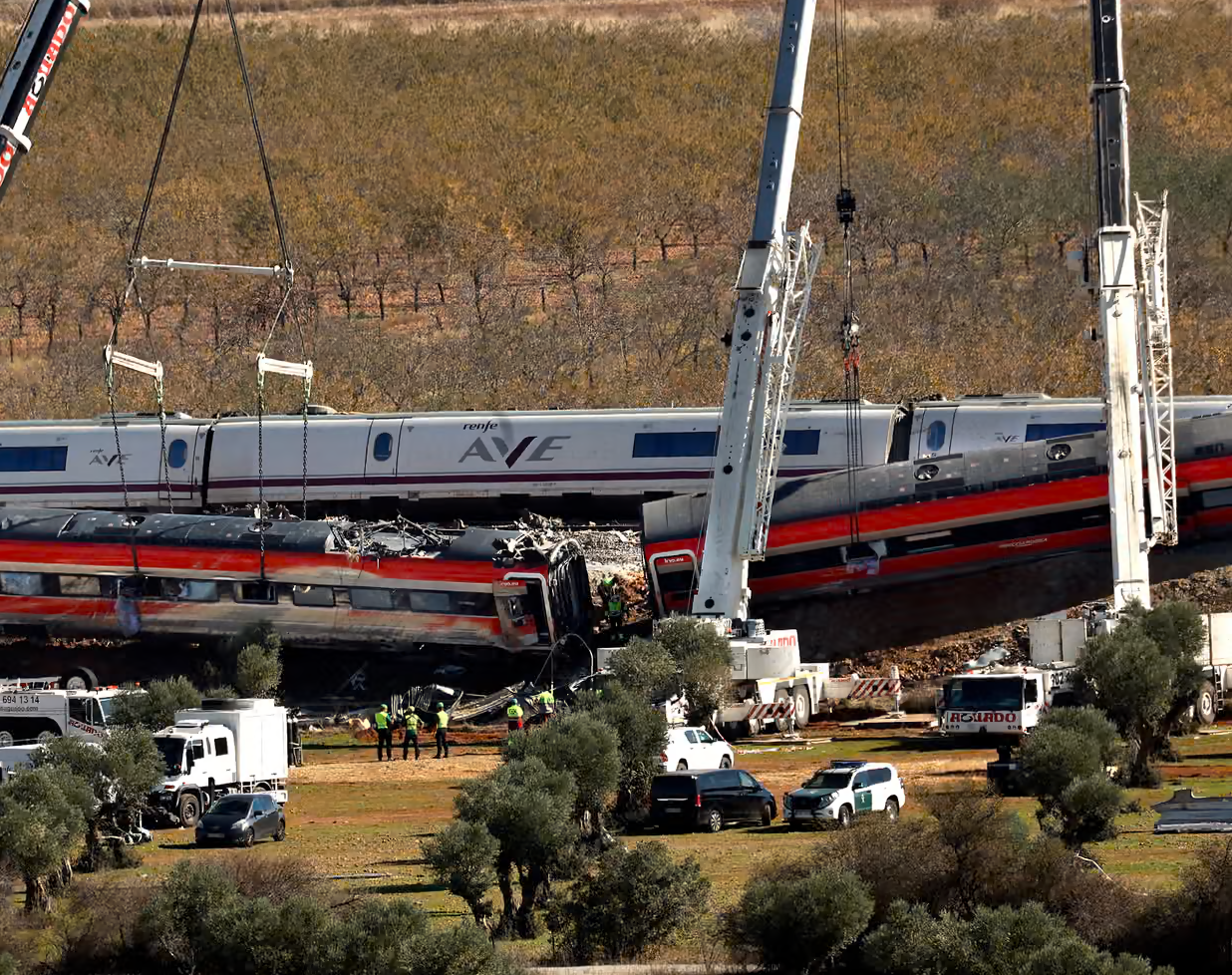
Image Credit: Oscar del Pozo/ AFP/ Getty Images via The Guardian
On Wednesday 28 October, two high-speed trains collided in the town of Urda, south of Madrid, killing 69 people and injuring over 100.
This is Spain’s second fatal train crash in less than 10 months. Earlier this year, in January, 46 people were killed following the derailing of a high-speed train in Adamuz.
Train data transmission systems in Spain failed 170 times this year, leading to widespread public anxiety and mistrust in the national rail network.
The crash occurred when a train operated by the state-run Renfe train crashed into the rear of a train from Iyro, a private operator.
Spain’s Transport Minister Oscar Puente said a computing failure had disrupted the signalling system and stopped trains in that area. A control centre then ordered the Renfe train to resume, a decision he called "inexplicable.” It then collided with the Iryo train.
The Transport Minister has since resigned.
Prime Minister Pedro Sánchez pledged financial aid for the families of the crash victims, and said that “our obligation is to restore the shattered confidence in high-speed rail as soon as possible at any cost.”
Last week’s disaster has also deepened the country’s political divide, with Prime Minister Pedro Sánchez’s Socialist government facing criticism from various parties, including far-right Vox. Opposing Conservative leader Alberto Núñez Feijóo insisted: “Spain has the right to know what is going on with its infrastructure.”
In the wake of this incident, Sànchez’s popularity has plummeted. Polls published on Monday show that support for his party dropped to the lowest point since 2023. The upcoming snap general elections called by Sánchez, due to take place on the 29th November, will inevitably be shaped by the repercussions of this event.