
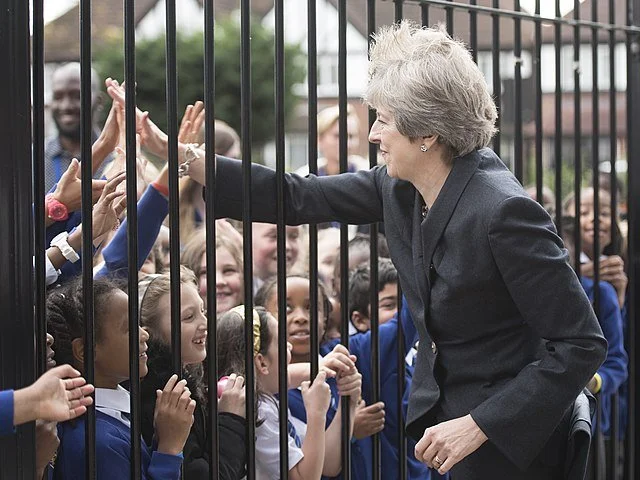
Image Credit: Number 10 via Wikimedia
More and more, we’re concerned with personality politics. Who we vote for is so largely informed by who we think politicians are rather than what their politics might be. We want to relate to our leaders, see ourselves in their lives, understand their private morals and gain glimpses into their personal lives. We want our politicians to be ‘real’ – the question is: how real?
In broad terms, the modern-day phenomenon of ‘realness’ is bound to ideas of authenticity. If someone can be unabashedly themselves, bear their truth and embrace their idiosyncrasies, then we are more inclined to think of them as living ‘authentically’. There is something admirable and also deeply intimate about sharing yourself in this way, and it seems like an honest way of living. If we agree that to be authentic is to be honest, then we can see how authenticity holds social and perhaps political value.
It makes sense, then, why politicians try to project authenticity. Whether that’s Keir Starmer pretending that he gets the ‘6 7’ meme in his recent school visits or Theresa May unashamedly admitting that she used to naughtily run through fields of wheat, authenticity is a tactic employed to demonstrate your ‘realness’. The problem is, living authentically doesn’t really work if you have to make a conscious decision to do so. We’re cringed out by Keir Starmer’s use of ‘6 7’ because nothing about it seems to reflect who he really is. Instead, it comes across as him trying to be someone he thinks we want him to be, which is a textbook case of inauthenticity.
But there are deeper concerns. Authenticity on an individual level is fun, sincere, and applaudable, but may have its limits for political leaders. In his essay ‘Can public figures have private lives?’ Frederick Schaeur argues that when we think about what kind of information we need to know about politicians, we need to consider two things: materiality and relevance of information. Materiality is all about what the role of the politician actually is, and relevant information is all about what facts or characteristics are indicative of an ability to perform the role well. Increasingly, the scope of relevant information, as well as what we consider material to the role of the politician, is becoming broader and broader, to the point that someone could say that we now expect politicians to be flawless. Yes, we want to feel that politicians are real, but we don’t want this to mediate our expectations to such a degree that we welcome politicians’ flaws.
We want to know that our leaders live private lives that are in accordance with their public personas. A politician who lives a double life is not usually someone we want to vote for. In some ways, this constitutes a demand for authenticity. However, if authenticity involves a kind of honesty, and honesty is in some way bound to being flawed, the two ideas begin to pull apart. This tension between being authentic and being flawless is one that many politicians will claim they struggle to reconcile.
So, what is more important - authenticity or flawlessness? My intuition is that flawlessness is unattainable and should be abandoned as a social expectation. That’s not to say that we shouldn’t have ambitions to be moral or ‘good’, but that we should recognise our limitations and fallibility. This, too, can apply to politicians. While we can’t expect perfection from our leaders, this shouldn’t stop us from holding them to account. Their decisions impact all of us, so their mistakes must be scrutinised. Imperfection is understandable, but impunity is not.