
image credit: Zeynep Demir Aslim via Shutterstock (2023)
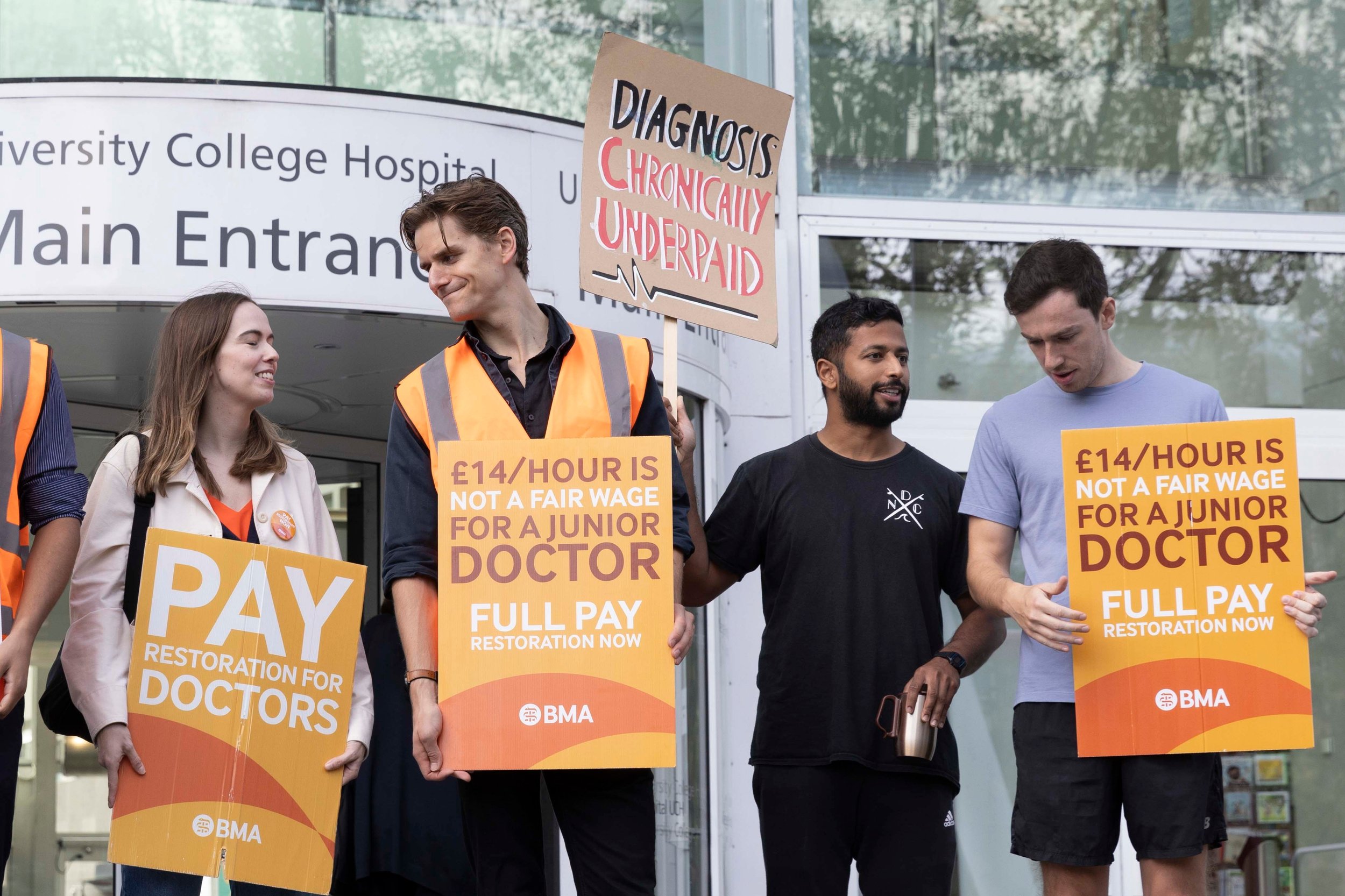
In the past week, the 5-day industrial action of resident doctors (formerly known as junior doctors) came to a close on Wednesday morning. And yet again, doctors were painted as the villains—heartless and cruel—who denied their patients care.
Throughout the week, Wes Streeting, the Health Secretary, relentlessly attacked all doctors participating in industrial action. Speaking to the BBC, he said that industrial action by resident doctors was “inflicting pain and misery”, following his previous comments stating that the actions taken were “morally reprehensible”. Yet, if the health secretary had intended to paint a fair picture, he might have said that 95% of the planned care for patients went ahead in the same manner and on the same platforms he used to attack resident doctors.
However, when we look past these claims, we start to see the full extent of the problem. We have had 30,000 qualified doctors apply for 10,000 training opportunities across the United Kingdom. Instead of the government offering to increase the number by a few thousand a year, Wes Streeting only offered a total of 2000 jobs a year, some 18,000 short of the current number of applicants. With the number of graduates only set to increase, this issue is only going to become worse in the coming years.
Though unemployment is common in multiple industries, with unemployment hitting 5%, owing to various factors, many are struggling. But such an event should not be seen as a point of attacking doctors; rather, it should bring attention to the overall state of the economy. Waitlists are the longest they have ever been; doctors are leaving this country for other fields and/or countries.
And that's just the beginning.
The additional offers to pay are minimal, with negligible offers to cover registration and exams when considering that doctors could already claim such expenses back on their taxes to begin with. The 10th and final point on the list provided by the Health Secretary was a promise to follow our contracts. This raises the concern that the government, or any other governmental bodies, could overrule our negotiated terms at their discretion.
As a final-year medical student, I believe those partaking in industrial action represent not only the current workforce but also those who have yet to graduate and those who will apply in the future. The profession I once dreamed of in 2018 does not exist anymore. General practice is now as competitive as neurosurgery was back in 2017. And this only covers the first couple of years of training, not the years spent as a senior registrar in preparation to be a consultant. Instead, we must face the harsh reality that doctors can finish their first two years of training but still be unemployed.
As I work on the wards, our patients also sympathise with my co-workers, not just the doctors. They are frustrated with the lack of drive this government and the Health Secretary are showing when it comes to creating training opportunities. And when the public starts to oppose the views expressed on the news, patients become fully aware that it is not just an issue for those currently in training, rather a failure to prepare the next generation of physicians.