
From “Martyr” to Meme: The Kirkification of Everything
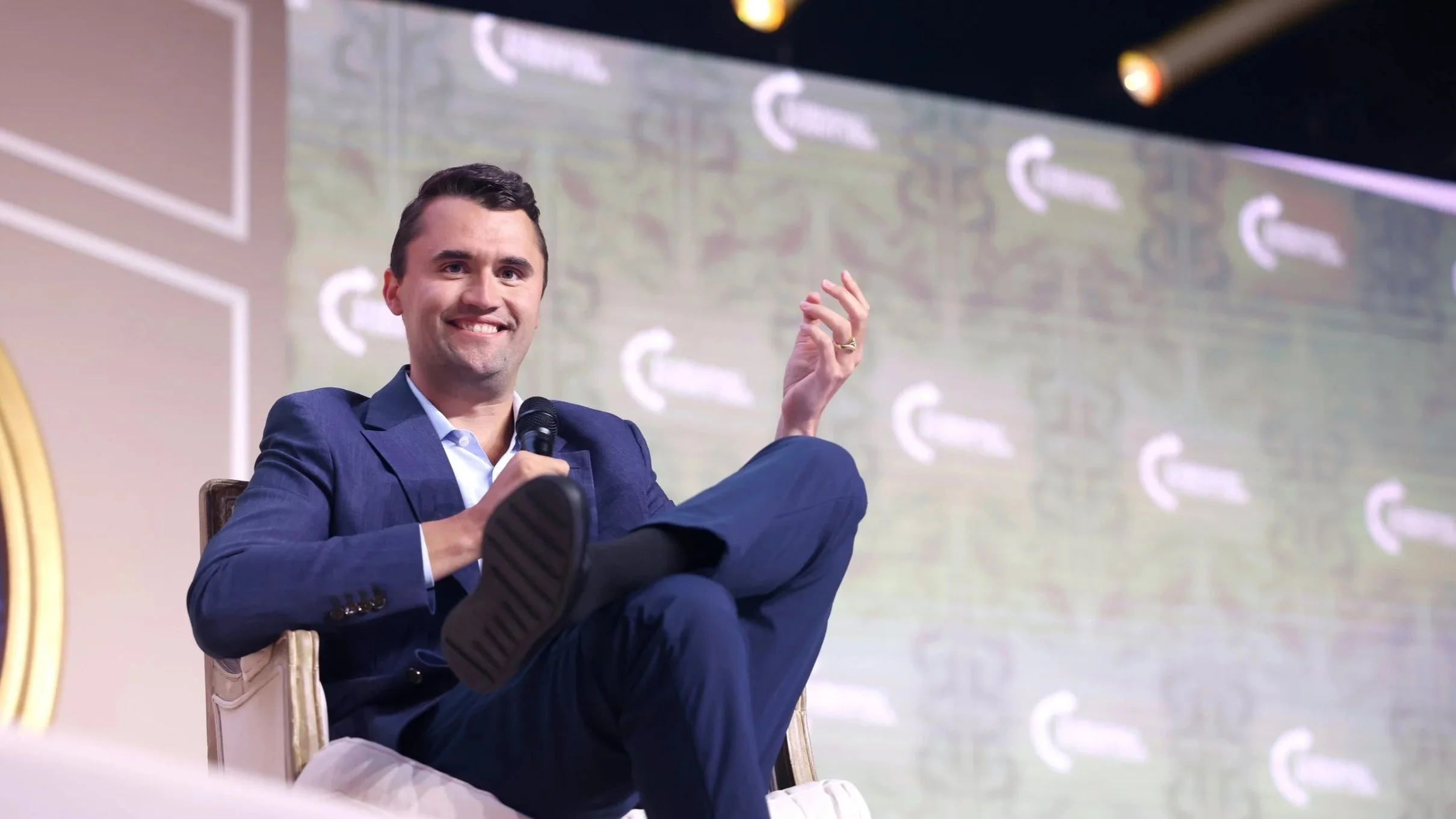
Image Credit: Gage Skidmore via Flickr
You’d might like to imagine, like me, that the name “Charlie Kirk” would not be heard after week of his death back in September. However, if you have spent more than a fraction of time on social media you probably still can’t escape the Kirkification memes, (or better yet, the ‘We are Charlie kirk’ anthem). Despite all of these being AI slop, the internet brought the far-right political influence back to life with deepfakes and soundtrack to back it.
The first big “Kirkification” meme, according to Know Your Meme, was a clip where someone pasted Kirk’s face onto iShowSpeed trying not to laugh. By late October, TikTok and Instagram were circulating compilations of reaction videos, all with Kirk’s face slapped on and captioned something like “Kirk would appreciate being immortalised” or “The great kirkification”.
This is simply what the internet does when a death is followed by a hyper-managed spectacle of grief, but especially when the figure in question has spent years cultivating outrage as a brand. If you build your political identity out of provocation, irony, spectacle, and self-mythologising, it is no surprise that the internet treats the death as more raw content.
This, however, isn’t a new phenomenon; Kirk is only the most recent entry to the internet’s long and morbid tradition of transgressive tragedy humour. For years, people have been making memes about JFK’s assassination, 9/11, and other heavily publicised deaths. It’s the charm of social media and, in an albeit grotesque way, is part of its taboo-breaking culture.
Angela Nagle describes this dynamic perfectly: transgression has become an aesthetic strategy. This combination of offensiveness, shock-factor, and moral boundary-crossing aren’t glitches in the system, they’re key features that generate attention - the only real currency online.
That’s the backdrop for Kirkification: a meme ecosystem where nothing is too sacred to be flipped, remixed, or repurposed for a joke that travels fast. Kirk’s self-appointed seriousness along with the polished theatricality of his subsequent tributes made his death especially for the internet to tear down. The more someone tries to stage-manage a narrative, the more determined the timeline is to turn it into a punchline.
The memes didn’t emerge because Kirk mattered, they emerged because he was generic enough to be seamlessly dropped into pre-existing formats. “We Are Charlie Kirk” isn’t evidence of legacy, it’s evidence of disposability.
However, there’s more layers to the meme than transgressive culture. There are people with interests in getting us to engage with Charlie Kirk, as soon after he was killed on September 10th, there was an influx of new crypto coins containing some part of his name. It’s hard to ignore the incentive structure: every uptick in meme circulation is an uptick in engagement, which is an uptick in value.
To make it even more dystopian, interacting with these videos pushes more extreme content onto our feeds, feeding into the alt right pipeline. Algorithmic recommendations treat any engagement with content about a far-right figure as interest in similar topics, watching or sharing “kirkification” memes can unintentionally cue the platform to push more explicitly far-right videos onto your feed.
In the end, Kirkification says far more about the internet than Kirk himself. The memes don’t immortalise him, they just go to show how quickly public figures get stripped of meaning and turned into a reusable visual gag. What begins as transgressive humour becomes, through repetition, just another piece of algorithm-friendly noise.