
Lessons from the Past: What the History of the Labour Party Can Tell Us About This Government’s Problems
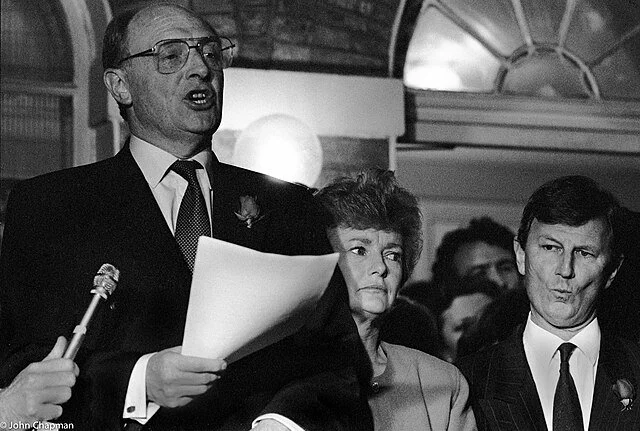
"The longest suicide note in history"
These were the words leading party member Gerald Kaufman would use to describe Michael Foot's 1983 Labour Party manifesto. Written at a pivotal moment in British history when Thatcherite policy was shifting away from social democracy and embracing neo-liberalism, this manifesto promised the very opposite. Renationalisation of recently privatised industries, higher taxes for the rich, and stricter financial regulation were just some of the policies proposed.
Internally, Labour was on the brink of collapse. Disagreements about its shift to the left had already provoked four prominent party members to defect and form the Social Democratic Party (SDP), leaving what remained of Labour a mess of internal conflicts.
After Foot's embarrassing electoral defeat, Labour was in dire need of reform. The party seemed divided and out of touch with the electorate. Speaking at the 1985 Labour conference, their new leader, Neil Kinnock, would set out a new direction for the party - famously declaring “implausible promises don’t win victories" and denouncing those on the far left. Labour could no longer compete with the ever-changing world whilst advocating for puritanical socialism. Progress could only be achieved through compromise.
12 years later, Kinnock's compromise would pay off. The party would enjoy three successive governments as "New Labour" (as opposed to the socialist "Old" Labour). It was unrecognisable: Clause IV, essentially binding Labour to the socialist agenda, had been scrapped in preference for more realistic commitments. Their new Prime Minister, quite the opposite to the scruffy intellectualism personified by Micheal Foot, was the young and dynamic Tony Blair: a man of muted ideology, but an international poster-boy of hope and change.
This renewed party, much like today's government, promised low-taxes and a commitment to growth, hoping to strip their image as a party of tax and spend. Of course, we now know which of these two versions of Labour were lying: whilst New Labour's first term saw a decrease in public spending as % of GDP from 41.2% to 38.8%, today's Labour has already raised roughly £66.6bn through tax rises. It's not that Reeves enjoys raising taxes, but unlike New Labour, there really is a tax-and-spend mindset behind the makeup.
The central problem of today’s Labour lies in its inability to do part of what Blair could. Whilst New Labour's 17 years of opposition convinced the left of the party to give up "implausible promises", their previous 14 years of opposition have resulted in the party leaning away from the centre and towards the left. Only 6 years ago, Labour was led by a man who suggested reinstating the old Clause IV.
Though Starmer has attempted to reinstate the party firmly to the centre, the backbencher revolt against proposed welfare reforms and Zara Sultana's infamous defection convey images of a leader losing control of his MPs. This division, combined with the fear of a leadership contest, forces politically unwise U-turns as an attempt to maintain unity. For example, just weeks after Starmer's aides briefed the media on a suspected leadership challenge from prominent MPs, their most recent budget raised taxes by 26bn to scrap the two-child benefit cap, accompanied by audible cheers from backbenchers and frustration from the electorate.
The recent budget and the rumours of a coup reinforce an old message that resonates loudly with the electorate: Labour is a party of division, high taxes, and reckless spending. At a time when Reform is scoring the same political points as “New Labour” before their landslide - welcoming Tory defectors and leading in almost every opinion poll - it is Labour's duty to stand united.
If Reform does form the next government, how much further right will Labour need to be dragged to win the public's trust again?