
Image Credit: House of Commons via Flickr
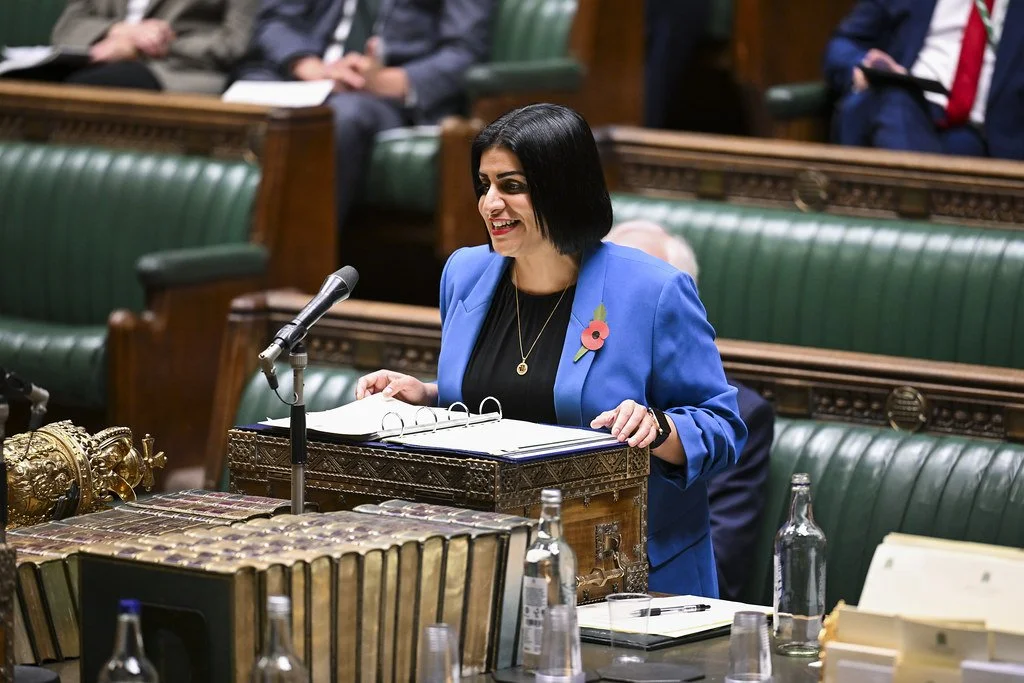
On Monday 17 November, the British Home Secretary Shabana Mahmood announced the anticipated asylum reforms. In her statement to the House of Commons, she argued that these reforms were necessary to "restore order and control to our borders".
The proposed reforms included an updated grant of refugee status that will last thirty months, instead of the previous five years. The refugee status will then be reviewed and renewed, only if the home country of the asylum seeker is deemed too unsafe to return to. The minimum required stay for permanent settled status will also be extended from five to twenty years. Mahmood claimed that the aims of the new policies were “firstly, to reduce illegal arrivals into this country, and secondly to increase removals of those with no right to be here”. The reforms also include a new work and study visa route created solely for refugees, with a quicker path to permanent settlement.
From a solely impartial standpoint, I'd contend these reforms will be successful in achieving their aims - to deter asylum seekers from coming to the UK. However, refugees deserve stability and safety, not a system that denies them both.
In her statement, Mahmood cited Denmark as an example of a successful change of asylum system from a European nation. If indeed the new reforms are intended to emulate the Danish system, then we can anticipate their probability of success by looking back at how asylum reform affected Denmark.
While the number of asylum claims has risen significantly for EU countries, including the UK, Denmark’s figures have remained low — even decreasing over the past ten years. Many attribute this to their firm, arguably harsh laws regarding asylum claims, spurred on by Prime Minister Frederikesen. These include delayed family reunification; seizure of assets, including jewellery, to fund accommodation; and short-term residency for refugees. The Prime Minister’s stated target was a categorical 'zero asylum seekers'.
Denmark's asylum system achieved this target by cultivating a hostile and unwelcoming reputation. And yet, the UK Home Secretary's statement affirmed that “this country will always offer sanctuary to those feeling danger". So why look to Denmark, a country aiming for 'zero asylum claims', for inspiration if we want to maintain a "compassionate and tolerant" Britain?
A deeper look reveals that the Social Democrat party of Denmark, to which Frederiksen belonged, gained substantial support with their implementation of a 'hardened' asylum policy, winning over voters from the growing right-wing Danish People's Party. It could be argued that Labour is pursuing a similar strategy with immigration and border control being the principal issue for Reform and Conservative voters.
It is undeniable that there is significant pressure on Britain’s asylum system, with June 2025 marking the highest level of asylum claims on record, a 14% increase from the previous year. This has placed considerable strain on the British economy; the cost of the UK's asylum system increased from £450 million in 2013/14 to £5.38 billion in 2023/24. Thus, an overhaul on the current asylum system is desperately needed, and these proposed reforms are seen by many as a solution.
The issue of illegal immigration has divided Britain, and Shabana Mahmood argued that this is the very reason reform is necessary. But with the Labour party disagreeing over the proposals, Green Party Leader Zack Polanski calling them “inhumane”, and right-wing extremist Tommy Robinson praising them, these changes risk polarising an already divided nation.
Now is the time for Britain to decide whether we want to follow in Denmark’s footsteps or forge a new path — one where our economy is not burdened by a broken asylum system, without denying refugees stability.