
North Korea: The Unlikely Superpower of Women’s Football
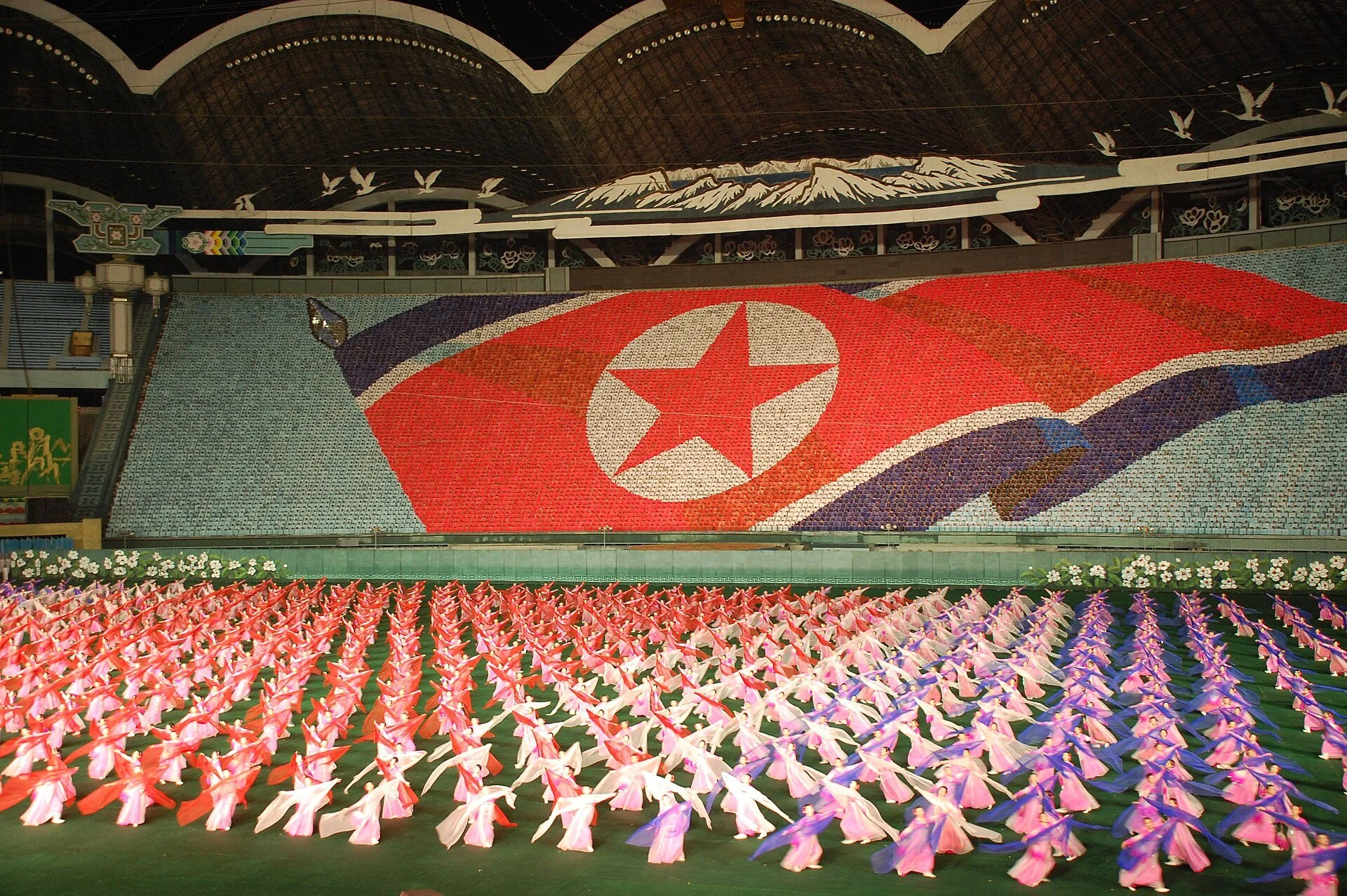
Image Credits: stephan via Wikimedia Commons.
In Foxborough on 27 June 1999, Tisha Venturini headed home her second goal of the evening, sealing a 3-0 win that sent the US Women’s National Soccer Team (USWNT) into the World Cup’s knockouts as group winners, and ultimately to glory. Their opponents that evening? North Korea.
Eight years later, the two sides met again, this time in their World Cup group opener. Abby Wambach put the Americans ahead, but there was no repeat of their 3-0 win from 1999. North Korea fought back to draw 2-2, a point that set them on their way to the quarter-finals for the first time.
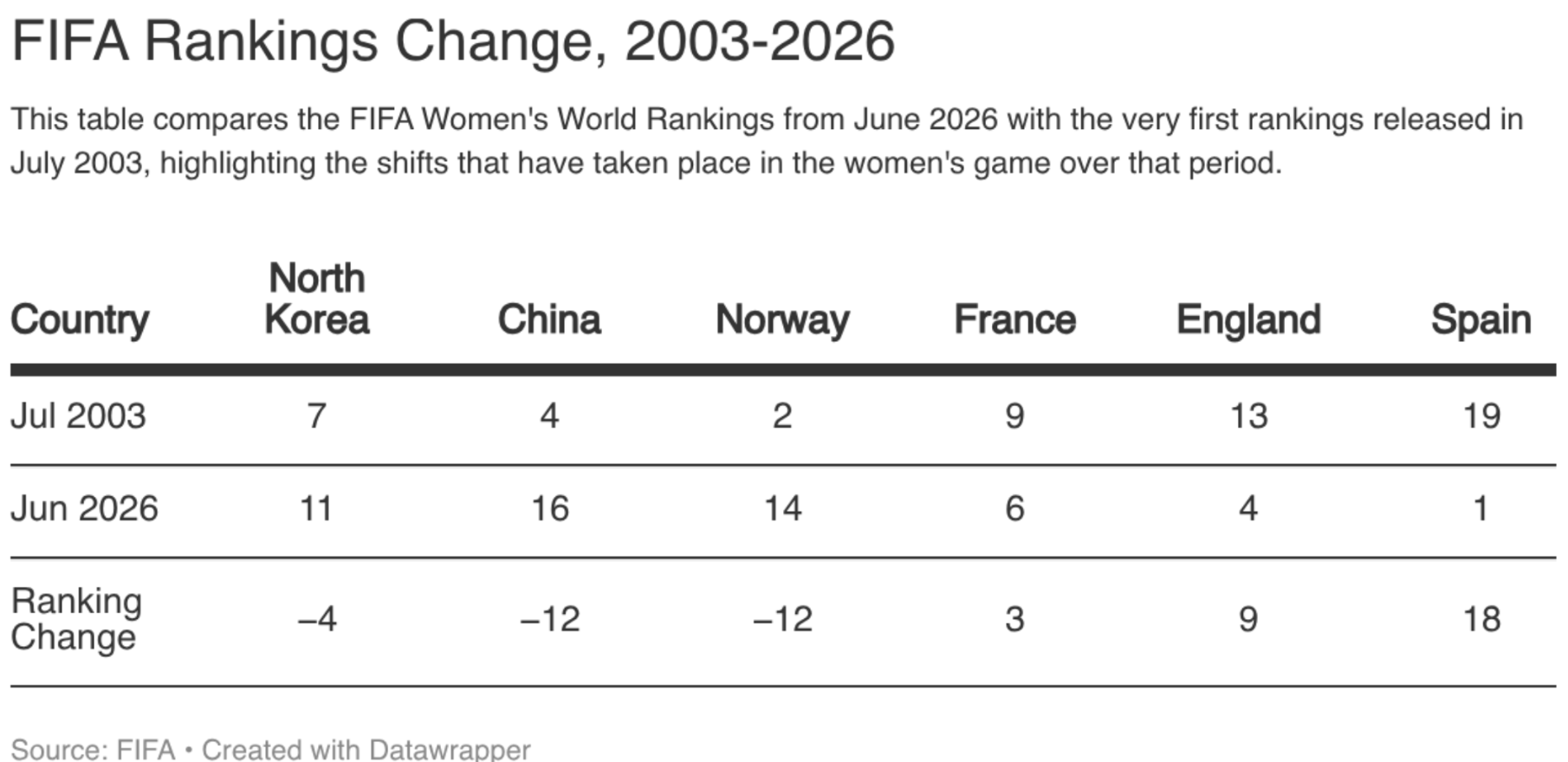
If North Korea’s presence in 1999 felt like an anomaly, their participation in 2007 was anything but. Between the two meetings, the Cheollima had won back-to-back Asian titles, climbed to fifth in the FIFA rankings and were now a genuine power.
North Korea: The Women’s Champion?
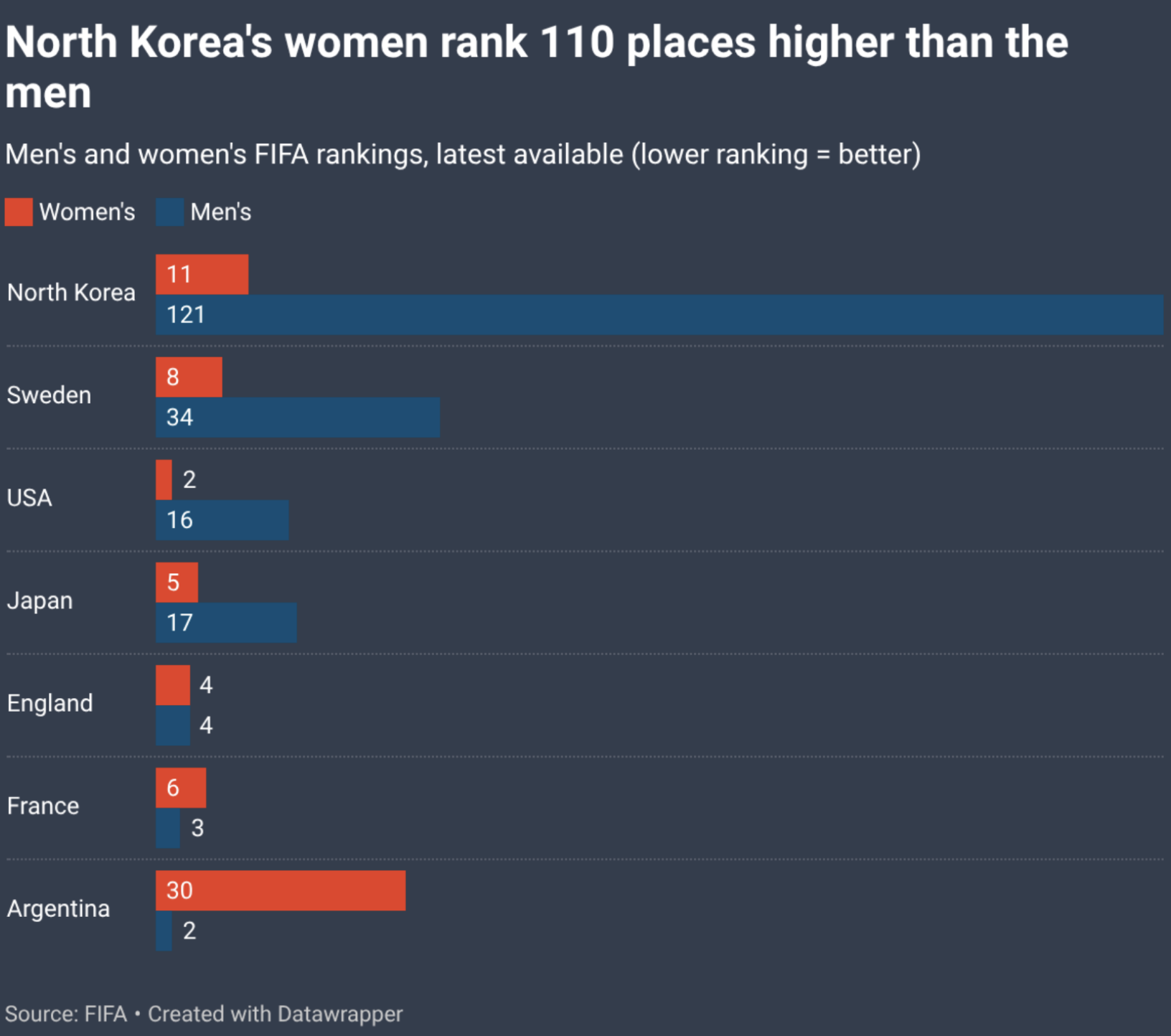
North Korea’s standing in the women’s game often surprises casual observers, given that the men’s team languishes in 121st in the FIFA rankings, 110 places below their female counterparts. Disparities of that size between the two genders are unusual: five countries appear in both the men’s and women’s top ten rankings, with Spain topping both.
Naturally, exceptions exist. The gulf between men’s and women’s success in the US is well documented, whilst in the Nordics, despite the men’s relatively modest modern record, Norway’s women were world champions in 1995, and Sweden have also finished third in three of the last four Women’s World Cups.
Explanations often circle back to the Nordic countries’ egalitarian social model: the region occupies the top three spots in the latest Global Gender Gap Index, and by the 1970s, local women’s leagues were already established in Denmark and Sweden. That logic is more difficult to apply to North Korea, a country where it is considered bad luck if a shop’s first customer of the day is a woman, and a regime that stands accused of overseeing a culture of sexual violence within its prisons.
1986: An Opening to Be Exploited
What explains this success, then? North Korea, like other socialist states, has long regarded sport as an effective soft-power tool. Success on the global sporting stage allows the state to project strength internationally. At home, victory becomes a symbol of collective triumph, one the regime credits both to its own leadership and to citizens’ dedication to the nation. That message carries particular weight in a country where the poverty rate was estimated at 60% in 2018.
Football already had political currency in North Korea, with the men’s run to the 1966 World Cup quarter-finals among some of the country’s high points. That success has not yet been repeated – their one World Cup appearance since featured a 7-0 humbling by Portugal.
The women’s story begins at FIFA’s congress in 1986, when Norwegian delegate Ellen Wille demanded a Women’s World Cup. According to Brigitte Weich, whose documentary Hana, Dul, Sed followed the DPRK’s women’s team, North Korean officials in attendance recognised the potential opening and seized on the lack of investment in the women’s game to get ahead. An extensive programme followed: investment poured in, women’s teams were founded, and facilities were constructed – a rarity for the women’s game at the time. Within two decades, the women’s team had triumphed continentally and held the United States to a draw at the 2007 World Cup – a match as geopolitically significant as it was sporting.
Investment has continued under Kim Jong Un, with the Pyongyang International Football School opening in 2013. In 2024, North Korea won both the under-17 and under-20 Women’s World Cups; investment in the youth system would certainly appear to be paying off.
An Early Peak, What About Later?
The school’s opening, however, coincided with the senior team’s retreat from the international scene. A doping scandal at the 2011 FIFA Women’s World Cup led to a ban from the 2015 edition, and the country’s stringent COVID-19 travel restrictions meant they did not attempt to qualify for the 2023 edition. Questions lingered over whether this marked the end of the country’s peculiar run of success, ones seemingly answered by the titles at youth level in 2024, prompting some to declare a new golden generation.
Assuming a carry over into senior success of the same nature would be premature: whilst the senior side has enjoyed genuine success, with three Asian titles and a quarter-final run at the 2007 World Cup, it has never matched the dominance of its youth teams. North Korea won the under-20 title in 2006 and under-17 title in 2008, yet it was Japan that became the first Asian nation to win the senior World Cup in 2011.
A Creaking Model in a Modern World
Why, then, the lack of follow-through at senior level? North Korea’s highly regimented training system may give young players an early edge over foreign counterparts, but the model, still rooted in Soviet-era methods, feels increasingly antiquated alongside the commercial and professional ecosystem that has emerged around women’s football in Europe in recent years.
North Korea’s early success, like China’s (a runner-up to the US at the 1999 World Cup but now a declining force, suffering an 8-0 defeat to England last November), rested not only on early state investment but also on underinvestment in the women’s game by the traditional powers of men’s football. That advantage, one the Nordic teams enjoyed too, is being eroded as women’s football becomes an increasingly attractive commercial asset in established football economies such as France, Spain and England. In England, total commercial revenue for Women’s Super League clubs more than doubled from £17mn in 2022/23 to £41mn in 2024/25.
The shift is visible at club level, too. Barcelona, Arsenal, Chelsea and Bayern Munich are now the premier sides on the European continent, displacing earlier heavyweights such as Umeå and Turbine Potsdam – standalone clubs with no ties to a men’s institution. The balance of power has therefore begun to shift away from the early investors in women’s football and state-sponsored systems, towards countries whose established men’s football economies can bring capital, infrastructure and commercial expertise to bear on the women’s game at a much larger scale.
In addition, North Korea faces a further constraint: its players largely cannot move abroad. UN sanctions complicate payments from foreign clubs, since a share of North Korean players’ salaries is expected to flow back to the regime. Even without sanctions, the Kim regime has its own reasons to keep players home: its survival depends on isolating citizens, even its finest athletes, from the outside world. At this year’s Asian Cup, all but one of North Korea’s squad were based domestically. Without regular competition against the world’s best at club level, development has a natural ceiling. Success can be achieved within the domestic system, but the question is whether or not it’s success is limited.
An Uncertain Future for An Elusive Star
Whether a limit will be placed on Choe Il-Son, winner of the Golden Boot and Golden Ball at the 2024 Under-20 World Cup, remains to be seen. Two years on, the 19-year-old remains tied to 4.25 SC, North Korea’s leading club, with the outside world catching only intermittent glimpses of her in international fixtures. Time is on her side, but her isolation risks making her emblematic of her country’s wider insularity.
Last month in Poland, a new generation of North Korean players reached another under-20 World Cup final, ultimately losing on penalties to Spain and thus falling short of a record-breaking fourth title. Even so, the run further crystallised the country’s dominance at youth level, whether this generation can be the ones to carry that success into the senior game is less certain.