
Pi to the Nearest Decimal - A Brief History of UCL’s Oldest Student Publication

*Originally published in Pi Zine (Sept/Oct ‘26 Edition)
To answer your first question, no, we are not a team of mathletes. Disappointing I know, and perhaps my choice of title for this article didn’t help (in my defence, it’s difficult to find a new way to spin ‘Pi’ after 80 years). What we are is UCL’s largest and oldest student publication, responsible for keeping generations of UCL students informed and for cultivating some of the most successful journalists of the 20th and 21st centuries. If you’re interested in writing, reading, editing, photography, design, marketing, or anything vaguely creative, there’s a space for you at Pi. Working across three branches - Pi Online, PiTV, and Pi Magazine - we are the only publication on campus to house an online platform, broadcast function, and renowned print edition. I first stumbled upon Pi as a fresher, and I can honestly say it’s completely changed my university experience. Through this society, I’ve been able to hone my writing, develop editorial experience, and make some of the closest friends I’ve ever had. As President, I want nothing more than to offer these same opportunities to you - so please join us, we’d love to have you!
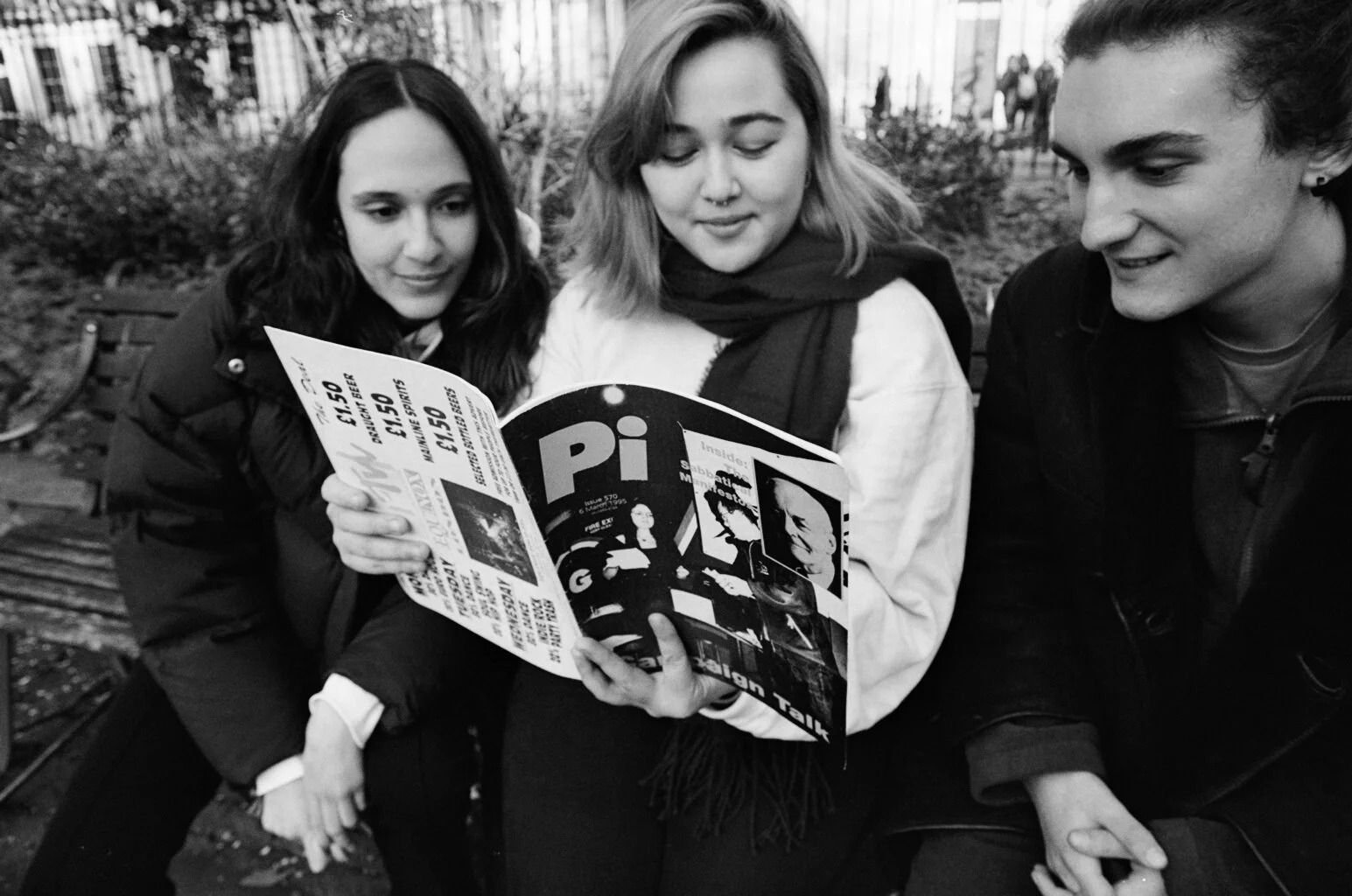
A BRIEF HISTORY OF PI
Named after our spiritual founder Sir David Pye, a former UCL provost, Pi was founded in 1946 as a community project intended to bind the campus community together in the aftermath of World War II. At a time when UCL was expanding rapidly, Pi cemented itself as the source of student news, insights, and opinions across Bloomsbury, publishing a fortnightly news-sheet that would eventually evolve into the three-pronged Pi of today. I doubt our founding editor, Richard Lubbock, ever expected Pi to one day exist in digital, print, and broadcast form, but here we are 80 years later - just as curious, just as creative, and just as committed to our student audience as we were in the 1940s.
Initially pitched as ‘The Newspaper of University College’, Lubbock led a small team of contributors, cartoonists, and creatives to report on campus news and Union politics. In our first-ever print edition, published on Thursday 21st February 1946, students covered the festivities of ‘Foundation Week’, the inception of a Swiss exchange programme, and the results of the Union elections. As the forefather of the paper you are reading right now, this edition inaugurated the rich intellectual and cultural tradition of Pi that continues to this day.
Unflinching in its journalism, Pi was praised in the 1950s for how it “fulfil(s) a very important function in the life of the College, particularly at the present time and under present conditions”. In the following 60s and 70s, Pi began to modernise, expanding to cover campus arts, sports, film photography, reviews, and even crossword puzzles. Echoing what we now know as TeamUCL, Pi would highlight the university’s burgeoning sports culture, including coverage of the Varsity rivalry between UCL and King’s. I’m sure the sports editors of the 1960s would be delighted to know that 2026 marked UCL’s 6th consecutive Varsity victory against our embattled rivals on the Strand.
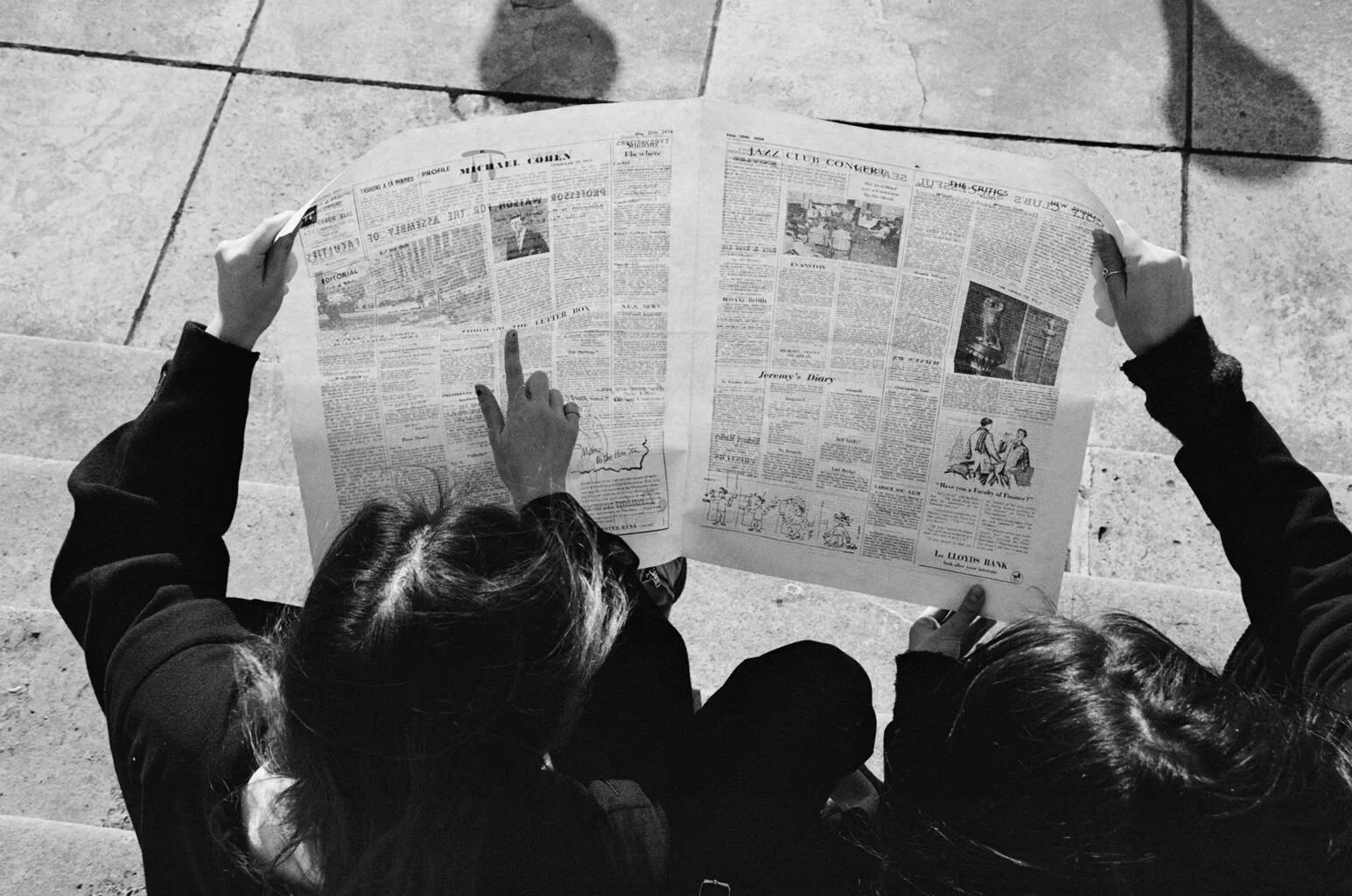
The 1970s ushered in a decade of economic turbulence for Britain (sound familiar?), and Pi began to refocus its reporting on financial concerns and the cost of studying in London. As an example of why student journalism is more than just a hobby, Pi acted as an outlet for the economic anxieties of an entire UCL generation. Though I have to say I wouldn’t be complaining if I could expect a pint of Guinness to cost 34p, IPA 27p, and Carling Lager 32p at a campus bar like they did in 1977.
Entering the era of Thatcherism, the Pi editors of the 1980s took the publication in a new direction, introducing magazine-style page-by-page articles instead of the original broadsheet format. New initiatives were rolled-out, including ‘Pi Diary’, a society events calendar advertising get-togethers and gatherings across campus. While we retain a reputation for editorial impartiality, the rise of Thatcher provoked political firebrands to publish subversively-minded articles, lending a new dimension to the previously liberal Pi. Whilst the Pi Media of 2026 doesn’t tie itself to any specific ideology, this vein of political reporting persists, with Pi Online documenting the hopes and frustrations of today’s cohort of students.
Continuing its streak of polemicism, Pi reverted back to its newspaper format in the 1990s, tackling sexual violence, rape, racism, discrimination, and LGBT rights across its pages. Laying the groundwork for the Pi of the 2000s, the 90s proved a pivot point, with the publication becoming more emboldened and opinionated with the turn of the century.
The new millennium saw the introduction of stylish print editions carefully segmented by section (some of which still prevail today on Pi Online). 2011 saw the momentous inception of Pi Online, our online platform which boasts thousands of views a month in 2026, while 2012 was graced with PiTV’s first broadcast video. Pi soon became collectively known as Pi Media, recognising the variety of mediums we work with to deliver student news and insights. While these years saw the rise of other publications attempting to follow in Pi’s footsteps, we remained the voice of the UCL student, modernising to best serve our readers.
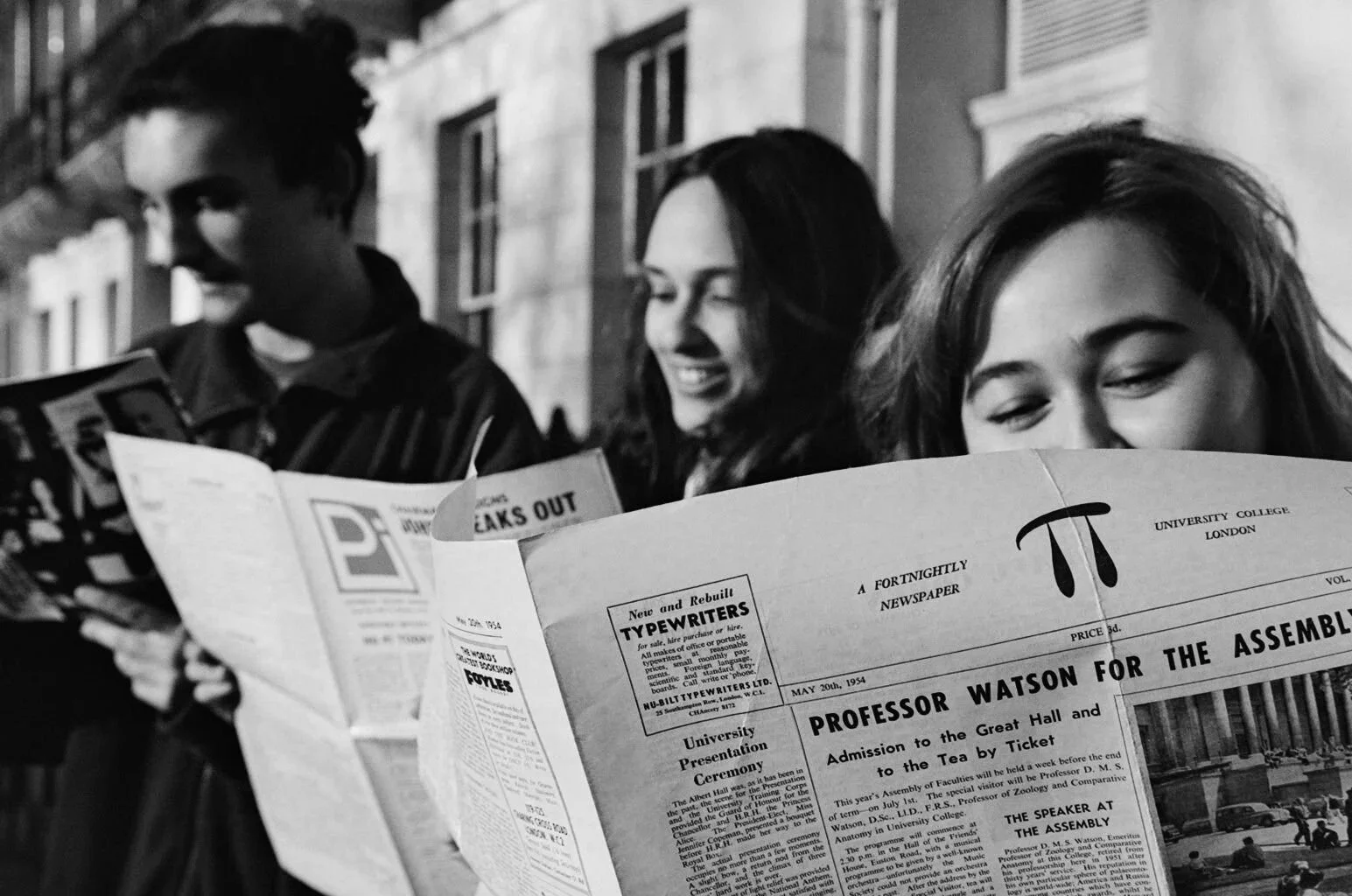
CLOSING REMARKS
The Pi Media I’ve inherited is the legacy of generations of UCL students: a bricolage of history, creativity, intellectual curiosity, and an implacable hunger to improve. I can honestly say I’m honoured to lead UCL’s premier publication, and I’m incredibly excited for what the year ahead is going to bring. Our work continues at pace across our sections, alongside a dynamic events programme bringing some of journalism’s most prolific voices to UCL. But don’t get me wrong - at our core we’re a student society, so we’re always ready for a party. From regular bar socials, to writers rooms, and Halloween parties, with an inaugural Pi Ball already being planned for 2027, we can confidently say we balance ‘serious journalism’ with the social life of a London student. One of my favourite parts of Pi is the flexibility, you can write as much or as little as you’d like, or you can just come to the socials! That said, our vast network of alumni, rigorous process of peer review, and countless opportunities to develop a range of skills render Pi more than an extracurricular: we’re a place for you to begin your career. Seems like a pretty good deal for £12 a year if you ask me.
So I would like to warmly invite you to join us, we can’t wait to see what you can do!