
Oxford Street: Built for People, Claimed by Traffic
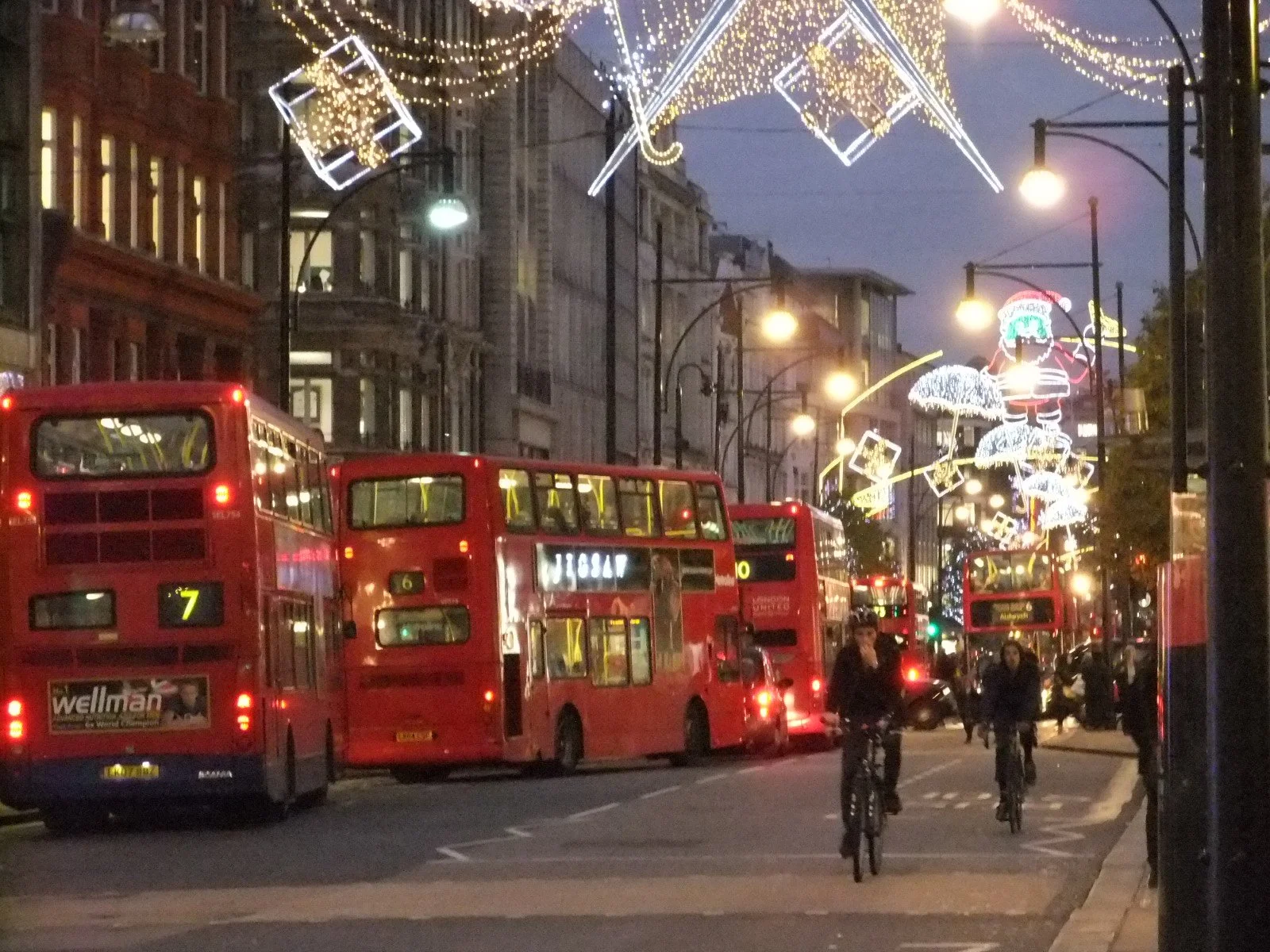
Image Credit: oatsy40 via Flickr
Between the carcasses of buildings, cities breathe life. The heart of a metropolis beats not in masses of cars gridlocked across expansive roads, but in the flurry of people along its pavements.
Oxford Street, originating from the Roman road Via Trinobantina, is the soul of London. Over centuries, the street evolved from a rural path into one of the city's busiest stretches, alive with the hum of urban life. However, as I walk through the street today, it is choking in the fumes and clamour of traffic.
Recent reports suggest that the Mayor of London has invested over £600,000 into pedestrianisation efforts across 12 high streets of the capital. September 21st, 2025 marked the first full pedestrianisation trial organised by the Greater London Authority (GLA) and Transport for London (TfL). Taking place between Orchard Street and Oxford Street, the goal was to test how the street’s infrastructure would cope with increased usage. The GLA concluded that there was “a compelling case for the phased pedestrianisation of Oxford Street to address overcrowding, air and noise pollution, and declining retail vitality.”
But the question remains: is pedestrianisation truly worthwhile in the long run?
On one hand, returning Oxford Street to pedestrians would re-establish its original purpose; a space for people rather than machines. The removal of traffic is predicted to bring about a reduction in emissions, improvement in air quality, and decrease in noise pollution.
Imagine a world where you can walk through the streets of London without the fear of being run over, and without the stench of fuel following you everywhere you go. Personally, this is a future I would welcome. Improved safety and reduced congestion in the area would eliminate the torment that is making your way through crowds of tourists towards Oxford Circus station, wedged between busy storefronts and the tide of buses and taxis. I’ve lost count of how many times I’ve clutched my friend's hand, overwhelmed, only for us to be ripped apart as I am crushed by a horde of shoppers.
Annually, Oxford Street contributes an estimated £25 billion to the UK economy. The September trial showed a 45% increase in footfall in comparison to previous weeks, with 67% of businesses reporting similar or higher sales than usual. I can already picture this new streetscape transforming into a space of cultural and economic activity.
However, such a transformation comes with a cost. It is estimated that the full pedestrianisation will require over £150 million, including the rerouting of buses, reinforcement of pavements, and provision of maintenance for heavier pedestrian use. The financial and logistical implications are substantial, while the results are predictions rather than guarantees. Furthermore, higher footfall will increase pressure on central tube routes and side streets, potentially increasing congestion rather than resolving it. If alternative routes are not properly developed, public transport services will have to be reconstructed to better support disabled residents and workers who may face increased difficulty accessing the area.
More people could also mean crowding, destruction of historical monuments, and increased demands on local businesses. This may lead to even higher costs and an increased need for jurisdiction. Herein lies the paradox: pedestrianisation, a policy intended to humanise streets, can make them less inclusive without careful planning and oversight.
But not all is lost! Successful examples of pedestrianization make me hopeful that London could follow a similar path. Pedestrianised in 1962, Copenhagen’s Strøget has become the thriving model of a walkable city centre. The project has led to improved air quality, economic growth, and an increase in public activity. Similarly, in Pontevedra, Spain, the removal of vehicles in the centre in 1999 saw a 90% decrease in road accidents and an improvement in air quality and community wellbeing.
The success of the Oxford Street pedestrianisation plan depends entirely on the city’s long-term commitment to inclusivity, sustainability, and functionality. I believe that the potential improvements outweigh the risks, an opportunity for a more breathable and human-oriented city centre. This vision of a calmer, more walkable Oxford Street is not just appealing- it is worth striving for.