
The Age of the Digicam: Why have Low-Quality Photos Made a Comeback?
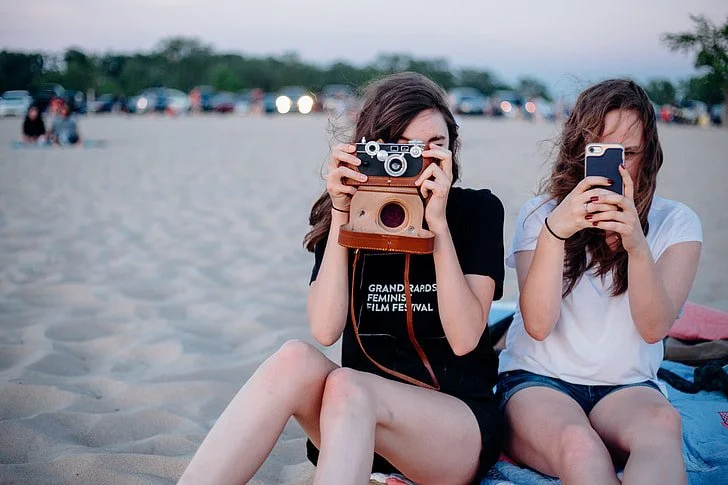
Image Credit via PickPik
If one were to look in my trusty clubbing bag, they would find the five things necessary for a night on the town: ID (obviously), phone (without a doubt), keys (debatable), lip liner, and my bright yellow Canon digicam.
I can’t pinpoint an exact moment when the latter became a staple in ‘going out’ culture, but - sure enough - it will be present. I may be locked out of my house, but rest assured, I will have the perfect photo dump on Instagram.
For many, the humble digicam has become an essential for any occasion, which poses the question: why do we go out of our way to lug these cameras around when we have perfectly functional smartphones in our back pocket?
It has long been believed that the only real improvement in newly released smartphones is camera quality. You would think - as major tech companies seem to - that providing high-resolution photos is desirable for consumers in today’s world, where one’s digital reputation is paramount, and lives are documented in photo form.
In some ways, this plays true: there are plenty of examples of dazzlingly sharp content on social media to suggest that high camera quality is the goal in this modern age. This preference is especially true in concerts, where the ability to zoom whilst retaining incredible detail makes those in the nosebleeds feel as intimate as being up at the barricade.
However, it’s clear that not everyone wants the crisp images that a smartphone can achieve, instead preferring the nostalgic, slightly blurred effect of the digicam - reminiscent of Y2K. Considering that digicams were replaced by smartphone cameras in the early 2010s, there is a subtle irony in this retro revival (though some may even see it as vengeance).
But why are people opting for these low-resolution pictures anyway? Perhaps the Y2K aesthetic is simply that powerful in shaping contemporary media, or perhaps the blurring of the picture provides a coincidental filter, making the image more attractive by removing harsh details and visible blemishes.
Optimistically, I’d like to believe that people have just gained a greater appreciation for taking photos of special occasions, understanding that a little more work goes into uploading from the digicam. The same can be said for the steady use of film, Polaroids, and disposable cameras, where the wait to develop photos and see the results makes one appreciate the process so much more than the instant processing of smartphones.
Yet that’s simply my hypothesis; there very well could be a multitude of reasons that explain this collective behaviour of choosing digicams over smartphones.
All I do know is that an iPhone 5 was placed in my hand last Saturday at a house party, and, with 2016 nostalgia flooding the algorithm, I can’t help but wonder whether the digicam will soon be superseded by the 2010s smartphone. I suppose that’s just the circle of life… or, of microtrends.