
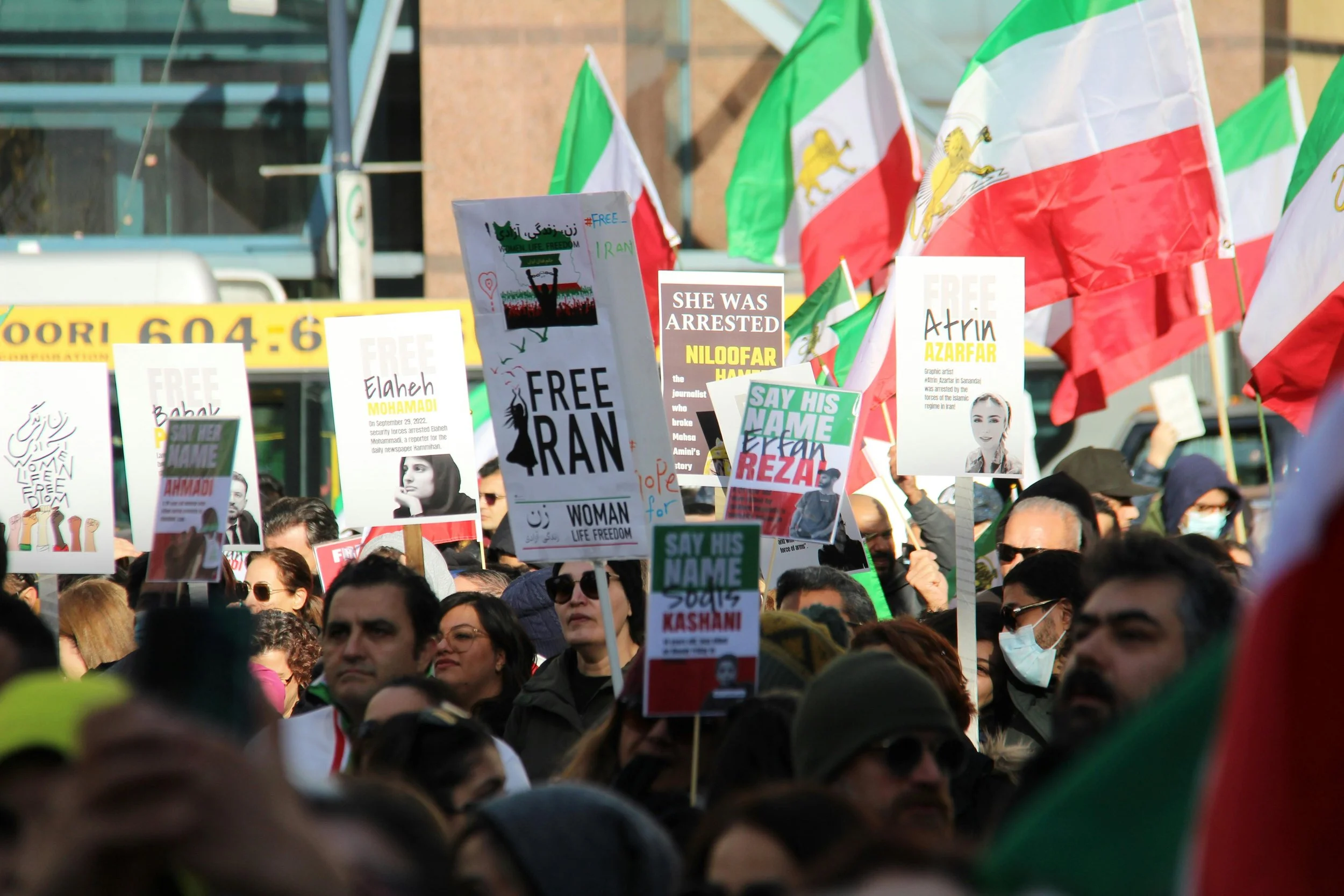
Image Author: Sima Ghaffarzadeh via Pexels
Last week, Trump offered Iranian protesters ‘help’ via Truth Media, with the absurd capitalisation and American-isms typical of the US President: “Iranian Patriots, keep protesting… help is on its way!” But can we really believe him?
Since late December 2025, violent protests have raged in Iran. Beginning as a condemnation of rising prices and cost of living, largely (and ironically) as a result of US sanctions, the protests have grown into widespread dissent of the Iranian political regime. Reports suggest that over 2000 people have been killed, and an internet blackout has kept citizens in information darkness, and from perpetual communication for over a week. But to understand current events and how they inadvertently play straight back into the hands of US imperialism, we have to go back a few decades.
In 1951, Mohammed Mossadegh was democratically elected Prime Minister of Iran. Beloved by the Iranian people, he implemented progressive social and economic policies, rejecting Western imperialism, and most importantly in our story, the nationalisation of oil.
Since 1909, Iranian oil was owned by the British Anglo-Iranian Oil Company, but Mossadegh’s election on a manifesto of nationalism saw oil brought back into the hands of the Iranian people. This wouldn’t do for the Western powers attempting to build a new economic empire of free-market neoliberalism. As we saw time and time again within this period, from Indonesia to Cuba, the CIA and MI6 collaborated in ‘Operation Ajax’, supporting a coup to replace Mossadegh with Iran’s last Shah, Mohammad Reza Pahlavi. The Iranian state maintained 50% of oil ownership, and the remainder was subsequently divided between Britain, the US, the Dutch, and the French. Western imperialism wins again.
This saw a new period for Iran, one marked by economic successes, from industrial growth to significant public health advancements. But alongside this was immense and growing wealth inequality, typical of neoliberal capitalist societies such as our own. Amid censorship, suppression of political dissent, and unfettered reliance on the West, the rumblings of political dissatisfaction culminated in the 1979 Islamic revolution. The Islamic Republic of Iran was thus born, and with it, subsequent years of deeply oppressive, conservative rule and political instability.
And so we arrive at the present, and the question remains: Is the US really here to help?
This brief overview of Iranian history points to a resounding ‘no’. We have seen this too many times before to think otherwise. In fact, this is the perfect opportunity for the US to regain control of Iranian oil reserves and simultaneously further their imperialism. Historical examples of shock tactics have shown that such immense political and economic instability is prime time for Western interventionism. They will say it’s a war against nuclear weaponry, as in this case, or against drug cartels, as in Venezuela, or for strategic military locations, as in Greenland, but that’s never the whole story. It’s about extractivism, imperialism and power.
This is not to argue the legitimacy of the current Iranian or Venezuelan leadership; both are undemocratic states with unelected dictators. But the US has little interest in maintaining democracy; it never has. The Cold War era of anti-communist interventionism in democratic nations in the Global South is a testament to that. Abducting foreign leaders or facilitating a coup d’état doesn’t bring rainbows and sunshine for state citizens. Deconstructing political and economic hierarchies and putting the power back into the hands of the people is likely a better place to start.
When will we learn that ‘help’ from the US is really just Western elites ‘helping themselves’? Specifically, helping themselves to natural resources, to markets and political powers. It is a story as old as the birth of imperialism. Trump is just continuing this decades-long legacy of US colonial rampage – the difference is, he isn’t being so quiet about it.