
Trump to Cut India Tariffs to 18% After Modi Agrees to Halt Russian Oil Purchases
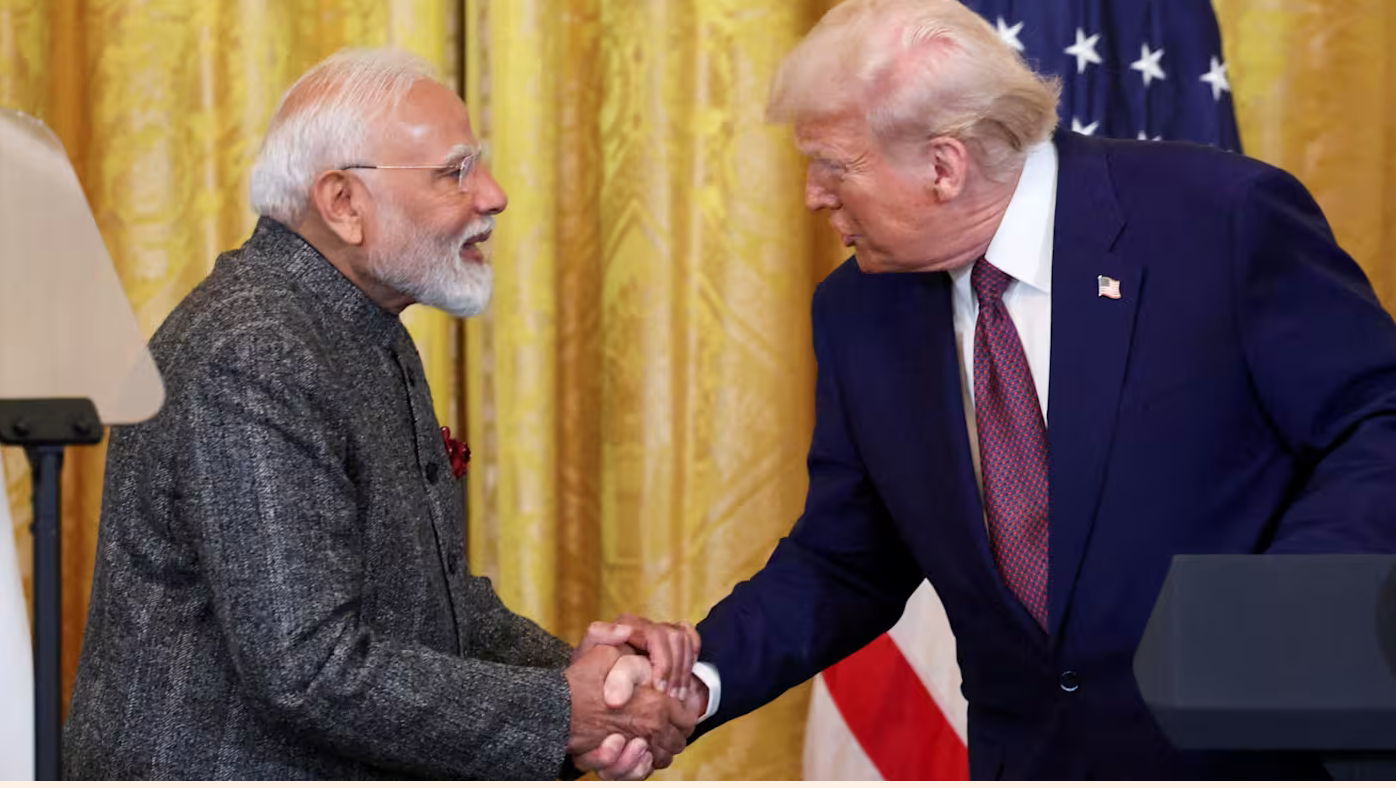
Image Credit: Financial Times via REUTERS
Indian market sentiment stabilised following an announcement by U.S. President Donald Trump to roll back punitive tariffs on Indian goods, a move linked to a broader trade agreement between the two countries. The decision, which includes the removal of an additional 25% tariff imposed over India’s purchases of Russian oil, has boosted investor confidence, according to Indian officials and market participants, even as key details of the deal remain undisclosed.
“The announcement of the trade deal reduced a great deal of global uncertainty,” India’s Economic Affairs Secretary Anuradha Thakur said in New Delhi. Market movements following the announcement appeared to support that assessment. The rupee strengthened 1.36% to 90.265 per dollar after Trump’s message, marking its largest one-day gain since December 2018.
Lower U.S. tariffs are expected to reduce prices for American consumers, thereby supporting higher Indian export volumes and improved competitiveness. Analysts say the move could also help integrate more Indian firms into U.S. supply chains. Economists note that the gains from tariff reductions are likely to outweigh any loss of competitiveness caused by the recent appreciation of the rupee.
However, uncertainty persists. Despite statements from Trump and social media posts by Indian Prime Minister Narendra Modi, neither side has released detailed quantitative terms of the agreement. Questions also remain over India’s future purchases of Russian oil, an issue closely tied to negotiations. Indian refiners have not been instructed to halt imports, while the Kremlin said it had received no indication that India planned to do so. Ratings agency Moody’s has warned that an abrupt end to Russian oil imports could disrupt India’s economic growth in the short term and fuel inflation by tightening energy supplies.
On the U.S. side, Agriculture Secretary Brooke Rollins said the deal would increase American farm exports to India, without specifying product categories. India has historically excluded agricultural and dairy sectors from trade agreements, citing the need to protect domestic jobs and infant industries, particularly among small-scale and subsistence farmers.