
Why Do Some Wars Capture the World’s Attention While Others Are Forgotten?
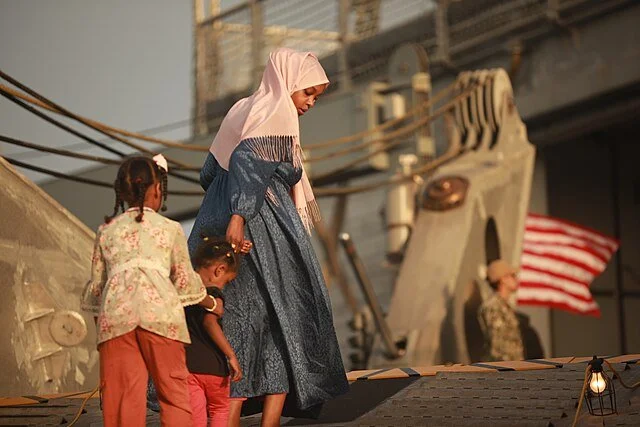
Image Credit: AFRICOM Public Affairs Office via Wikimedia
A child dying in Khartoum suffers as much as a child in Gaza or Kharkiv. Yet for much of the world, the suffering of children in Sudan goes largely unnoticed, as the country’s war has largely faded from view.
Since fighting between the Sudanese Armed Forces and the Rapid Support Forces erupted in April 2023, UN agencies say more than 12.4 million people have been forced from their homes, making Sudan one of the largest displacement crises on earth. Independent monitors and humanitarian analyses have put the death toll at around 150,000, though some modelling studies suggest the overall mortality may be much higher due to indirect deaths from famine, disease and disrupted health services.
Despite the scale of this tragedy, media-monitoring data indicates that Sudan accounted for less than one per cent of global conflict reporting in 2024, while other crises such as the Israel–Palestine conflict dominated headlines. Major international outlets published roughly 32,000 articles on Israel–Palestine compared with 3,400 on Sudan.
Experts say this disparity is no accident; Dr. Neven Andjelić, an International Relations scholar and former journalist at Regent’s University London explains the issue is deeply rooted in long-standing structural inequalities in global media flows. “The world has been dominated by the West for the last five centuries. Global media—even non-Western media—position themselves in relation to how the West reports. If Western outlets don’t prioritise Sudan, the rest of the world rarely sees it either.”
Yemen presents a similar story. After more than a decade of war, UN agencies estimate hundreds of thousands of conflict-related deaths, alongside chronic famine affecting millions. Yet sustained reporting from major news outlets is limited.
Geopolitical interests, Andjelić argues, play a decisive role in what becomes ‘news’: “Middle Eastern conflicts attract attention because the West is directly or indirectly implicated — whether through political support, military alliances or strategic interests. In contrast, Yemen or Sudan don’t align as clearly with Western geopolitical narratives, so they fall off the radar.”
The consequences are stark. Wars that receive little coverage, like Sudan’s, face reduced humanitarian funding, weakened public pressure and atrocities that unfold with minimal scrutiny. The Global Peace Index 2025 highlights the scale of the problem: some of the deadliest conflicts are the least reported. These crises remain invisible largely because they do not fit the narratives that drive global media attention – leaving millions to suffer in silence.
Even in one of the world’s most globalised cities, awareness of distant conflicts is often limited. On a busy afternoon in central London, many students said they knew almost nothing about Sudan’s war. One third-year UCL student summed up a common response: “I hadn’t really heard of the war in Sudan. I mainly hear about Palestine and Ukraine. Honestly? They’re bigger, more ‘important’ countries, and people may find it more interesting to talk about them.”
The gap between human suffering and media attention shows why all major conflicts, not just the ones dominating the headlines, demand attention. Wars like the one in Sudan may receive little coverage, but the human cost is no less real. Staying informed ensures aid reaches those who need it, and that preventable suffering does not go unnoticed.