
From Streets to Ballots: Bangladesh’s Youth Uprising Faces the Test of Democracy
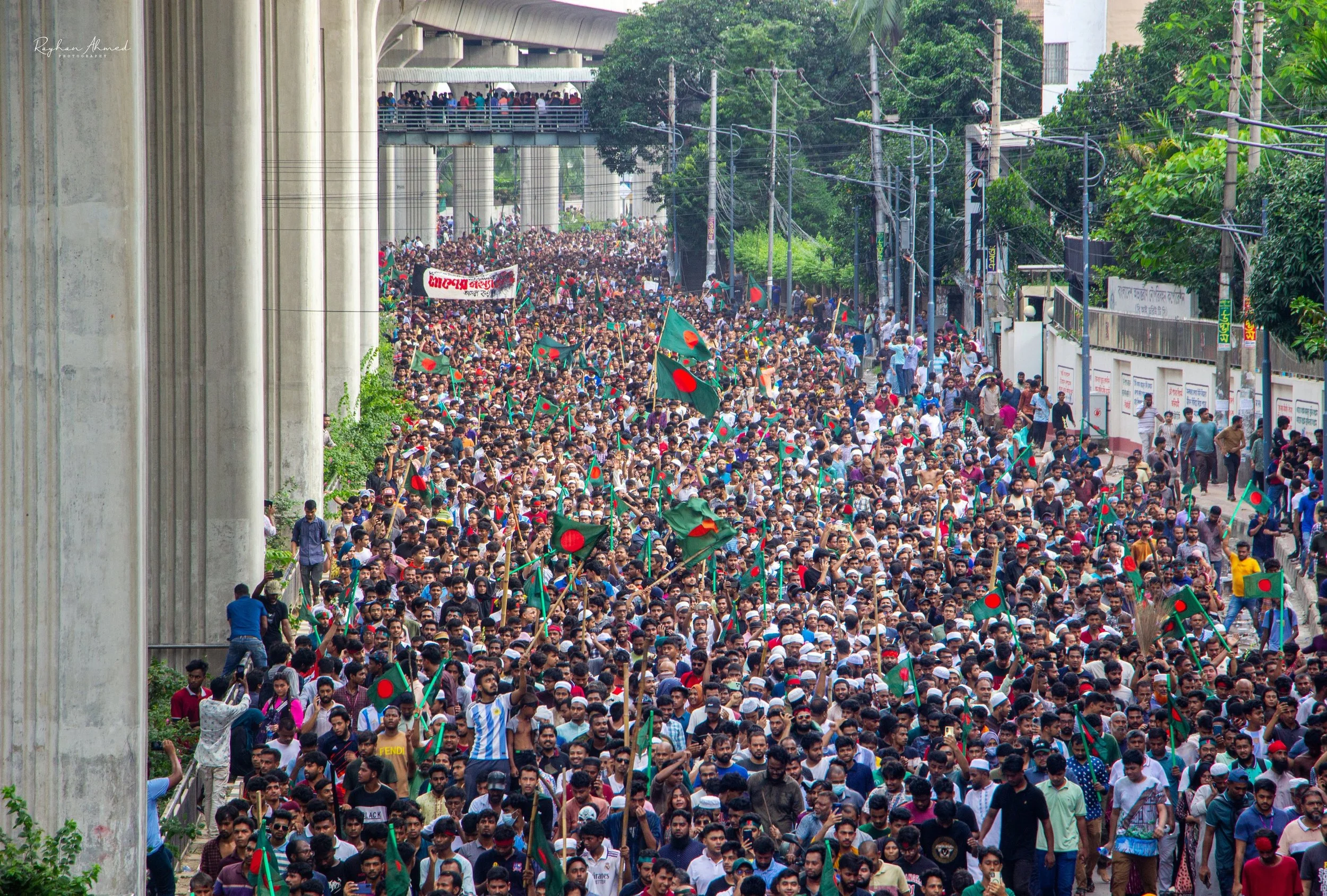
Image via WikiCommons
A child of Bangladesh’s political history could be forgiven for thinking that protests change nothing. For decades, demonstrations flared, were suppressed, and life returned to a familiar pattern of entrenched power and disillusioned citizens. But in the summer of 2024, something different happened. The streets did not fall silent. The young people who filled them did not retreat. And a government that had seemed immovable for 15 years finally gave way.
Now, less than two years later, those same young people stand in polling queues instead of protest lines. The slogans that once covered campus walls are being replaced by campaign posters. Bangladesh’s youth — who helped bring down a prime minister through mass mobilisation — are facing a new and unfamiliar test: whether they can turn the energy of rebellion into the discipline of democracy.
Across Dhaka University, graffiti still lingers like a memory that refuses to fade. Students gather in small knots under trees and stairwells, debating candidates with the same intensity they once debated protest tactics. But the conversations have changed. They are no longer asking how to protest. They are asking who to vote for.
For many of them, this is the first election that feels real.
Under former Prime Minister Sheikh Hasina’s rule, elections were frequently criticised as uncompetitive and marred by intimidation. For many Bangladeshis now in their late teens and twenties, the ballot box felt distant — a ritual with little meaning. Politics seemed predetermined, voices unheard.
That changed during what came to be known as the Monsoon Uprising of July–August 2024. What began as anger over job quotas and inequality swelled into a broader revolt against political stagnation and authoritarian governance. Students, young workers and first-time protesters poured into the streets in numbers that stunned the establishment. The movement was chaotic, emotional and relentless — and it worked.
Hasina resigned. An interim government took charge. And for the first time in years, democracy felt like a tangible possibility rather than an abstract ideal.
As the country returns to the polls, young voters now make up nearly half of the electorate. Political parties, long focused on older voting blocs, have had to shift their messaging toward employment, transparency, education and freedom of expression — issues young people have long demanded.
Yet, hope is threaded with caution.
Many of the political actors now competing for power are familiar faces. Established parties dominate the race, and even new groups born from the student movement have had to align with older forces to gain influence. For a generation that dreamed of a clean break from the past, this reality is uncomfortable. The system they challenged is still, in many ways, the system they must now navigate.
The interim government, led by Nobel Peace Prize laureate Muhammad Yunus, has stressed that this election is only one step in a longer democratic journey. Young voters are watching not just who wins, but how the process unfolds — aware of how quickly hope can erode.
In conversations across campuses and neighbourhood tea stalls, there is a quiet understanding that this election is a test not only for politicians, but for themselves. Protesting is dramatic. Voting is patient. One is an act of defiance; the other is an act of trust.
They are voting because they know what it costs not to.
Whether this moment marks the start of lasting democratic renewal or a brief surge of youthful optimism remains uncertain. But Bangladesh’s political story has already shifted in one crucial way: young people are no longer on the margins of it.
They are at its centre — not shouting from the streets, but speaking through the ballot box.