
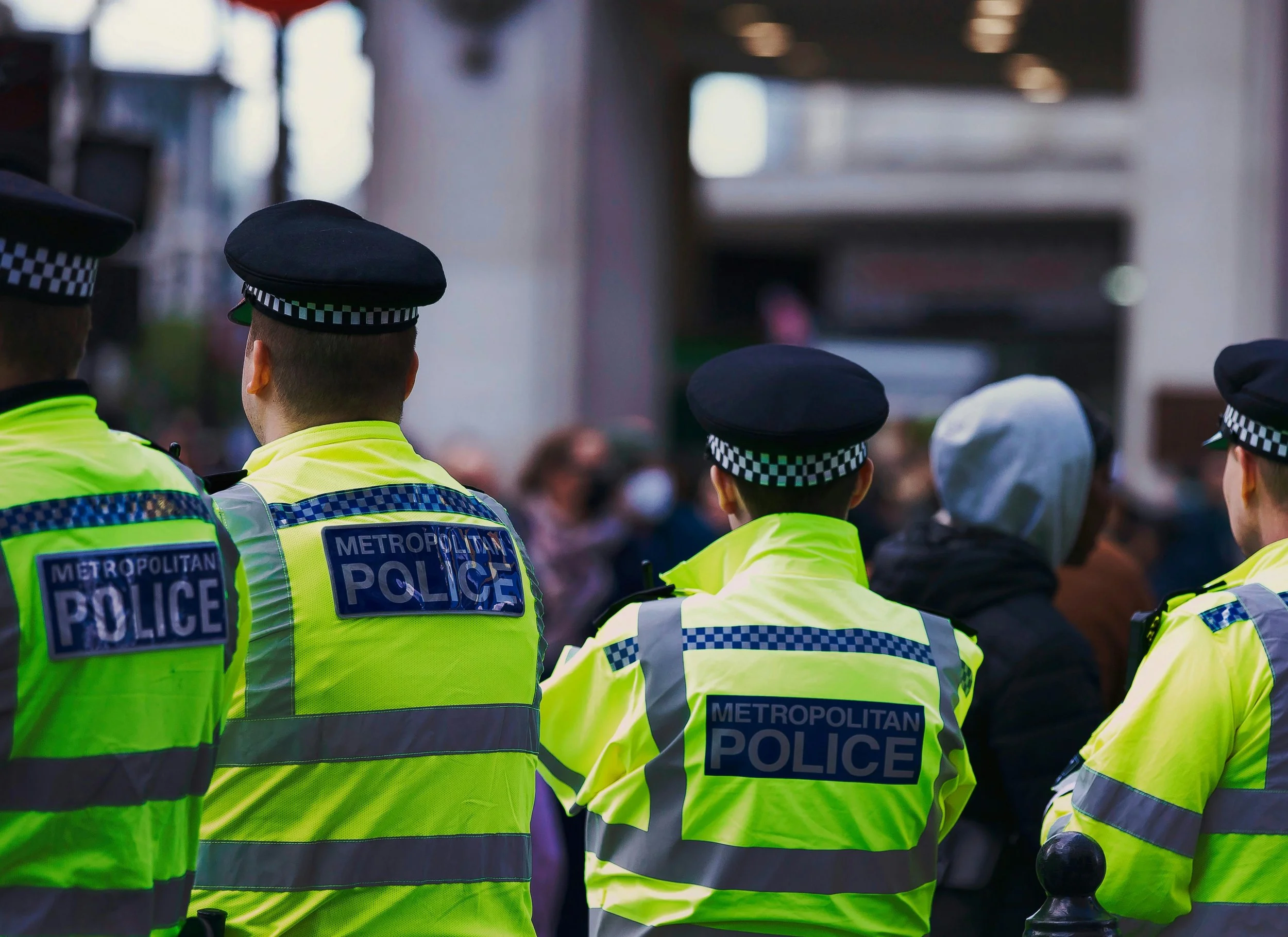
Image Credit: Bob Jenkin via Pexels
I grew up in East London, a part of the capital that exists in the public imagination as less a place than a warning. It is invoked by politicians when they want to talk about gangs, deployed by newspapers as shorthand for urban decay, and dramatised on television as somewhere violence is always around the corner. Together, these images create the impression of a city sliding steadily towards chaos, reinforced daily by headlines and political speeches. However, this fearmongering is undermined by last year’s crime report, which recorded the lowest number of homicides in more than a decade.
The gap between how London is discussed and how it is actually experienced matters: fearmongering can shape a nation, from the way we vote to the way we police and as our attitudes begin to harden, national divides become more entrenched. When a city is repeatedly portrayed as dangerous, anxiety begins to feel like common sense, suspicion like prudence, and heavy-handed responses like necessity. This is familiar to anyone who lives in or near an area routinely described as “rough” or labelled a “ghetto”. A single stabbing can become a city-wide spectacle within minutes, while the millions of ordinary, peaceful interactions that make up daily life pass largely unseen. Over time, this imbalance distorts our sense of reality, making rare, albeit horrific, events feel familiar.
This distortion has been politically useful. Crime is a compelling issue, and London has increasingly been cast as a symbol of the loosening grip of law and order, a shorthand for everything that is supposedly going wrong in the country. It is far easier to campaign against a capital in chaos than to engage seriously with housing shortages or stagnant wages. In this climate, the image of a dangerous London persists not because it is accurate, but because it serves a purpose.
Increasingly, this narrative has been personally levelled against Sadiq Khan. While scrutiny of crime policy is both legitimate and necessary, much of the rhetoric aimed at him drifts beyond substantive debate: figures and online groups aligned with the MAGA movement present London as unsafe because of who governs it. These attacks are shamelessly based on racialised and religious cues, using references to Khan's identity to imply a deeper cultural failure. Under the familiar language of “law and order”, Islamophobia is allowed to surface discretely. London itself becomes suspect, and its diversity is treated as a liability rather than a defining urban feature. In falsifying London’s safety as a moral failure of a single figure, this narrative crowds out serious discussion of inequality, housing and social investment in favour of a simpler politics of blame.
When fear begins to outweigh evidence, policy inevitably suffers. Policing is pushed towards more visible and punitive tactics designed to reassure a frightened public, despite the fact that serious violence is concentrated among a small number of people and places. None of this is to suggest that falling homicide rates mean London is free from violence; every killing remains a tragedy but there is a difference between acknowledging faults and insisting that the city is on the brink of collapse. London remains one of the safest large cities in the world, and refusing to recognise that distorts the debate. There is something corrosive about a city taught to believe the worst about itself. When we are convinced our streets are dangerous, we withdraw from public life and begin to see difference as a threat rather than one of the city’s defining strengths.
If London is to keep getting safer, honesty has to be the starting point. That means recognising progress as well as confronting what remains unresolved, resisting sensationalism, and grounding public debate in evidence over anxiety. The numbers tell a reassuring story, and it is time we allowed that story to shape the way we talk about the city.