
“I’m Going to Stop Wars”: Trump and the Gap in Ideology
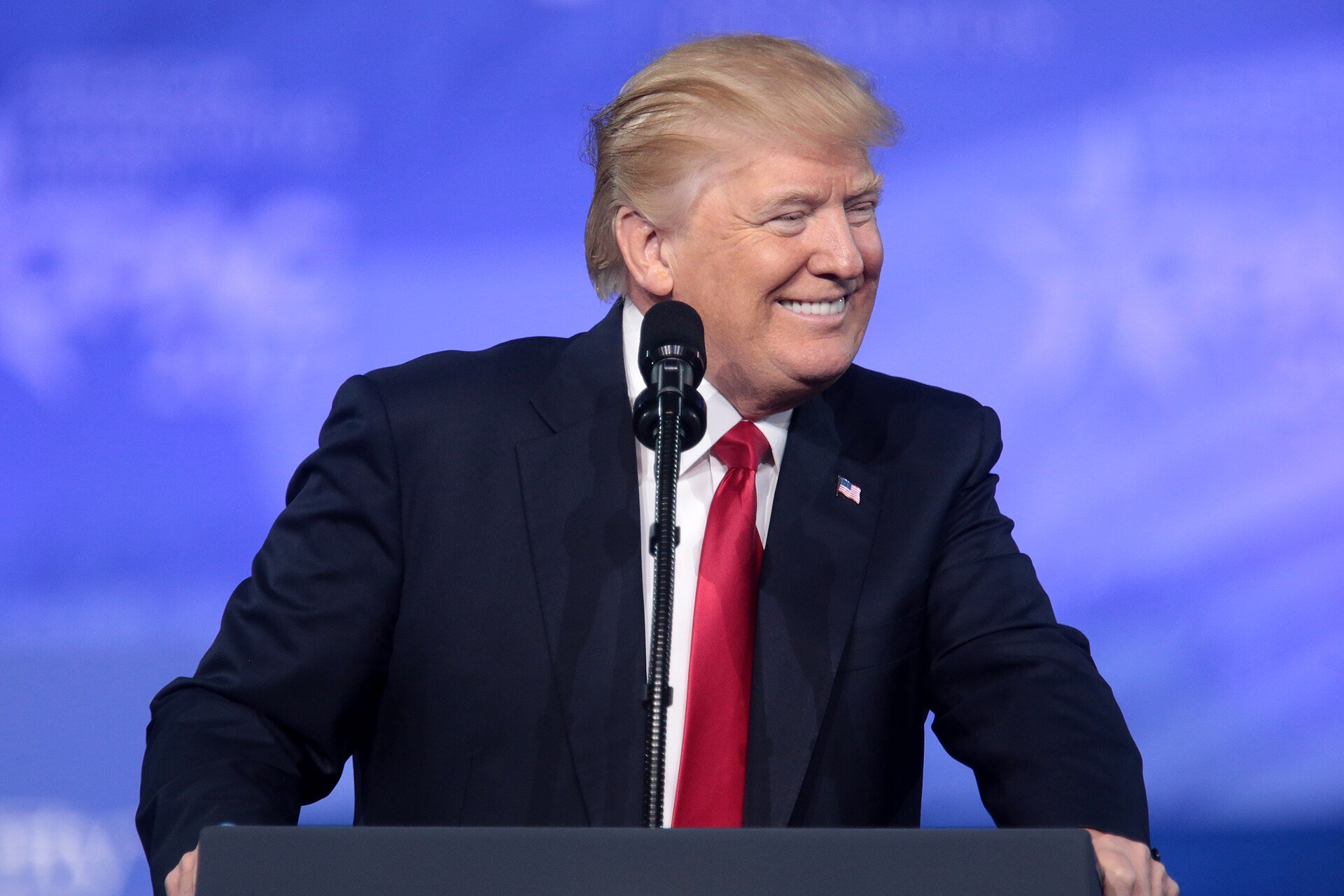
Image Credit: Gage Skidmore via Wikimedia Commons
“I’m not going to start a war, I’m going to stop the wars,” Trump said during his re-election speech, reinforcing many of the anti-war and anti-interventionalist sentiments that drove his 2016 campaign and first term.
Aaron Bastani and Glenn Greenwald discussed this in a podcast episode for Novara Media, where Greenwald framed Trump’s early isolationism as a potential escape from America’s bipartisan “prison” of endless wars.
Trump’s anti-interventionalist stance in 2016 seemed like a way out of that echo-chamber, though Greenwald admits he was never “disillusioned about the fact that Donald Trump is a very unpredictable person and isn’t really deeply rooted in any ideology” (7:03-7:32). At the time, Trump seemed like “a risk we were willing to take”, and he largely delivered: aside from inherited conflicts, he was one of the first presidents in decades not to launch or finance a new war.
This stood in stark contrast to predecessors; G.W. Bush’s Afghanistan (2001) and Iraq (2003) invasions, as well as Obama’s expanded drone wars and troop presence in Afghanistan, set a precedent of prolonged military engagement which Trump largely broke from. Trump branded himself ‘the anti-war president’, even condemning the Iraq war, saying “we should have never been in Iraq. I’ve said that from day one.” CNN later uncovered this as false; he had previously expressed that a war with Iraq was necessary in his book, The America We Deserve.
When I began writing this article, my claims against Trump's self-proclaimed isolationism cited meddling in Venezuela as well as his discussions of annexing Greenland. On Saturday morning, however, the prophecy I was attempting to argue fulfilled itself. In an eight minute video Trump posted to Truth Social, he stated that the US military had begun “major combat operations in Iran” with the objective to eliminate “imminent threats from the Iranian regime”.
Later, Trump wrote, “Khamenei, one of the most evil people in history, is dead”. (Perhaps the only thing Trump does hold true to is his love for announcing political bombshells via his social media platform, Truth Social.)
Named “Operation Epic Fury”, the US did not act alone in the strike on Saturday - Israel launched initial airstrikes on Iranian nuclear sites which were followed by the US strikes on Tehran that killed the Supreme Leader.
For the self-proclaimed “president of peace”, Trump has veered sharply from the anti-interventionalist agenda that propelled his 2024 election, which echoed promises from his 2016 campaign to end wars.
Greenwald’s analysis lingers: could Trump’s unpredictability and inconsistency stem from a profound lack of ideological anchor? Greenwald proposes one difference from his first term: pre-second-term felony pressures made Trump vulnerable to the Silicon Valley tech bosses, who poured a whopping $394.1 million into his campaign, as well as the “military industrial complex types” looking over his shoulder. The combination of this influence, along with Trump’s immense respect for the wealthy white men of America, reveals a glaring fact: his decisions don’t bend to principles, but to the rich patrons whose respect he craves.
Discussing recent events, Negar Mortazavi, Iranian American journalist and political analyst, says that the war was a “war of choice” launched by the US with a “push from Israel”.
The conclusion emerges that Trump will mangle foreign policy and deploy America’s military for the sake of favour, reminding us of the many warnings given by Kamala Harris throughout her campaign. Regarding Putin’s aim to not only claim Ukraine but the rest of Europe as well, she urged Trump to tell affected Americans “how quickly [he] would give up for the sake of favour” with a dictator “who would eat [him] for lunch”. Her words feel like an imminent “I told you so” in light of last Saturday’s events, as well as those of the last few months.
The reality is that, with no coherent ideology, Trump’s foreign policy decisions are tied to whatever wealth and corruption eats at his table in the White House.