
The Pi Perspective: Week 7
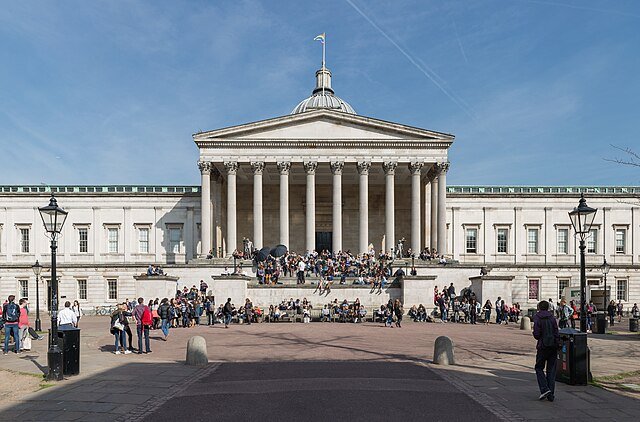
Image Credits: Wikimedia Commons
At Pi Online, we are a massive group of editors who work together to curate content for the website. But who are we really? What do we like, dislike, observe, think?
Each week, we’re pulling back the curtain with a new editorial spotlighting what’s been on our minds.
Editors-in-Chief
Dearest gentle readers, this author regrets to inform you that the world – and her disposition – are in a rather gloomy state.
What began as an indulgent weekend spent binging the second half of Bridgerton season 4 (wherein, in my humble opinion, #Benophie has decisively unseated #Kanthony), quickly unravelled into one of unrest. On Saturday morning, thousands of international students from the Middle East, myself included, woke up to the news that our homes are under missile attack.
It is a peculiar experience to trade ballroom drama for breaking news. To sit in Bloomsbury while your family shelters far away. At moments such as these, society gossip feels somewhat beside the point.
At such a time, it would be remiss of me not to extend my thoughts and prayers to all those affected, and to remind the rest of our student community at UCL to check in on their friends for whom home has gone from a postcode to a headline.
With any luck, this will soon pass, and I will be able to return to debating fictional viscounts with my mother without the steady murmur of the BBC in the background.
News
Thursday’s Gorton and Denton by-election resulted in a political shake-up greater than anticipated. It was expected to be a three-horse race between Green, Labour and Reform, yet the Green Party’s Hannah Spencer received a 40.7% share of the vote, while Reform and Labour received a measly 28.7% and 25.4% respectively. Green’s huge victory represents the changing public opinion of the party, with rising support inspired by Zack Polanski and by the growing discontent with Labour. It shows the Green Party to be a real political force in the UK, and represents hope for the political left in making headway against Reform.
It’s worth considering also the results for the Conservative Party, who weren’t even considered as one of the top contenders for this by-election. On Thursday they received only 1.9% of the vote, just 0.1% ahead of the Liberal Democrats. While we are all aware of how Reform has usurped the Tories’ share of right-wing support, it is striking to see in numbers just how irrelevant the former leading political party in the UK has become.
This former-Labour seat was contentious for Labour earlier in the year, with Kier Starmer blocking Andy Burnham from standing in the by-election. It’s natural to consider the counterfactual: if Andy Burnham had stood for Labour, would Labour have won?
Features
I love discovering new music. Specifically, I love discovering a new genre and feeling like I’ve suddenly tripled the amount of new music I have to listen to.
Recently while perusing a subreddit dedicated to Anatolian funk, I came across a comment from a fellow music lover warning of the prevalence of AI songs across both Spotify and Apple Music. This triggered a somewhat existential crisis for me. I don’t feel even a shred of confidence in my ability to spot AI music. Almost 97% of respondents from an Ipsos survey agree. This is incredibly worrying for those of us who really value diversity, creativity and personality in our music.
And it’s not just music that’s affected, it's the ads we see on the tube, the AI overview that pops up with every Google search, AI generated Tik Toks etc. There is an almost unnoticeable creep of AI entangling itself in each aspect of our everyday lives, often without our consent.
Undoubtedly, there is something to be said about the incredibly useful applications of AI in healthcare education and science, but what’s worrying is how it is taking over our culture. When AI quietly fills that space, we lose much more than authenticity — we lose meaning. For now, perhaps the best thing we can do is to pay attention. Seek out the human and refuse to let convenience lead our lives.
Opinion
In my mind, one of the most devastating consequences of the polycrisis that is the 21st century is the quiet relegation of climate change to the political periphery. I was in secondary school when Greta Thunberg began her daily strikes outside of the Swedish Parliament, and for a moment it felt as if a consensus could emerge - that we were all finally waking up to the realisation that global warming is an existential threat. That moment didn’t last long. Even as someone who follows the news closely, I rarely see any mention of what remains one of the gravest challenges facing us as a species, and if I do it’s normally a byline in an article covering the current occupant of the Oval Office.
With the rise of AI, and the looming threat of water scarcity, it is even more imperative that our attention remains fixed on caring for our planet. Climate change is not an abstraction, nor is it self-correcting - however convenient that assumption may be for those in power.
Lifestyle and Culture
Like many of you (I hope), I went into Reading Week with the best intentions. A very ambitious pile of books sat on my desk. We did not interact.
Instead, I caught up on TV: Bridgerton, Love Is Blind, Queer Eye – a wholesome line-up. Tea: brewed, kitten: snoozing, brain: off. Then romance gave way to chaos - Reality Check: Inside America’s Next Top Model.
If you grew up on ANTM, you’ll know its chokehold. Re-watching as an adult hits differently. The show’s “tough love” approach feels less motivational when you’re no longer 13 and dazzled by makeovers. At its centre was Tyra Banks - equal parts visionary and unhinged. She gave us smizing. She gave us high-fashion melodrama. She also gave us fat-shaming, black-facing, and head-shaving.
I pressed play hoping for reflection; maybe a slightly humbled Tyra admitting that, yes, perhaps bringing 18 year olds to tears on national TV wasn’t the pinnacle of mentorship. Instead, her apology - if we can even call it that - was giving Toxic Gossip Train energy: plenty of “it was a different time”, a touch of self-congratulation, and even hints at a potential reboot. Accountability did not, it seems, get a photo this week.
It’s nostalgic, jaw-dropping, occasionally surreal – but I finished it feeling weirdly disappointed. Not because the documentary wasn’t entertaining, but because I wanted a real reckoning. A sincere “we got it wrong”. We were rooting for you, Miss Tyra! We were all rooting for you!
Science and Technology
Spring is coming, although it doesn’t quite feel like it yet. The coats are still on, the sky is still undecided, and the rain falls more often than not. And yet, spring is coming.
Plants do not flower because it feels warm. They flower because they can measure light.
Many species rely on photoperiodism: the ability to detect changes in day length. As the Earth tilts gradually back toward the sun, daylight stretches minute by minute. Specialised light receptors in plant leaves register this shift, triggering hormonal signals that travel to buds and shoots. Even while temperatures remain low, cells are dividing and growth is already underway.
Some plants also require vernalisation: a period of winter cold that effectively ‘unlocks’ their ability to flower. Without that exposure to cold, spring blooming wouldn’t happen properly. In other words, winter isn’t just something to endure, it’s part of the process.
That feels like a hopeful thing to remember this time of year. What looks dormant is often preparing and what feels static may simply be responding to cues we can’t yet see.
Spring doesn’t arrive overnight. It emerges through quiet biological calculations. Light measured, signals sent, growth initiated beneath the surface. And whether or not it feels like it today, those processes have already begun.
Sports
Pi perspective : The north London derby was painful for Tottenham, as a 4-1 defeat commenced Igor Tudor’s reign. But, the most surprising moment for me wasn’t the result, it was when Dele Alli walked onto the pitch as a guest of honour.
Not long ago, Dele was Tottenham’s future. He was decisive, fearless, and expected to reach great heights. But now, a series of on and off the pitch problems has resulted in him being a free agent at just 29. He now represents something else: how quickly football moves on and how brutal a sport it can be.
Football has a habit of hyping up young players, setting expectations that are too high, criticising them in the media, all while forgetting their age and the fact that they are people too. This reoccurring cycle reflects a system that doesn’t give players a chance to last. Until football learns to protect young players from their own hype, there will be hundreds of players just like Dele Alli, who become remembered for what they were, rather than what they ever became.