
The Shadows That Continue to Haunt the World of Figure Skating
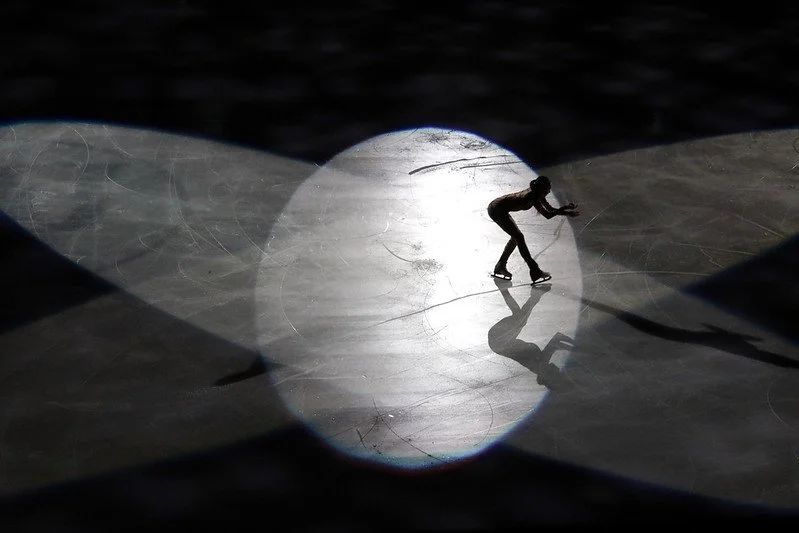
Image Credit: Flickr
Compared with past Olympic figure skating, this year’s edition was the more joyous of the two. Though, that is a low bar, given that the Beijing Games were overshadowed by the doping scandal involving 15-year-old Kamila Valieva. Whereas doping cases usually provoke vitriol towards the violator, Beijing forced the sporting world to wrestle with the doping of a child: a perceived violator, instead of the violated. Against that backdrop, Milan-Cortina had little to perform to feel like progress. Yet there were genuine moments of delight: Riku Miura and Ryuichi Kihara translating their two world titles into Olympic gold in pairs, and Alysa Liu, having retired at sixteen in 2022, now standing atop the Olympic podium after rediscovering her love for skating. As for the other disciplines, remnants of the past overshadowed much of what unfolded on the ice.
The ghost of Beijing reared its head almost immediately when Eteri Tutberidze, the coach of Valieva and other Russian medalists from the past decade, sat in the kiss & cry, this time alongside a male pupil, Nika Egadze. Legally, Tutberidze had every right to be there, having faced no disciplinary action from WADA over the Valieva case. Emotionally, however, Tutberidze’s presence was uncomfortable, even for WADA president Witold Banka. Seeing Tutberidze in Milan, whilst Valieva was ineligible to meet qualification requirements given her four-year ban, raised the question of whether the sport had punished an individual rather than the system responsible for her. That would be one thing, but Adeliia Petrosian’s involvement in the women’s event, finishing sixth as an Individual Neutral Athlete alongside injury struggles, made clear that the fallout from Beijing remains largely unaddressed. Tutberidze’s methods, which, yes, have produced a series of champions, but brought premature retirements for all of them, show little sign of disappearing. The likelihood of seeing another of Tutberidze’s teenage charges in France in 2030 remains high.
If there were hopes that Tutberidze’s presence would be the only skeleton to emerge from figure skating’s closet, they were soon dispelled. Despite a mistake in their free skate, the French team of Guillaume Cizeron and Laurence Fournier Beaudry won gold over Americans Madison Chock and Evan Bates in the ice dance event. What began as disappointment morphed into full-blown controversy when it was revealed that Jézabel Dabouis, a French judge, had scored Chock and Bates well below the marks awarded by her fellow panelists. What might have been laughed off as sour grapes in another sport, only reawakened uncomfortable moments from figure skating’s past. After all, the uncovering of vote-swapping clouded the figure skating at the 2002 Salt Lake Olympics, and the outcome of the ladies’ singles event in Sochi, in which Adelina Sotnikova triumphed on home ice, remains riddled with accusations of vote rigging. In many ways, the conversation surrounding Cizeron and Fournier Beaudry’s victory is less about the duo themselves, although their partnership is itself born of controversy, but rather a reminder of the imperfections of a scoring system that can be exploited within judged sport.
Imperfection defined the men’s singles too, this time in performance rather than scoring, with several leading contenders suffering falls, including pre-tournament favourite Ilia Malinin. Ultimately, it was Mikhail Shaidorov who claimed the title, historic for two reasons: it marked Kazakhstan’s first figure skating Olympic gold and evoked another part of the sport’s past — the memory of Denis Ten. There is a propensity to over-eulogise the fallen, especially when their passing is premature or at the hands of violence, as in Ten’s case. Yet, there is no hagiography to be found in the remembrance of Ten, a skater beloved by fellow competitors, who became the first Kazakhstani skater to medal on the Olympic stage by winning bronze in 2014. It would be simplistic to suggest that without Ten there would be no Shaidorov, but the influence of the former upon the latter is evident — Shaidorov himself acknowledged the doors Ten opened for skaters from Kazakhstan.
In remembering this year’s men’s singles, it would be best not to dwell on the parallels between Malinin’s falls and those of Nathan Chen in Pyeongchang in 2018 — though one hopes Malinin can replicate Chen’s Beijing redemption in four years time — but as a testament to Ten. An event where his legacy stepped out of the shadows and took its place at the forefront.