
Inked Infatuation: Are Couples' Tattoos Tokens of Undying Love or Permanent Mistakes?
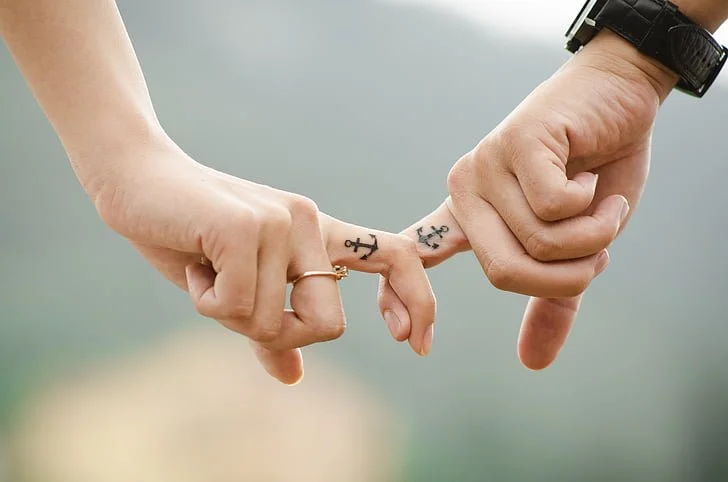
Image via PickPik
Last week, during Justin Bieber’s particularly ‘stripped-back’ (pun very much intended) Grammys performance, the pop star revealed a new back tattoo that many believe depicts his wife, Hailey Bieber. As is now customary with any development in a celebrity’s personal life - or bodily autonomy - the internet was quick to respond with fervour. The new ink was dissected, theorised over, and projected upon. Some commentators framed it as a desperate attempt at reaffirming affection; others defaulted to a familiar narrative of female coercion, suggesting the supermodel had somehow compelled her husband to commit. A quieter, less cynical group simply found it romantic. Meanwhile, a separate (possibly more superstitious) camp insisted the portrait was not Hailey at all, but a likeness of Jesus Christ.
Long-time fans were quick to point out the irony. Veteran Beliebers and devotees to the Jelena era recall a time when Bieber bore a similar tattoo inspired by his former partner, Selena Gomez - a portrait on his left wrist that was later altered following their highly publicised breakup. Given that Bieber has already experienced regret over a relationship-inspired tattoo, it’s difficult to muster much sympathy at the prospect of history repeating itself.
JB is far from the first celebrity to contend with the permanence of romantic ink. His situation inevitably evokes nostalgia for Johnny Depp’s infamous ‘Winona Forever’ tattoo, dedicated to then-girlfriend Winona Ryder, and later amended to read ‘Wino Forever’ - a wry acknowledgement that whilst love may falter, the pleasure of the grape and the grain often endures.
Once associated primarily with sailors, subcultures, and ritualistic traditions, tattoos have become a mainstream form of self-expression, no more radical than a piercing or a change in hair colour. As a generation increasingly comfortable with permanently marking our bodies, it follows that love - arguably life’s most consuming force - would find its way into the visual narrative. In 2024, a surge of young women were inspired by a lyric from Taylor Swift’s Guilty as Sin? (“What if he’s written ‘Mine’ on my upper thigh?”) and had their partner’s handwriting tattooed accordingly. This trend often overlooked the song’s darker themes of emotional volatility and betrayal, favouring instead the aesthetic romance of the gesture. Perhaps more poignant is the growing popularity of tattooed wedding rings: an indelible symbol of commitment, replacing an object that can be removed or lost.
Unfortunately, though, love is - more often than not - destined for heartbreak. With 42% of UK marriages ending in divorce, and the average person having between four and ten sexual partners in their lifetime, a loved-up tattoo becomes a gamble - and one not easily rescinded. Uncomfortable enough as it is to walk around with a constant reminder of a lost love on your body, it can also be a source of insecurity for your next partner(s).
And still, in the immediacy of love, a tattoo honouring the person you believe you will spend your life with can feel entirely justified. Perhaps the more compelling question is not whether we should commemorate love in ink, but why we get tattoos at all - and what we ask them to represent. Are they souvenirs of a former self, markers of memory and experience, or declarations of devotion? What parts of our past do we preserve, and what do we attempt to erase? Is it healthier to forget entirely, or to remember with the quiet understanding that we once felt differently, or simply knew less about ourselves?
Not all breakups allow for such generous reflection. Some memories are better left to impermanence. All I know is, looking back on past relationships, I’m glad I never took my love to the tattoo parlour. Thank you, next.