
Image Credit: Mustafa Suleman via SquareSpace
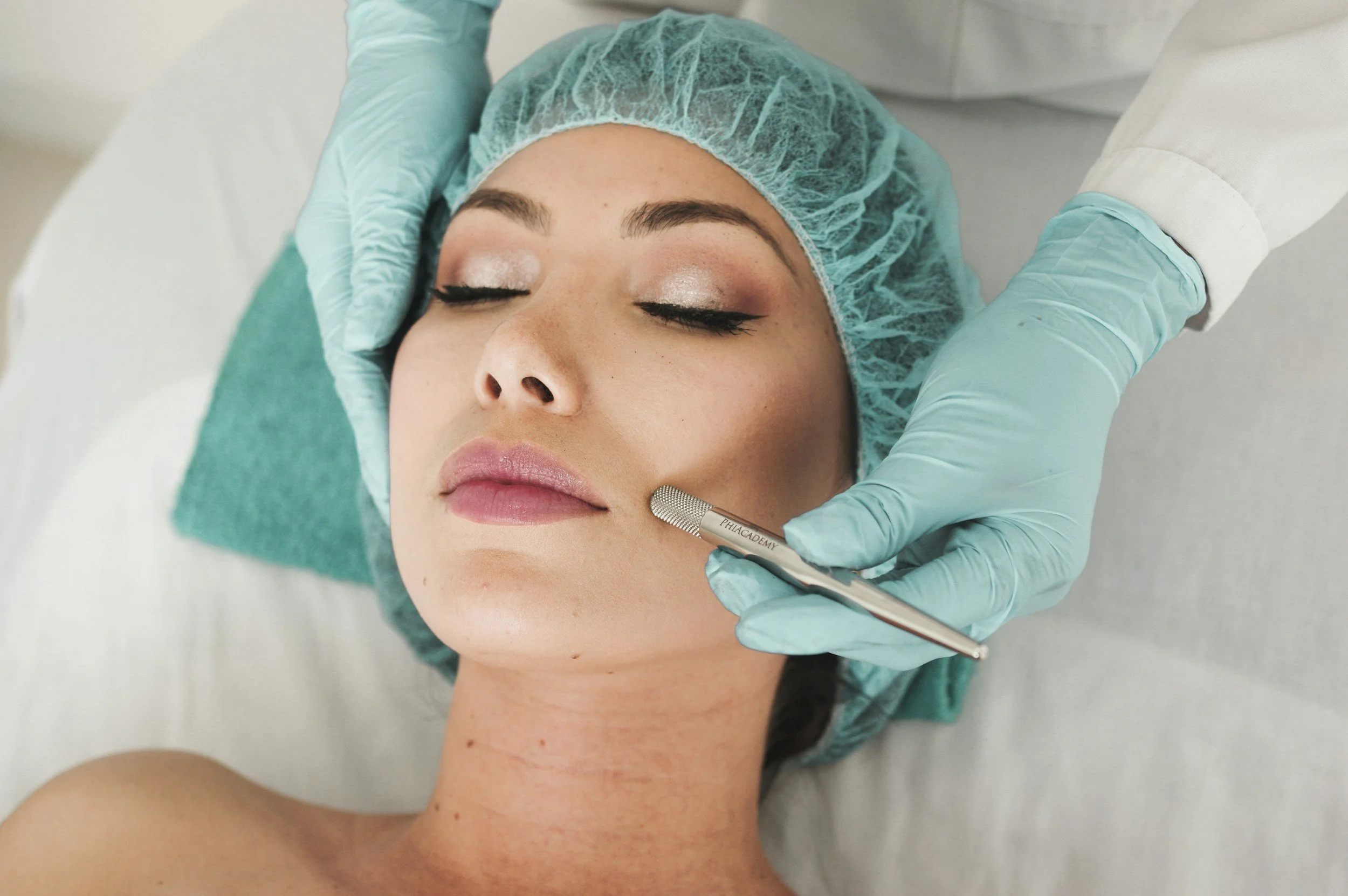
Claims of empowerment and invocations of bodily choice were once heard from women advocating for control over their reproductive rights, fighting for the right to work, and demanding political representation. Today, appeals to choice and empowerment are often used to ascribe any action that a woman may take as feminist and as having emerged outside the bounds of any patriarchal forces, shielding these actions from criticism. One such conversation that is evaded through an appeal to empowerment is that of cosmetic surgery and beauty practices.
In recent years, feminist discourse has seen a shift away from the critical deconstruction of the patriarchal forces that insist upon women upholding certain beauty standards towards a passive acceptance of these norms. Perhaps it is our hyper-individualistic world, centring personal choices over collective liberation, that has lent this idea of empowerment such credence. Perhaps it is our increasingly connected world that forefronts women who adhere to these prescribed beauty standards. Whatever the reason may be, choice feminism is on the rise, and it has normalised cosmetic surgeries for women.
Labelling these beauty practices to be inherently empowering does not pave the way for women to move through the world, free from patriarchal constraints and limitations. On the contrary, refusing to engage in this discourse has placed us on a dangerous path; we can no longer question and unravel the external colonial, capitalist, and patriarchal forces that continue to shape women’s lives, particularly for women of colour.
As women, adhering to these patriarchal expectations may afford us social acceptance and ease, individually empowering as acceptable women in society. It is the less radical and less impactful route. However, upholding and further narrowing these standards are decidedly anti-feminist acts. They reinforce the valuation of a woman solely based on her physical attributes, devaluing an aging woman, a woman without typical western features, or any woman who does not conform to these rigid beauty norms.
That being said, my criticism lies not with the individual woman who choose such a path. It is far from helpful to condemn women who conform to the expectations that are subtly embedded within every stage of a woman’s life. This creates the illusion of the “perfect” feminist and positions the idea of a perfect feminist as an unattainable ideal. I, too, engage in practices that adhere to patriarchal expectations, and I am still a feminist. I will not, however, claim that removing my body hair is an act of feminist empowerment. I recognise that I am making myself more digestible within a world that values women for their appearances. It is the labelling of such practices as empowering that I seek to deconstruct.
We are growing up in a dangerous time. Dissent and discourse are increasingly silenced as we are influenced by capitalist, neo-colonial, and patriarchal ideologies. As women, we are discouraged from questioning the unrealistic beauty standards levelled towards us. Instead, we must continue to tinker away at ourselves under the pretext of empowerment. It is more important than ever to engage in conversations surrounding beauty practices, to overturn the norms that centre women’s appearances over all other attributes. We must critically analyse the declining diversity of women's appearances in our world and understand the deeply rooted, oppressive forces that lie at the origins of plastic surgery. Have difficult conversations. That is feminist empowerment.