
Mojtaba Khamenei’s Rise to Power: What Does it Mean for Iran?
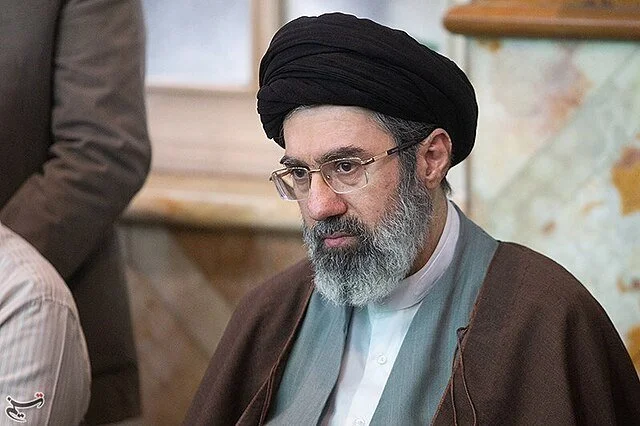
Image Author: Mostafa Tehrani via Wikimedia Commons
On the 28th of February 2026, the US and Israel initiated air strikes on Iran, and on that same day, 86-year-old Ayatollah Ali Khamenei, supreme leader of Iran for the last three decades, was assassinated in a joint strike. Just over a week later, Iran’s Assembly of Experts announced an unexpected successor: his 56-year-old son, Mojtaba Khamenei. This surprised many, with Trump calling Khamenei’s election ‘unacceptable’ amid stated US aims to bring ‘harmony and peace to Iran’.
In contrast to his father, Mojtaba Khamenei has largely remained unseen in the public eye over recent years. While little information about him is available, the impact of his rise to power on Iran will by no means be minimal. Based on late 2000s Diplomatic Cable leaks, he has been described as a ‘capable and forceful’ leader behind the scenes of many political decisions in Iran over recent years.
So, what exactly do we know about Mojtaba Khamenei?
Born in 1969, Mojtaba studied in Tehran and later joined the Islamic Revolutionary Guard Corps, the widely feared military organisation tasked with defending Iran’s clerical regime, participating in the final years of the Iran-Iraq war. This association with the IRGC aligned him with hard-line wings within the regime, allowing him to gain authority within powerful military and political networks. Years later, with the power of his family name behind him, Mojtaba made his first foray into the public eye as an extremist figure during the 2005 Iranian election. During this election, reformist candidate Mehdi Karroubi wrote an open letter alleging that Mojtaba interfered in the voting, distributing money to religious organisations in order to aid the victory of right-wing Ahmadinejad. Four years later, this accusation recurred after the re-election of Ahmadinejad, sparking outrage across Iran in a wave of protests that later became known as the Green Movement. This movement made clear the fear and disdain for the prospect of Mojtaba as Iran’s next leader as protestors called for his punishment.
It seems that, even before gaining utmost power, Mojtaba Khamenei demonstrated a disregard for democracy, associated with the violent quashing of anti-revolutionary movements over the years. The available information suggests that Mojtaba Khamenei has every intention of continuing the hard-line rule of his father, prioritising ultimate power over the respect of his people.
Furthermore, the rapidity with which Mojtaba has been elected directly contradicts the intended ideology of the 1979 Islamic Revolution, giving rise to concerns that Iran is reverting once more to a structure of hereditary power. For ordinary Iranians, Mojtaba’s election is deepening disillusionment. The revolutionary narrative that once sustained the Islamic Republic, rooted in justice and religious purity, now holds less relevance for those facing limited opportunities and restricted freedoms. The prosecution of protestors during the Green Movement is only one example of this. One man in Tehran, Iran’s capital, was reported saying that ‘Even the thinnest of chances for a change are no more’ following this election. Mojtaba Khamenei’s rise does not only demonstrate continuity of entrenched authoritarian governance, but also widens the gap between the Iranian state and its people under successive oppressive regimes.
While the extent of Mojtaba’s damaging effect on Iran remains uncertain, what is clear is that his past reputation points to a deeply entrenched hard-line inclination that bodes ominously for the Iranian people. Crucially, Mojtaba Khamenei’s ascent leaves not clarity, but a growing sense of unease about what lies ahead for Iran.