
Tabi Taboo: The Polarity of Fashion's Very Own Marmite
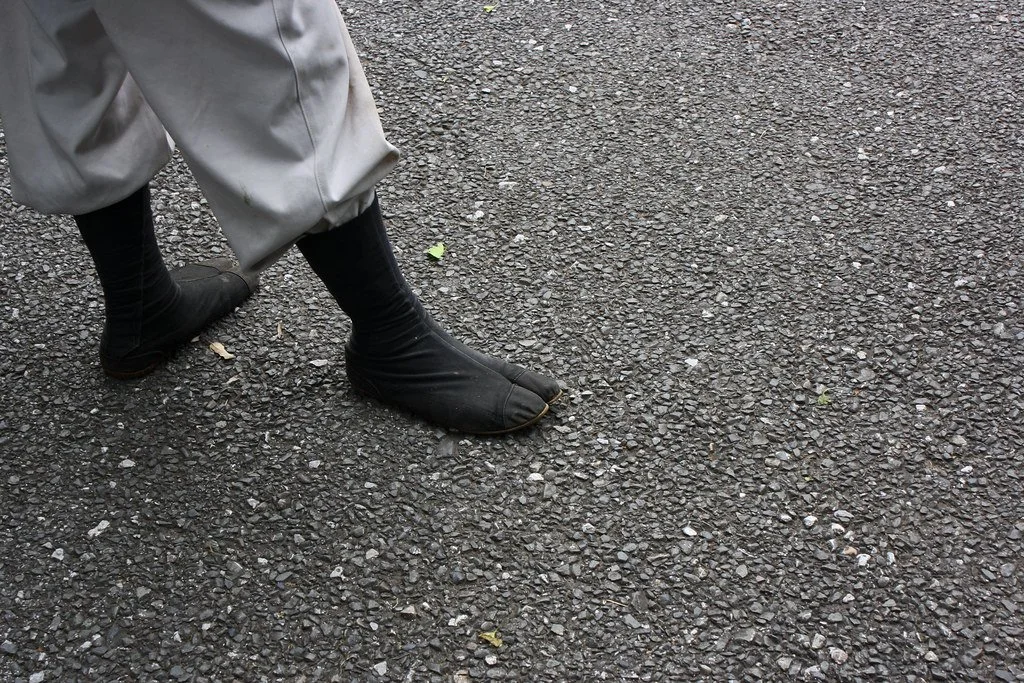
Image Credit: istolethetv via Flickr
There is something of the perverse in Margiela’s Tabi shoe. Its surely less-than-comfortable split - rendering the foot a kind of trotter - has divided as many opinions as it has toes. Donned by the likes of Jacob Elordi and Dua Lipa, the footwear has occupied haute couture’s mind ever since it reared its bicephalic head in a fit of virality in 2023. The flames of popularity were only fanned by stories of stolen slip-ons, and, by the next year, the Tabi was trotting along the internet halls of fame.
The Tabi is far from a newcomer to the fashion world: the split-toe design dates back to 15th-century Japan, where it first appeared in traditional socks. Their functionality transcended mere aesthetics and bore a strong association with ritual - they were worn in tea ceremonies, coloured white to represent purity, or dyed for use in traditional kabuki theatre. Their origins betray footwear that represented more than merely an in-joke of the fashion community; they instead symbolised intention, balance, and an appreciation of art and heritage.
The tabi-sock would later evolve into the Jika-tabi, presented to the public by brothers Tokujirō Ishibashi and Shōjirō Ishibashi (who later founded tyre company Bridgestone). Its rubber sole and heavy-duty material made it appropriate footwear for construction workers, farmers, and gardeners; the thorough embodiment of what a Depop seller might call ‘gorpcore’. Some of the ceremony of the very earliest tabis is admittedly lost in the mundanity of the Jika-tabi’s modest practicality, but is adequately supplemented by an inherent utility, making them beloved by Japan’s labouring classes.
The Maison Margiela Tabi we have all come to know and love first graced catwalks in 1988. Margiela had his models step in red paint before taking to the runway, leaving a trail of scarlet footprints, which enhanced the inevitable sense of the Boschian - a sense that has come to characterise the shoe in the contemporary zeitgeist.
The taboo of the Tabi also lies in its rare estrangement from drama. Vetements’ debut of their own Tabi-style boots for the Autumn/Winter 2018 collection prompted Instagram accounts like @diet_prada to express their usual brand of dry disdain. Stranger still was the tale of the ‘Tabi Swiper’, where unfortunate New York-based fashion creator Lexus awoke from a Tinder date to find her pair absent, planted into the unwitting hands of her date’s secret girlfriend.
It was thus from 2018 that the shoes skyrocketed in popularity. Even today, articles expressing incredulity at their popularity, disgust at their awkwardness, or didactically instructing readers how to style them still litter the internet.
What is of more interest, however, is the exoticisation inherent in the internet’s obsession with the slipper. In its framing as Otherworldly (read Said if you didn’t note the capital ‘O’), fashion writers like Sophia-Ines Klein opine that the Tabi is victim to Orientalist perspectives.
And so, the question remains: in reducing tabi to taboo, do we risk simultaneously undermining the footwear’s rich history, brushing away the (suspiciously cleft-toed) footprint in the sand?