
Tackling Human Trafficking in North Africa: Reforming the Hawala
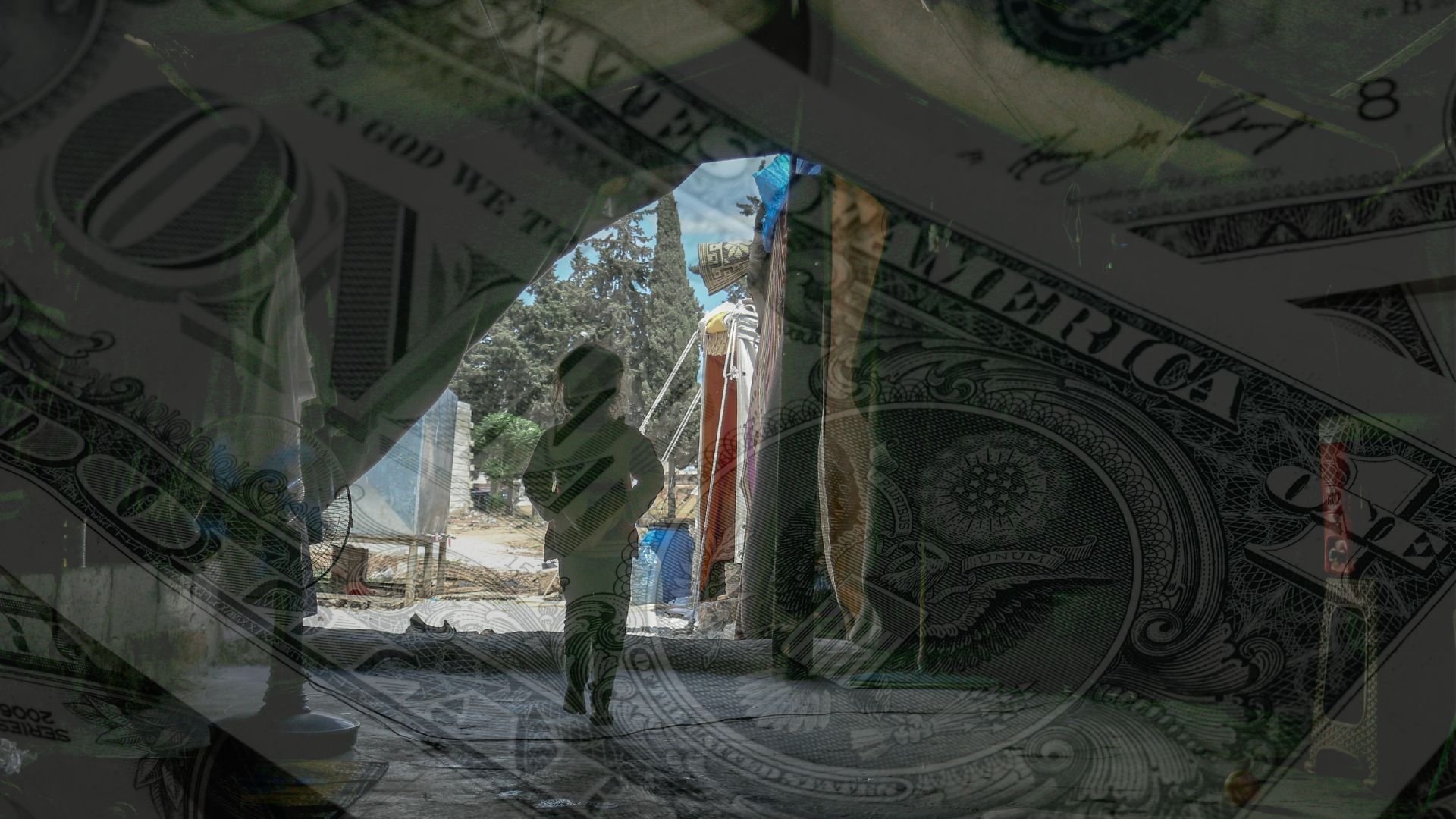
Image Credit via Victoria Mainard
A Business Built on Detention
In detention centres across northern Africa, thousands of migrants are held not because of ideology, security, or border protection, but because they are profitable. From Libya to Niger, human trafficking has evolved into a sophisticated business model — one sustained by ransom payments, informal money transfers, and weak financial oversight.
International responses have largely focused on border control, interception of migrants at sea, and cooperation with local armed actors (that are often supported by African governments and the EU, as it wants to stop migrants from reaching its shores).
These approaches have failed to dismantle trafficking networks and have often exacerbated them by redirecting migration routes into more dangerous channels and empowering local armed groups that profit directly from detention and extortion. By providing indirect funding, legitimacy, or political cover to these actors — often through security partnerships driven by short-term political goals — international policies have inadvertently reinforced the very trafficking economies they aim to suppress.
Hawala: A Lifeline Turned Weapon
At the centre of this trafficking system is hawala, an informal and untraceable money transfer network that operates through independent brokers and physical cash. Hawala is not inherently criminal. For millions across Africa, the Middle East, and South Asia, it is the only accessible way to send money across borders. But in the context of human trafficking, hawala has become the financial lifeline that allows captors to demand ransoms, move profits invisibly, and operate with near-total impunity.
Families of detained migrants are often sent videos of their loved ones being tortured, burned, beaten or starved, alongside instructions on how to pay. The money does not pass through formal banks. Instead, a family member pays a local hawala broker in Sudan, Nigeria, or Eritrea. Then, a corresponding broker, often operating in Libya or regional financial hubs, releases the funds to traffickers once payment is confirmed. No paper trail. No alarms. No accountability.
As long as this system remains entirely informal and unregulated, traffickers retain a reliable way to collect profits, transferring them into offshore accounts often in Switzerland or Dubai. But banning hawala outright would be both unrealistic and dangerous. Crackdowns on informal finance often push communities toward even riskier underground methods, while cutting off legitimate users — migrant workers, refugees, and families — from essential services.
The solution is not prohibition, but legalisation and regulation.
Regulation as Disruption, Not Surveillance
By bringing hawala into a monitored legal framework — through licensing brokers, record-keeping, and oversight — states could preserve their legitimate uses while making it far harder for traffickers to operate anonymously. Licensed hawala brokers would be required to report suspicious transactions, much like banks under anti-money-laundering rules. This would not eliminate trafficking overnight, but it would dramatically raise the cost and risk of doing business.
The focus should not only be to help current victims of human trafficking, but also to prevent future victims. Human trafficking in this region persists because it is profitable. If this profitability is stripped from the industry, and if captors cannot receive, control, transfer, and enjoy the fruits of their labour, this business will eventually run dry. Trafficking networks thrive on low risk and high reward. Regulation disrupts both.
Importantly, this approach does not require mass surveillance or the elimination of informal economies. It simply acknowledges that financial invisibility is what allows trafficking to flourish.
The Missing Link: African Fraud Detection Agencies
Yet financial regulation alone is not enough. Even when suspicious transactions are detected, many African states lack the institutional capacity to investigate and act on them. This is where fraud detection and financial intelligence units become critical.
Across much of northern and sub-Saharan Africa, financial intelligence units (FIUs) are underfunded, understaffed, or technologically outdated. Traffickers exploit these gaps, moving money across borders faster than authorities can track it. Strengthening these agencies through funding, training, and cross-border cooperation would allow states to trace ransom payments, identify trafficking networks, and freeze assets before profits disappear.
Reframing Trafficking as Financial Crime
Importantly, this approach shifts the focus away from migrants themselves and toward the systems that exploit them. For years, international policy has treated migration as the problem to be solved. The result has been interception at sea, detention on land, and cooperation with local militias — all of which have inadvertently fed trafficking economies.
By contrast, targeting money flows reframes trafficking as a form of organised financial crime. This makes international cooperation more feasible and attractive. Governments may disagree on migration policy, but they are far more willing to collaborate on combating fraud, money laundering, and transnational crime.
There is also a powerful deterrent effect. When traffickers can no longer easily receive, store, or transfer profits, the incentive to capture migrants diminishes. Detention centres lose their value as revenue-generating assets. Militias are forced to seek alternative sources of income. Over time, the scale of trafficking shrinks — not because borders are sealed, but because exploitation no longer pays.
Not a Silver Bullet, but a Structural Shift
If this occurs, can’t traffickers simply adapt by finding new methods of payment or hiding profits elsewhere? This risk is real. But adaptability cuts both ways.
Financial oversight systems can evolve too — especially when African fraud agencies are properly resourced and connected to international partners. The goal is not absolute eradication, but structural disruption: making trafficking harder, riskier, and less profitable than before.
Crucially, this strategy also avoids the moral and legal contradictions that have plagued past responses. Instead of funding detention systems linked to abuse, international actors would invest in transparency, accountability, and institutional capacity. Instead of punishing migrants for moving, policy would punish those who profit from their suffering.
Human trafficking in northern Africa is not sustained by chaos alone. It is sustained by money — earned, moved, and hidden in plain sight. If governments are serious about stopping it, they must stop looking only at boats and borders, and start following the cash.
Because when the money dries up, the cages do too.