
Image Credit: Wellcome Library via Wikimedia Commons
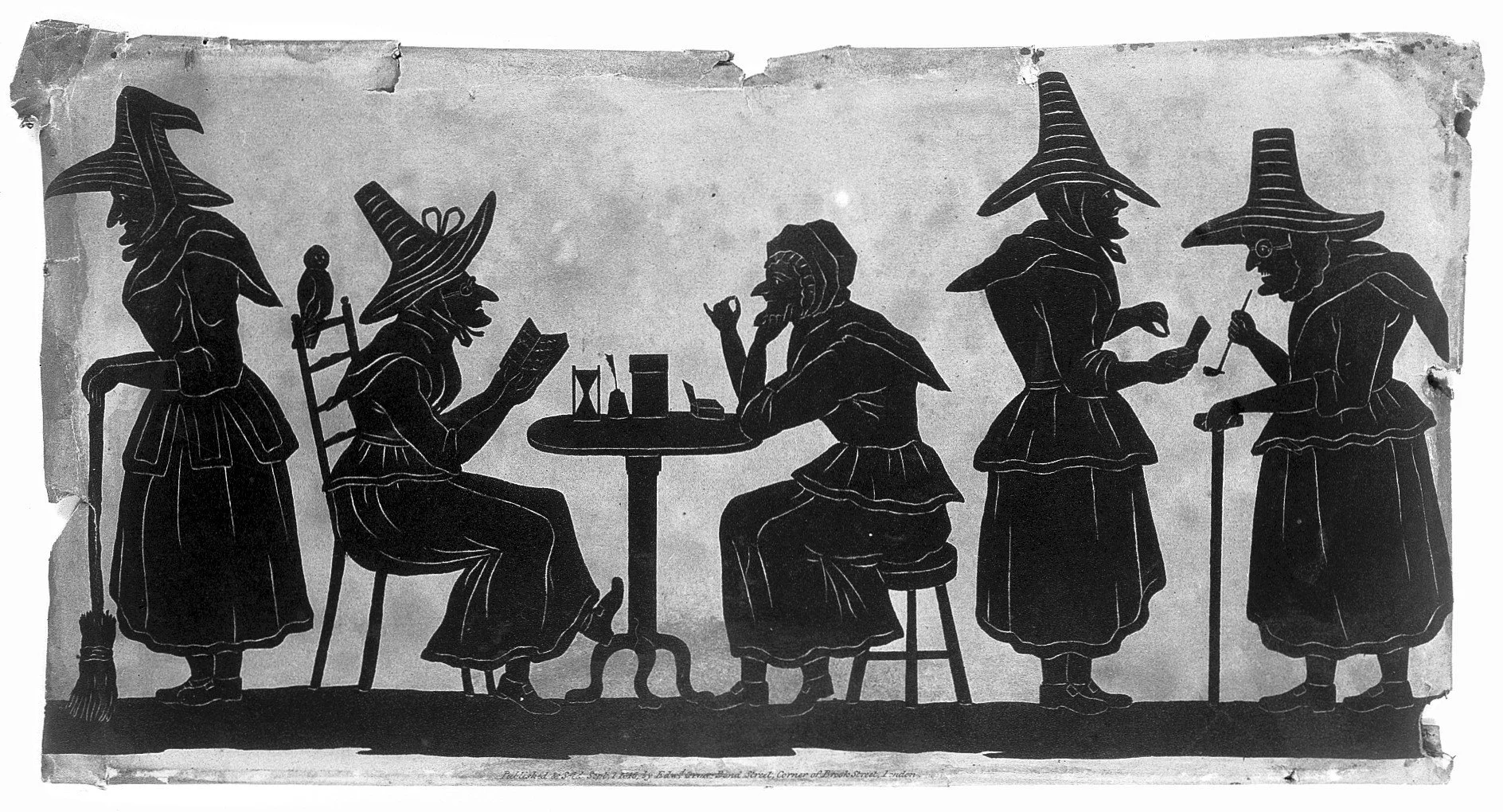
As one often finds before any event where dress-up is ‘strongly encouraged’, this Halloween I was faced with the terrifying prospect of ensuring that my costume was sufficiently attractive, vaguely unique, and certainly not over the cost of five Great British Pounds. With little choice but to conform to the socially agreed terms and conditions of the ancient Celtic holiday, I settled on the iconic witch as my inspiration. Most keen to fulfil the first of these three aims, I donned a black dress, a pointed hat, and briefly toyed with repurposing the kitchen broom before deciding a broomstick, on this occasion, would hinder my travel rather than aid it. Still, there is surely something feminist in the idea of sacrificing the broom that has historically anchored women to domestic labour in favour of a Halloween costume.
Lest I be put on trial by a historically accurate gladiator who scoffs at the unoriginality of my costume, demanding to know the precise inspiration of my attire, I spent my time on the Northern line preparing my defence: I was honouring the late Patricia Crowther, the Sheffield born occultist who has been hailed as the UK’s oldest witch and reported to have passed away in September 2025. Should my interlocutor seem unlikely to be up to date with the publications of BBC Yorkshire, I could quite easily claim to be Lamia from the Hollywood blockbuster Stardust, Sabrina the Teenage Witch, or one of the three witches from Macbeth.
I hadn’t considered that my costume was participating in pop culture’s appropriation of a femicide that saw hundreds of thousands of predominantly female witches across Europe suffer extreme torture and brutal murder over the course of the fifteenth to the eighteenth centuries. As for the 20,000 people who have been accused of witchcraft and subsequently abused, maimed, and murdered between 2010 and 2019, I was entirely ignorant. In fact, the reality of the witch is not contained to films, books, and Halloween costumes of unknowing party-goers: this year, the National Indigenous Times reported how a mother of six from Papua New Guinea had been abducted, brutally tortured over a two-day period, and subsequently murdered after being accused of causing a death in the family.
This mother’s case is not unique, however. In 2024, the Women's Foundation Nepal found that the practice of killing women remains strikingly prevalent, and that ‘most of the allegations are followed by beating of the victim and forcing the person to consume human excrement. Sometimes the victim is beaten to death’. In Papua New Guinea, it became illegal to participate in witch hunts in 2013 but the following year, Amnesty International reported that 20-year-old Kepari Leniata had been burned alive. Indeed, if accusations of witchcraft were illegal in Ghana, perhaps 90-year-old Akua Denteh would not have been publicly whipped to death in Kafaba in July 2020. Videos of her harrowing ordeal still circulate YouTube.
For the women condemned – who are often elderly, widowed, disabled, and mothers of children with albinism – to be a witch is far from a costume that is worn for a party and stripped off at the end of the night. Whilst the fictional witches of pop culture often seize their identities as the societal Other and use their bodies as subversive vessels of feminism, the reality is that the female body continues to be deemed an infectious carrier of corruption in over 60 countries. Undeniably, accusations of witchcraft in the 21st century constitute a human rights emergency, one that requires immediate and serious investment from governments globally if the gynocidal phenomena is to come to an end. I, for one, won’t be dressing up as a witch next year.