
The Pi Perspective: Week 5
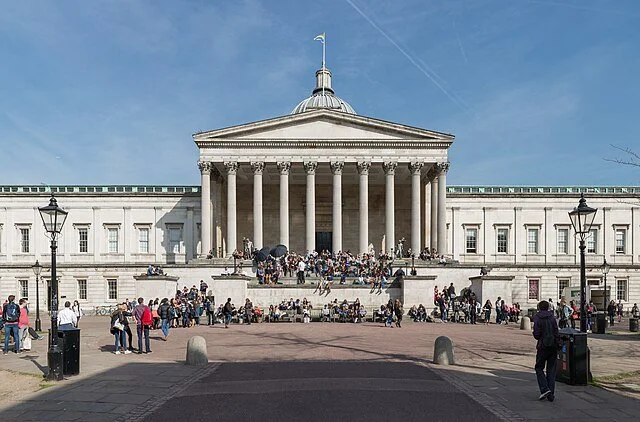
Image via Wikimedia Commons
At Pi Online, we are a massive group of editors who work together to curate content for the website. But who are we really? What do we like, dislike, observe, think?
Each week, we’re pulling back the curtain with a new editorial spotlighting what’s been on our minds.
Editors-in-Chief
This week, I turned 21 – and in true Aquarius fashion, stretched the celebrations into a three-day extravaganza. I have a lot to be grateful for: friends I clinked glasses with, family and chosen family who joined in via FaceTime across time zones, and the restaurants and clubs that generously tolerated our collective volume.
But one spot deserves a special mention. Fatt Pundit, an Indo-Chinese restaurant (the undisputed best cuisine in the world – don’t knock it till you try it) tucked away in a Covent Garden alley, went above and beyond. It has always felt like a slice of home in London, with food, service, and ambience that never miss. This time, though, they outdid themselves.
After our meal came the expected – a complimentary dessert, complete with candle and a gold Happy Birthday banner. Lovely, but familiar. What followed was not. Our server handed me a beautifully packaged card, thanking me for spending my birthday with them and wishing me “the best on [my] birthday and everything fabulous for all the years ahead.”
Now if that isn’t the cutest thing you’ve ever heard, I don’t know what is!
News
As fellow London-based students, the editors at Pi News know we are not alone in our frustration with recent local weather conditions. As reported by Sky News, it has rained for the last 37 consecutive days in England. However, the issuing of dozens of flood warnings suggest that the transition to spring weather is not coming as soon as many UCL students would hope. This weekend, the Environmental Agency (EA) has issued 85 flood warnings around England. You can check this link for a live flood map. The EA fears ‘significant ongoing groundwater flooding impacts’, and have deployed Environmental Agency teams to the ground to ‘support those communities affected’.
Features
My new thing these days is determinism. Having read Gabor Maté’s ‘The Myth of Normal’, (which I’ve been relentlessly recommending to anything with eyes to read) I’ve started to buy into the idea that no one has any say in the way they are. The factors, dynamics and events that play out in our childhood, of which we have no control, dictate the adults we become.
Where this theory snags is at the question of responsibility. If this is the case, we are no longer responsible for our actions, the past is. What does this mean for people who have inflicted harm on others? Is it no longer their fault because anyone else in their place would have done the same?
I don’t know how to remedy this point, and I don’t know where accountability should lie. But to whatever extent you engage with the theory, it can still teach valuable lessons, ones that I think can help all of us today. It inspires us to have compassion for those around us, to endeavour to understand rather than to judge. It encourages a more balanced recognition of nuance, and does away with rapid condemnation, something which I think we can all agree would be no bad thing for today’s society.
Opinion
It is sickening that we live in a world where a President whose name repeatedly appears in the Epstein files endures, while a Prime Minister not mentioned even once has been driven to the brink of political collapse by nothing more than removed association. But that is the world we live in.
Starmer’s days seem numbered, and his assertions that he will lead Labour into the next election grow more tenuous by the day. The Mandelson appointment was, at the very least, ill-advised, though it’s likely the ‘Prince of Darkness’ was brought onboard specifically because of his sinister connections with the current US administration, rather than in spite of them. This radical example of realpolitik may have made sense at the time of the appointment, but Starmer must be kicking himself now. Having won the 2024 election on a platform of moral credibility, the architecture of Starmer’s entire political agenda is crumbling under the force of these revelations.
Perhaps there is something of a silver lining to this debacle, though. While Starmer seems like a decent, upstanding man, he is an ineffective politician. If he does lead Labour into 2027, it is incredibly likely he would lead them into the jaws of defeat - perhaps ceding Downing Street to Nigel Farage. If this scandal does result in the Prime Minister’s defenestration, at least a new Labour leader might be able to rescue whatever electoral hopes they have left. These are desperate times indeed.
Lifestyle and Culture
I consider myself a rather curious person when it comes to the music industry. Not curious enough, however, to figure out where to tune into the Grammy awards as they happen. Is it on YouTube? A TikTok live? I’d like to believe that, as in all the best movies, there’s a giant Times Square-esque screen at the city center where pedestrians gather around the broadcast, emoting and clapping in unison like paid extras. The displays outside the Tottenham Court Station suit the role perfectly. We still have time to arrange this before the Oscars roll in - who’s in? Contact me.
This lack of dedication never gets in the way of me somehow garnering the roundups from A to Z - albeit often against my will. You can’t dodge the content wave. But I’m not complaining: a 15-second reel here, a bright carousel there, add a heated argument in the comments section, and the summary of the ceremony is ready for my expert interpretation. Honestly, I bet these awarding bodies employ a similarly rigorous process when selecting the winners.
Science and Technology
With much of our engagement with environmental issues filtered though headlines, statistics, and scrolling fatigue, it can be easy to feel detached from the realities of nature and conservation. Recently, I’ve enjoyed a few documentaries that pull back the curtain, showcasing people engaging in conservation in a more grounded way - and they are well worth your time.
For something short and sweet, The Hive Architect | Saving Britain’s Wild Bees is a visually poetic YouTube documentary centered on bee conservationist Matt Somerville. Spending over a decade building and installing log hives for wild bees, he challenges the idea that British bees need human management to survive, and roots the solution in coexistence.
For a longer watch, Wilding follows a couple who take a radical gamble on the future of their four-hundred-year-old estate. Abandoning conventional farming, they remove fences, reintroduce animals, and allow natural processes to shape the land’s recovery. What begins as a risk slowly becomes one of Europe’s most significant rewilding experiments, with breeding stalks being reintroducing to the British landscape in over 600 years.
Both are calm, thoughtful watches, and pose perhaps uncomfortable questions about our role in conservation, while offering a glimpse of what a more patient, coexisting framework might look like.
Sports
Saturday morning my alarm goes off early so that I can make it to an 8am Pilates class. According to the stereotypes, this will be followed by a matcha, brunch, and a ‘girly’ day out. At least, that’s what Pilates culture is often reduced to online.
Viewed as a ‘soft’ form of exercise, something that’s ‘only for girls’, and supposedly ‘easy’, Pilates is generally misunderstood. In reality, it’s an elite-level form of training that builds core strength, posture, balance, and stamina. Yet, it’s often dismissed purely due to the audience it attracts: women.
Recently, male sports teams ranging from football to rugby have jumped on a social media trend where the squad tries out a Pilates session for the first time. The outcome is almost always the same: athletes struggle through the exercises. These videos unintentionally expose how inaccurate Pilates’ easy workout label really is.
Perhaps Pilates has a branding problem that results in it not being taken as seriously. But, in reality, it’s an exercise that develops athleticism, improves recovery, and helps injury preventions. In fact, many professional athletes likely use Pilates, even if it isn’t talked about.
Pilates isn’t underestimated because it’s ineffective, it’s underestimated because those that haven’t tried it don’t view it as ‘impressive’. Before dismissing it, try a class and see how long your preconceived notions last!