
The Science of Life: Pi Attends the Royal Society’s Summer Science Exhibition 2026
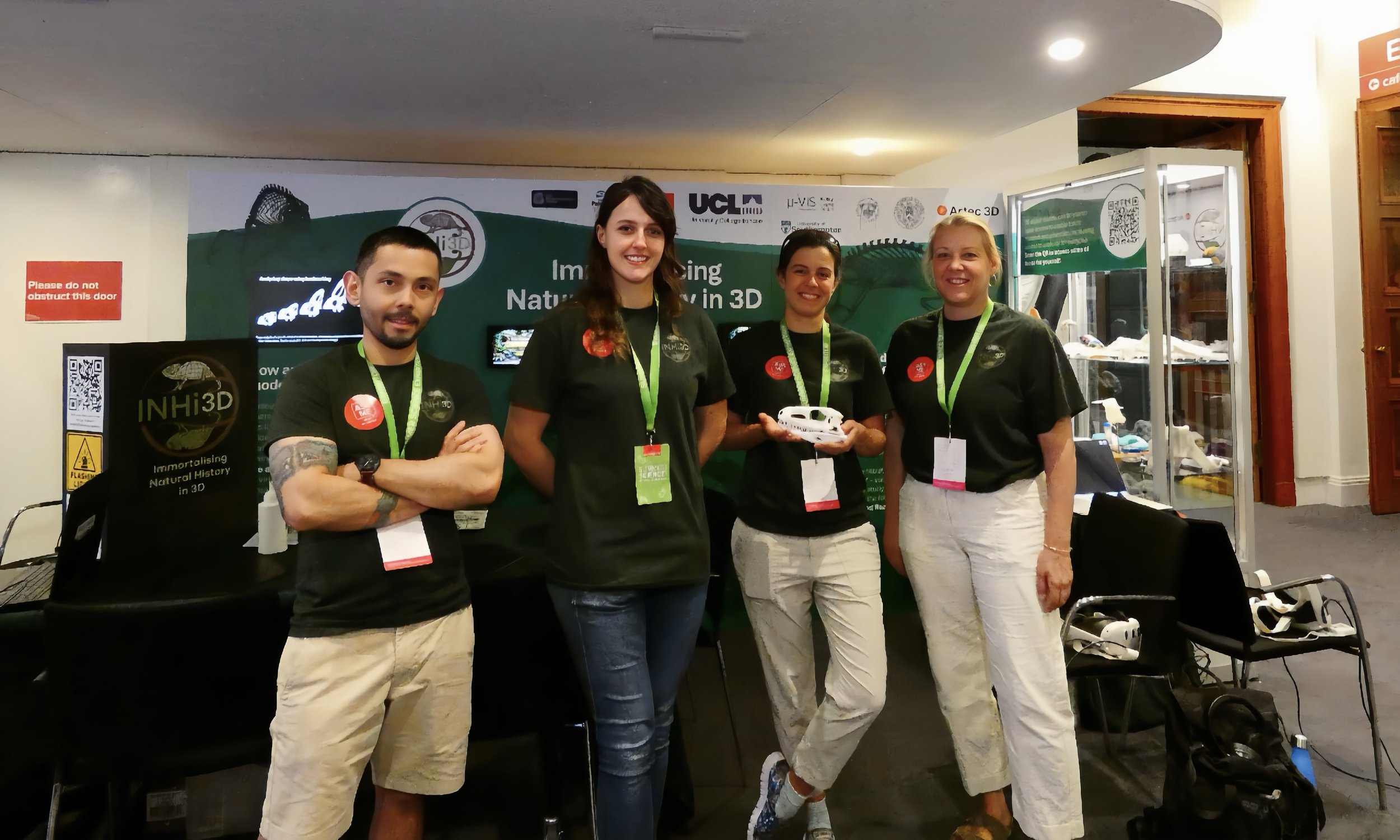
From left to right: Dr. Fernando Alvarez-Borges (µVIS, University of Southampton), Dr. Alice Leavey (University of Southampton), Dr. Laura Porro (UCL), and Tannis Davidson (Grant Museum of Zoology, UCL). Image Credit: Hermione Chan
Tucked into a glass case at the Royal Society’s ‘Immortalising Natural History in 3D’ stand is a series of 3D-printed animal skeletons: some coloured and marked, others bare and white. Dr. Alice Leavey from the University of Southampton and her former PhD supervisor, UCL’s own Dr. Laura Porro, stand by the display. It is 08:55 on a Tuesday morning. I ask what exactly is going on.
“We’re showing how we use different types of scanning technology [...] to digitise natural history specimens, [whether from] modern animals or [...] fossils to create these ‘digital twins’,” explains Laura. Physical specimens can be incredibly fragile, but creating digital copies removes concerns about damage or deterioration because “in some ways, [they are] preserved forever.”
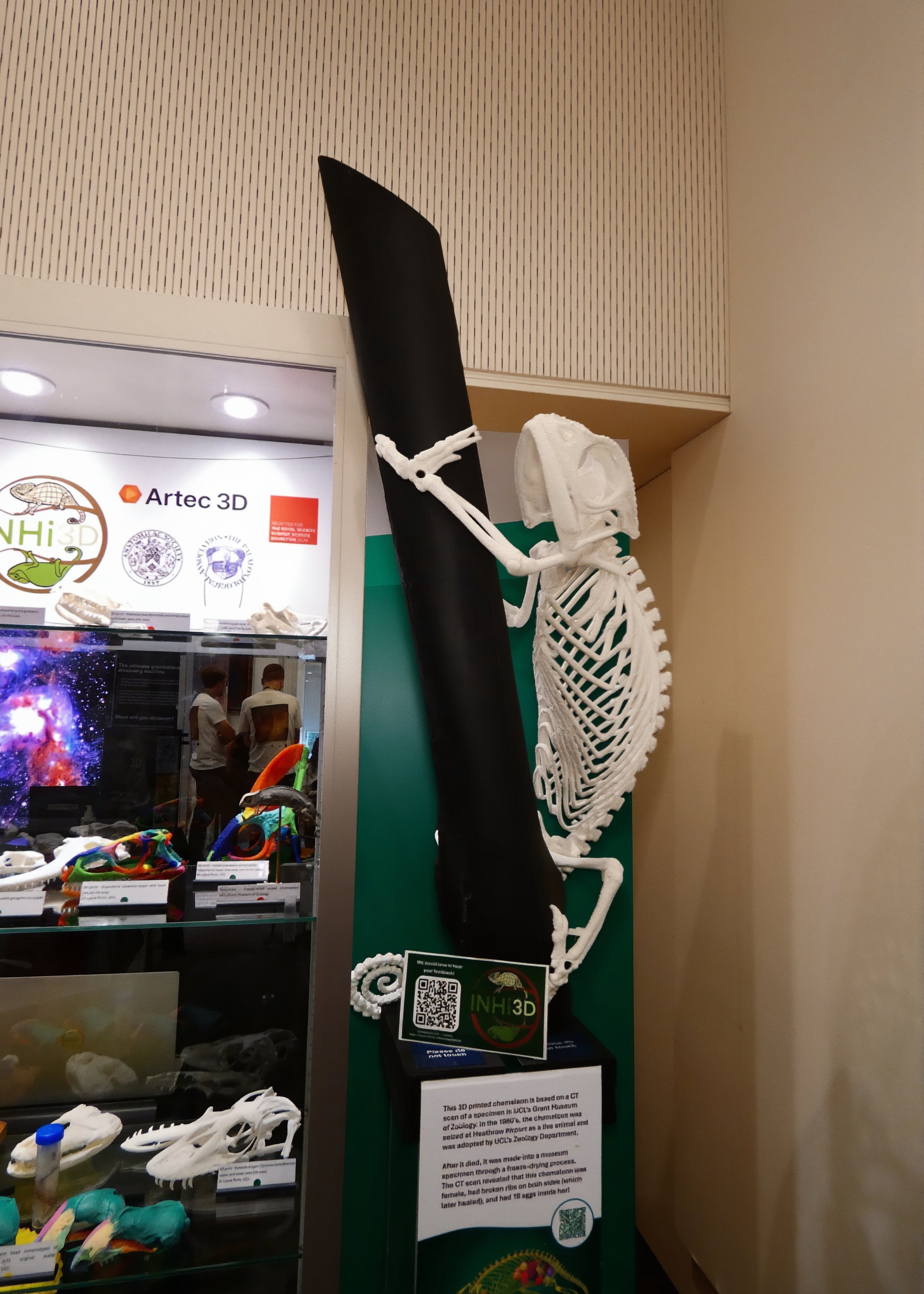
A 3D-printed chameleon skeleton guards the exhibit stall. Image Credit: Hermione Chan
Preservation, however, is only part of the story. The technology also opens the door to entirely new ways of studying specimens, and reconstructing fossils in 3D is one such application. As if on cue, Laura gestures towards a vibrant model of Euparkeria’s upper jaw: some of these were “originally smashed, and we can bring [them] back together. Then, we can 3D print [them].”
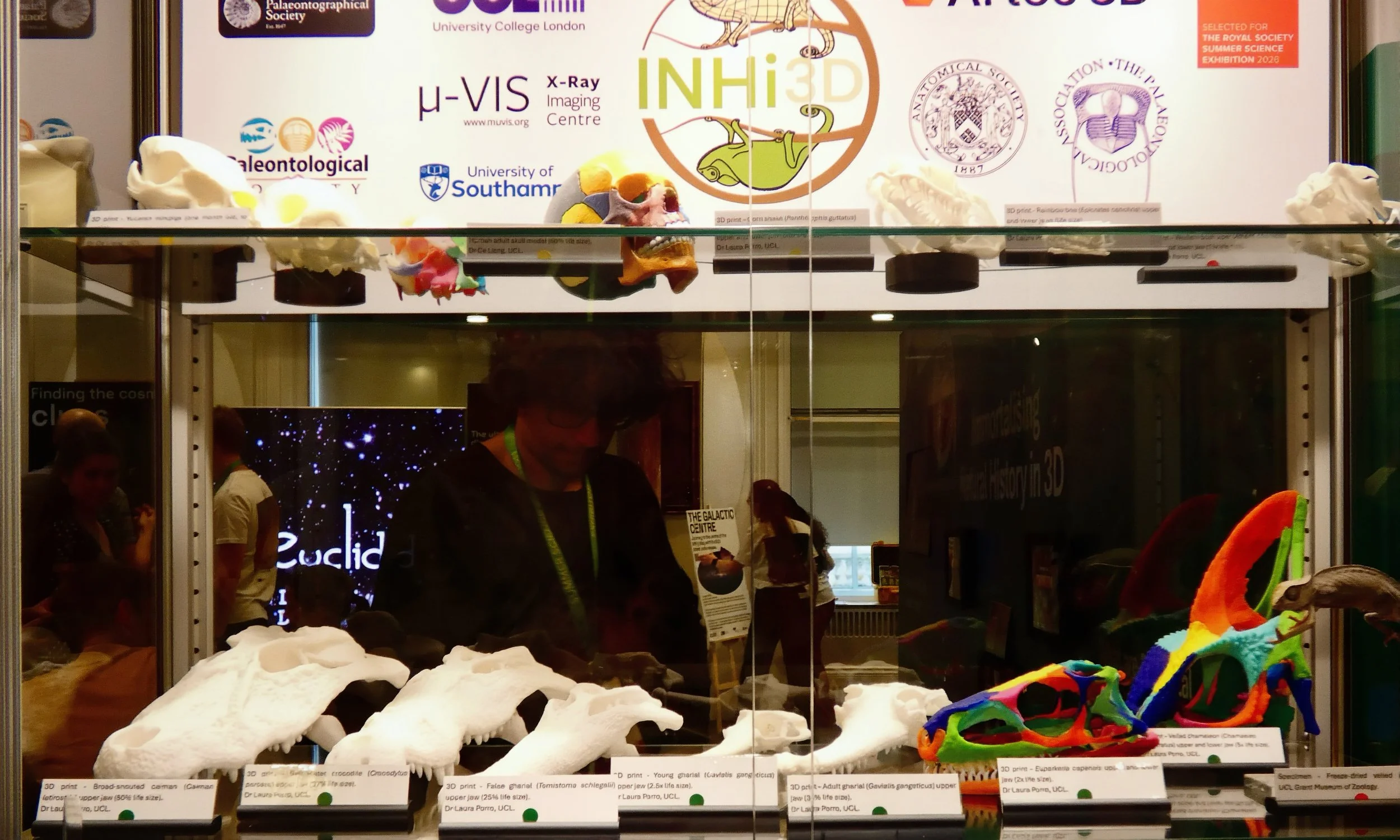
A display of the team's many animal specimens. Image Credit: Hermione Chan
Alice mentions the wider implications. “One of the most amazing things about creating digital versions of museum specimens is that the same person across the world can visualise the same fossil.” Can you imagine? A researcher in Lagos and a researcher in London, looking at the same smashed jaw, rebuilt and rotated on a screen.
This is the Summer Science Exhibition—an annual showcase, free and open to the public, of some of the UK’s most groundbreaking science and technology. We are told this is the first year student media has been invited along, and it certainly feels fitting. After all, the role of science communication has become increasingly important in recent years, and witnessing these projects firsthand serves as a stark reminder that research should be shared and experienced by the wider community.
It also comes as little surprise that two of the thirteen flagship exhibits involve UCL academics. Our university’s breadth of research is the one aspect that even the loudest detractors cannot undermine.
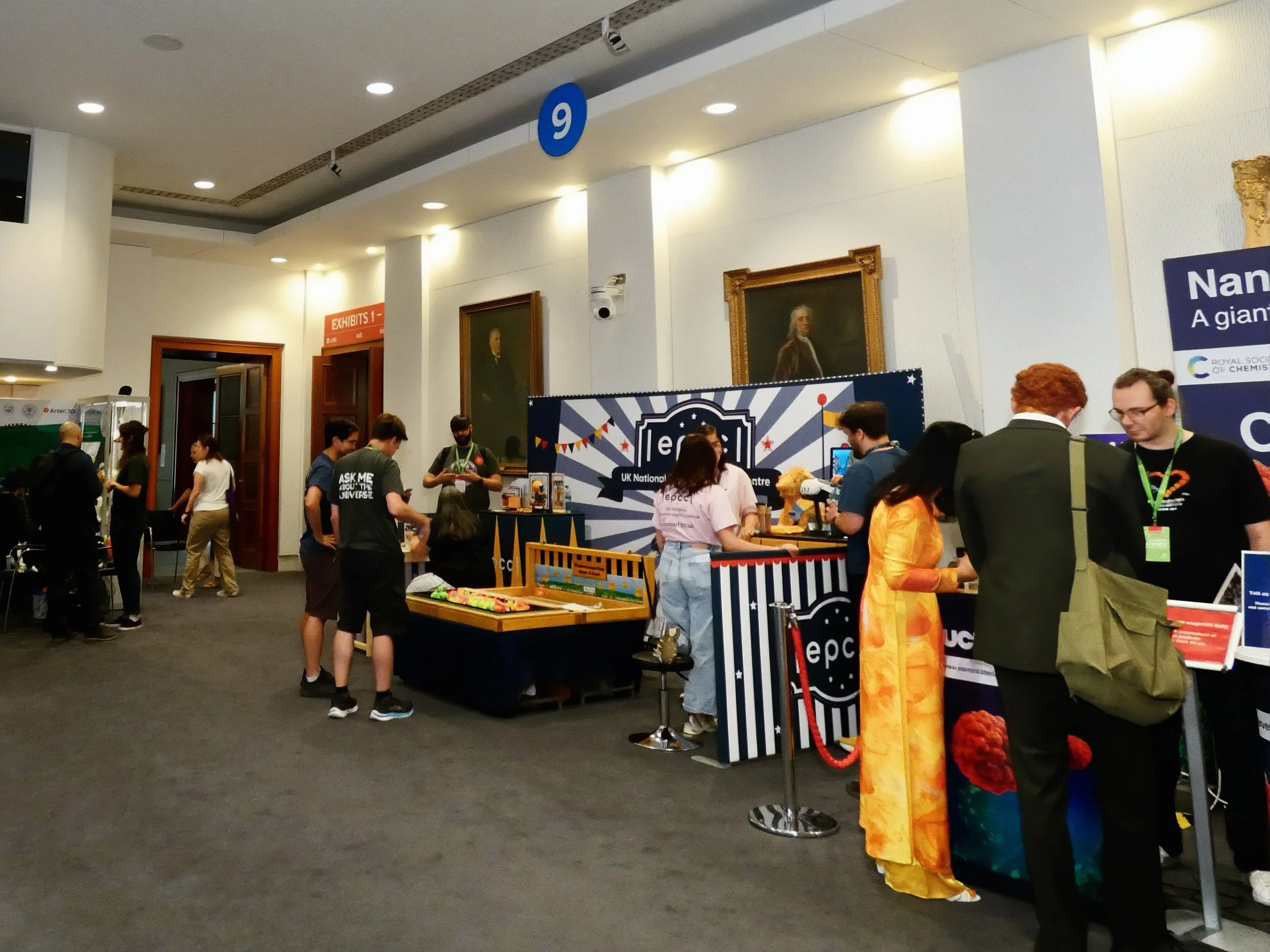
The Royal Society's Summer Science Exhibition 2026. Image Credit: Hermione Chan
A few stands along, Professor Umber Cheema, Head of the UCL Centre for 3D Models of Health and Disease, greets us with an enthusiasm that is frankly impressive for a rainy weekday morning. Her work sits at an unlikely intersection: she engineers tumours in the lab, places healthy cells in the surrounding tissue, and monitors how these structures grow. The goal is to create a humanised model accurate enough to test cancer treatments without ever touching an animal.
“What we then want to do with these nanoparticles,” she elaborates, “is test the efficacy of them in a humanised in vitro model instead of an animal model, then go to humans.” Her team are essentially building a tumour you can fight on your own terms, and the literature student in me thinks there is something almost poetic about this whole concept.
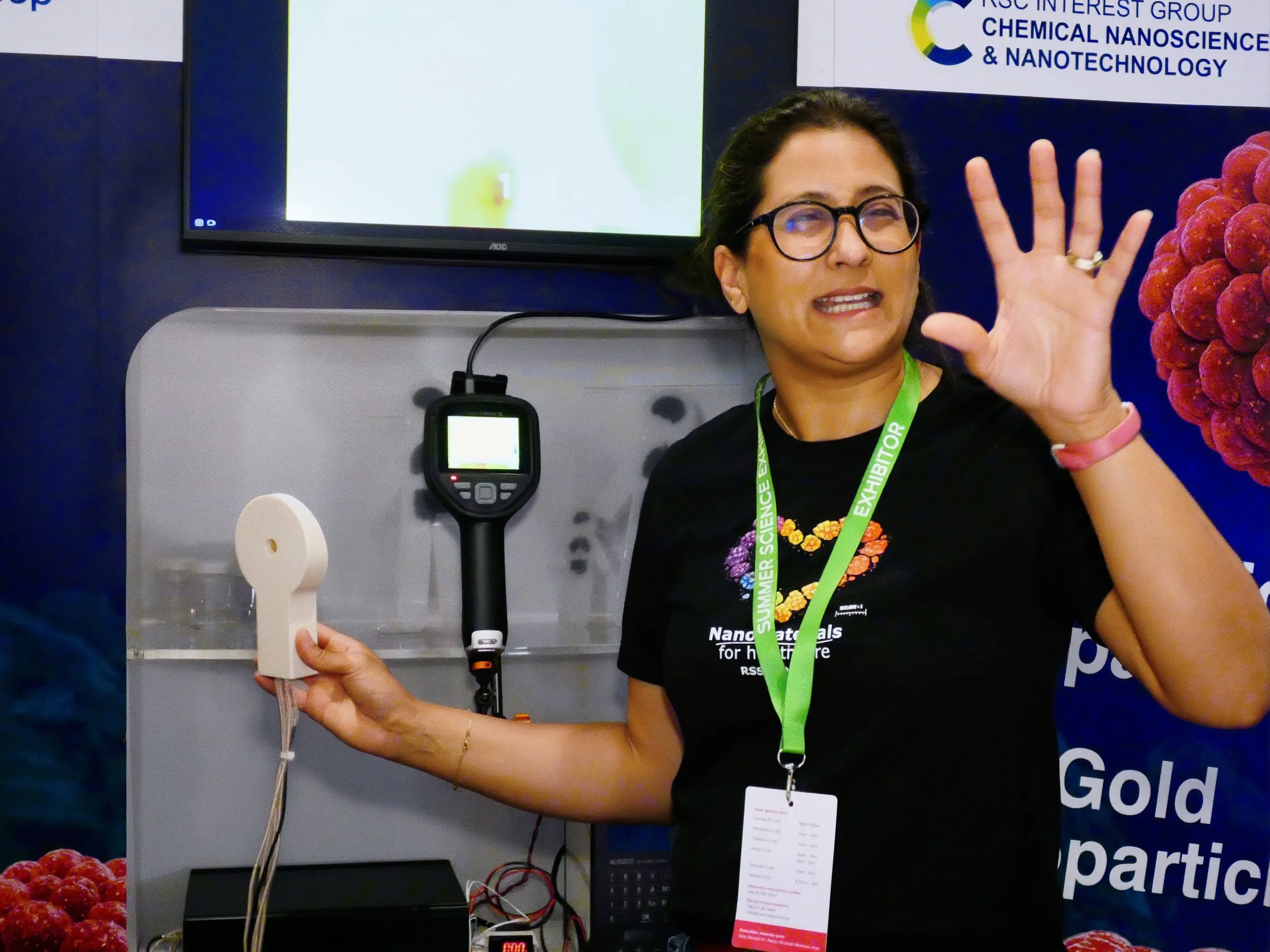
Professor Umber Cheema explains her work. Image Credit: Hermione Chan
We are then introduced to postgraduate research associate Dr. Georgios Gkogkos, who leads us to what he calls the flow reactor. The compact, ordinary-looking device before me sits on a table, handling the extraordinarily precise chemistry of nanoparticle production. Making nanoparticles, he explains, is a lot like cooking, except the mixing must happen with a speed and precision no kitchen could manage. The reactor does this automatically, producing iron oxide nanoparticles in real time, right there before us.
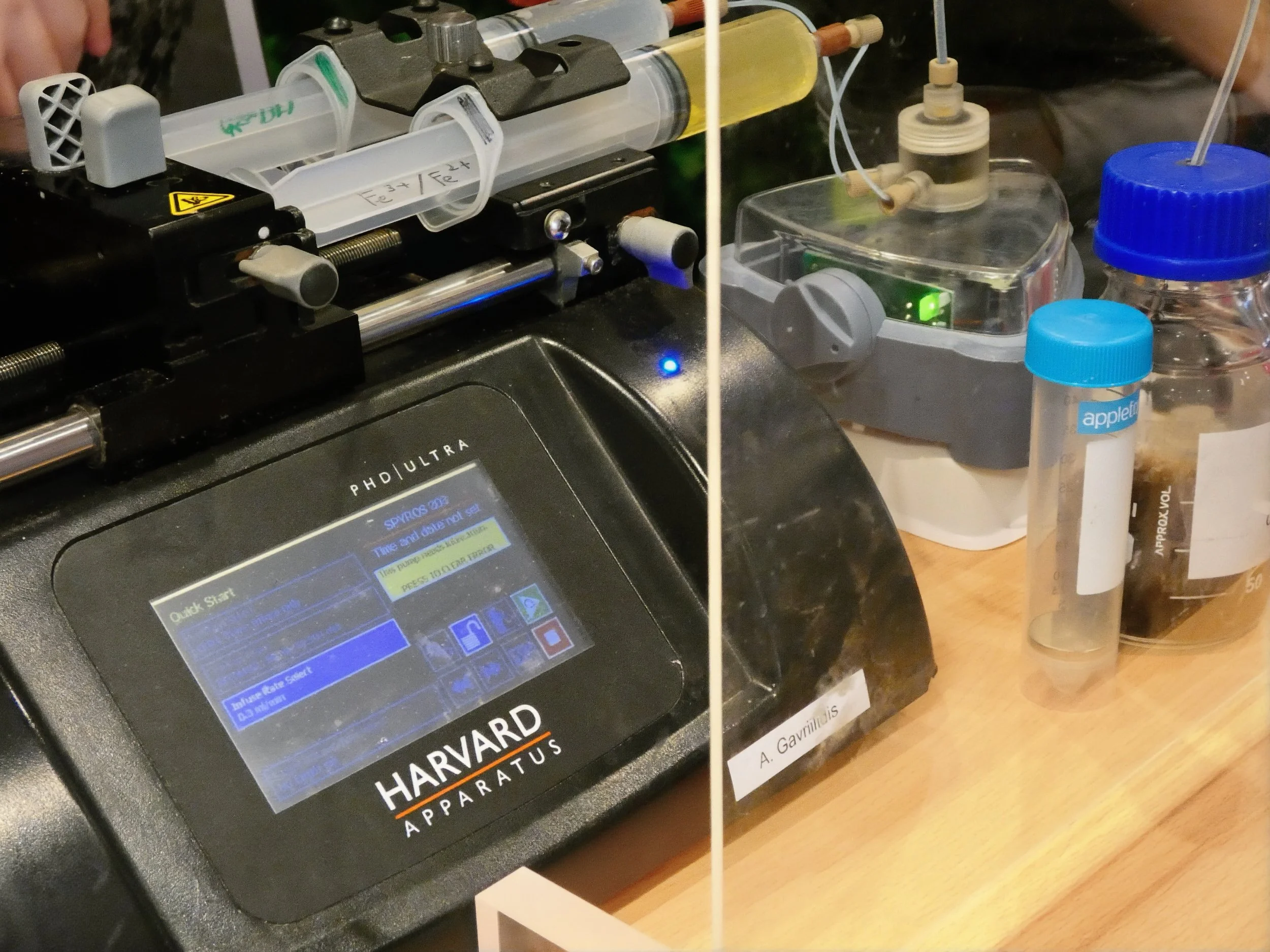
The flow reactor. Image Credit: Hermione Chan
A collaboration spanning chemical engineering, oncology, biomaterials, and physics, the work of the ‘Nanomaterials: A Giant Leap for Healthcare’ team is the prime definition of interdisciplinary, brought together under one UCL-led exhibit, running live reactor and all, in the marble halls of the Royal Society.
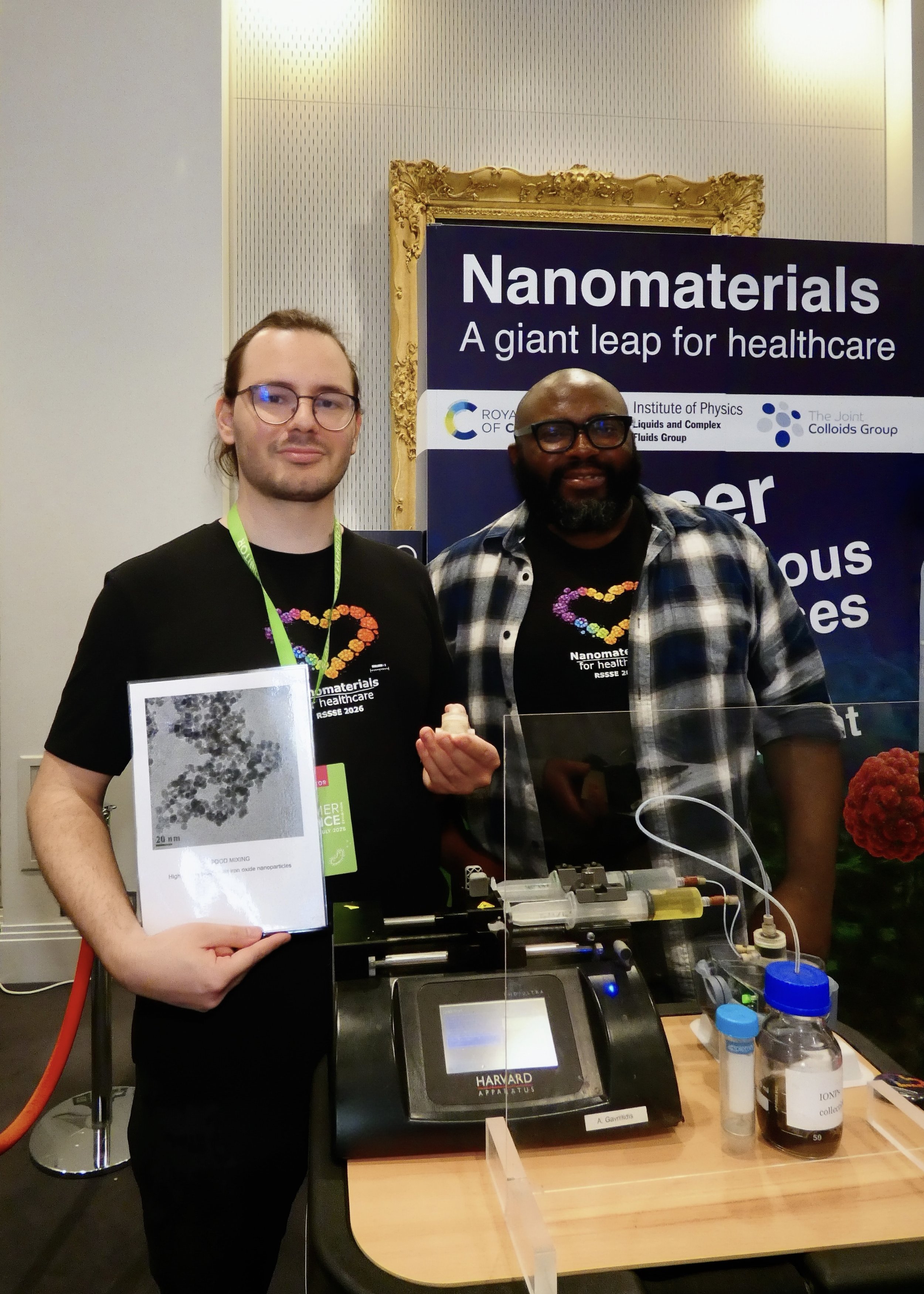
Doctors Georgios Gkogkos and Dubem Anyaduba stand before their work. Image Credit: Hermione Chan
The UCL stands are far from the only highlights. Nearby, Professor Ingmar Posner enlightens us on the Oxford Robotics Institute’s ‘Frank’ (a bimanual robot), inviting visitors to appreciate just how difficult it is to teach a machine something as seemingly simple as two-handed coordination, while Dr. Marco Pontin and Principal Investigator Perla Maiolino then talk us through the sensory soft robot hands that will soon be at the forefront of robotics.
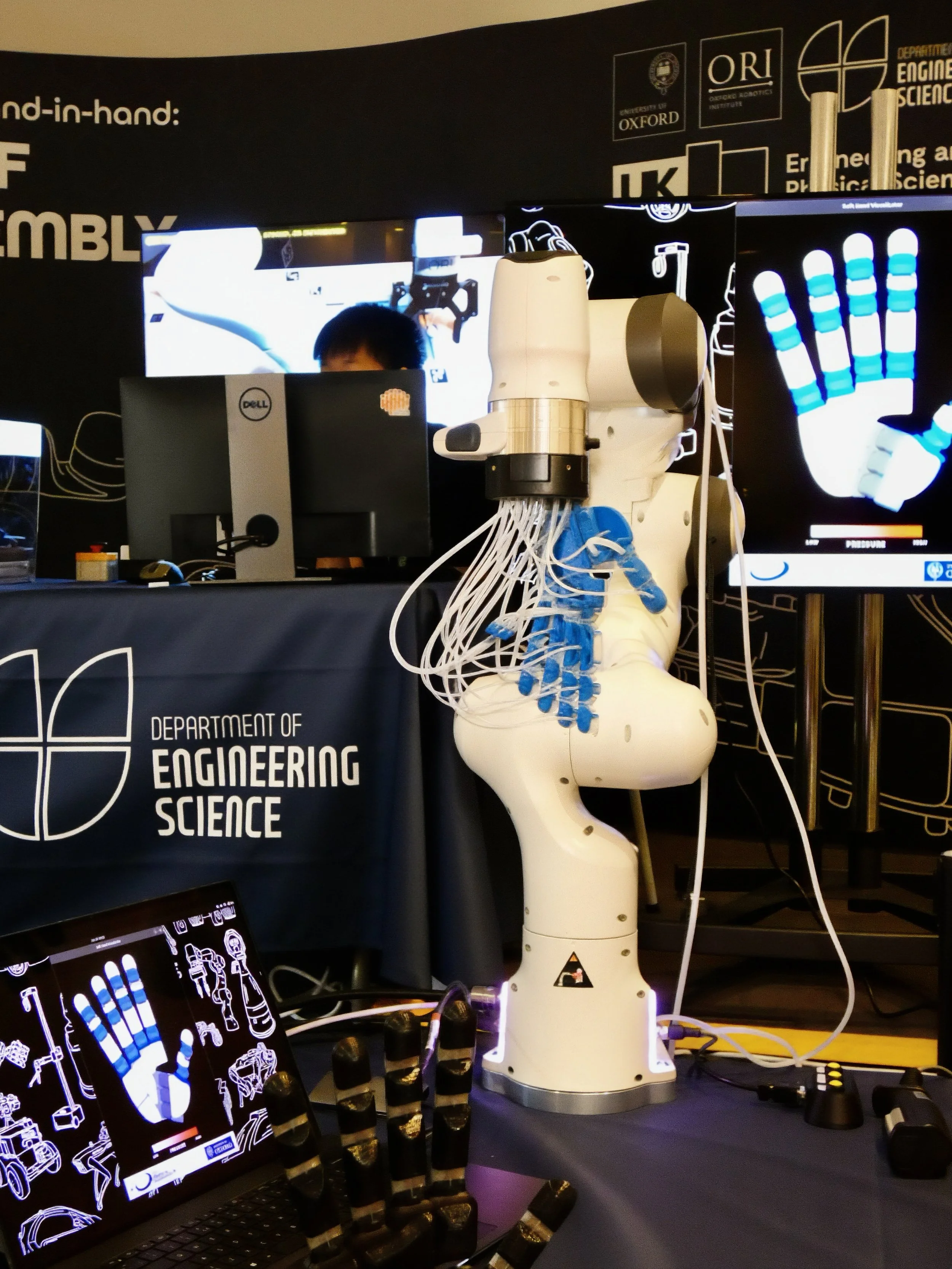
'Frank' greets visitors. Image Credit: Hermione Chan
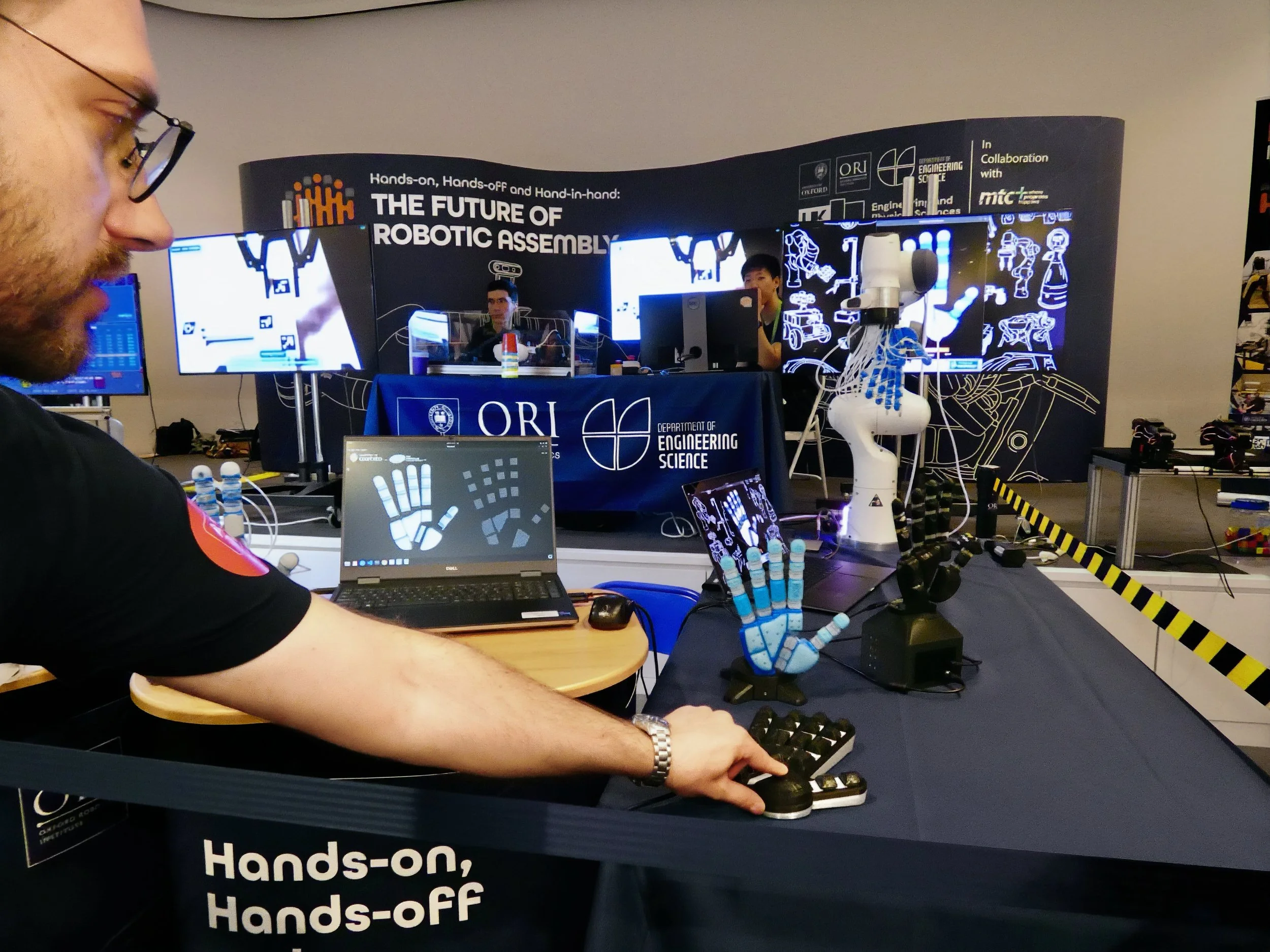
Dr. Marco Pontin demonstrates the mechanics behind the robot hand. Image Credit: Hermione Chan
The LhARA project, a laser-hybrid accelerator designed for cancer radiobiology, offers a rather more cosmic perspective on treatment.
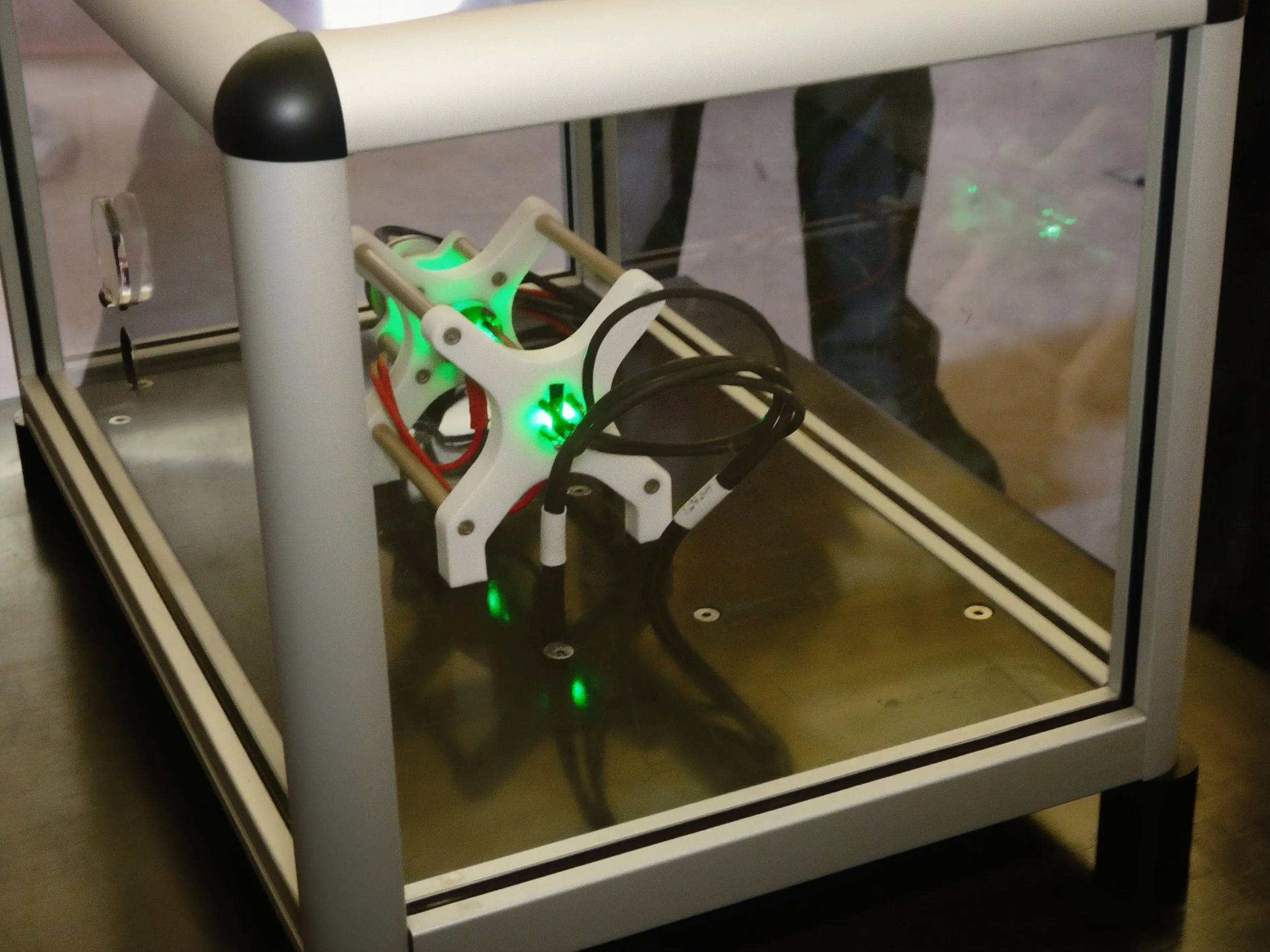
The LhARA project's laser-hybrid accelerator. Image Credit: Hermione Chan
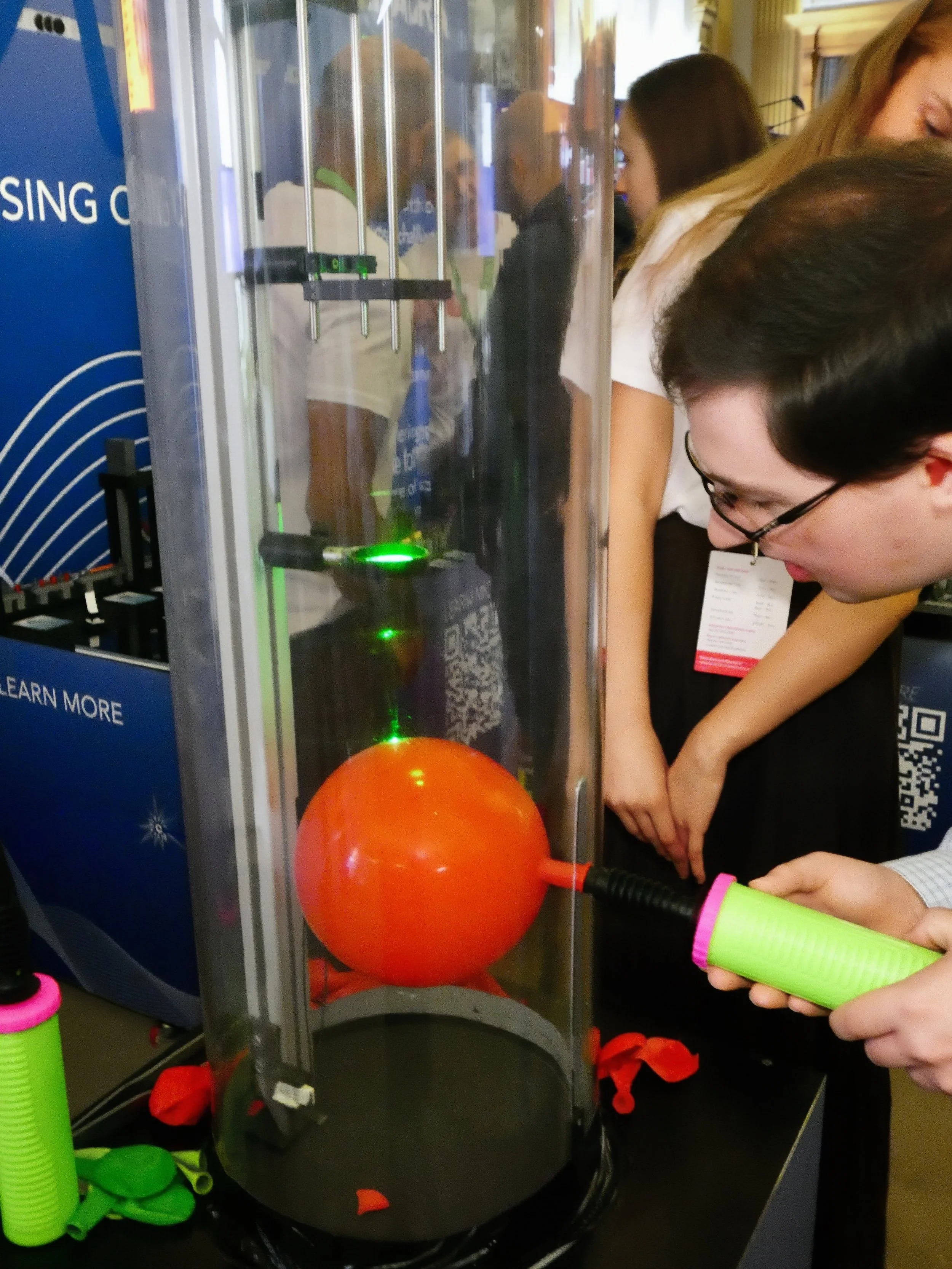
A visitor pumps balloons to simulate the LhARA process. Image Credit: Hermione Chan
And then there is Cardiff University’s Morgan-Botti Lightning Laboratory team, who, to the audible delight of the room—myself included—conduct a live demonstration of artificial lightning, capable of generating currents up to 200,000 amps: more than five times that of the average bolt from the sky.
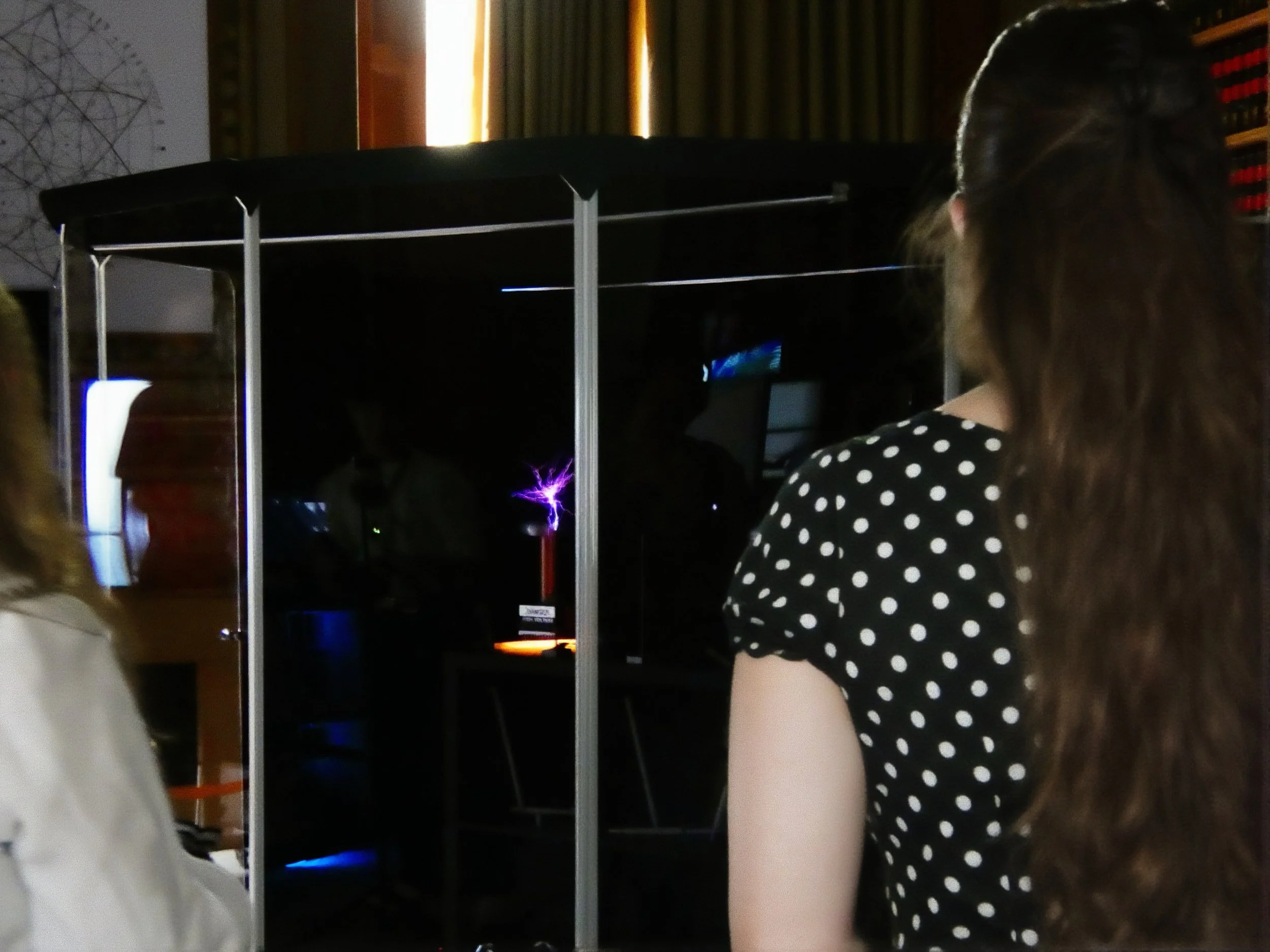
Artificial lightning is conducted by the University of Cardiff's Morgan-Botti Lightning Laboratory. Image Credit: Hermione Chan
By the time we leave the Royal Society’s marble halls at 11:00, it is difficult not to feel that science is in very good health.